Yolink without the hype: the long-range sensor store built for big properties
Official homepage: https://shop.yosmart.com
Smart home stores usually assume your house is the size of a WiFi router's patience. Sensors that work beautifully in a suburban ranch drop offline in the detached garage, the metal-walled workshop, the basement utility room behind a steel door, or the barn two hundred feet past the pool. YoLink was built for exactly this failure mode. Instead of the industry's default 2.4 GHz WiFi or mesh Zigbee, every device in the store runs on LoRa — the low-power, long-range radio borrowed from industrial IoT — giving sensors a quarter-mile of open-air range from the hub and battery lives measured in years rather than months. With a product wall that spans contact sensors, leak detectors, valve controllers, plugs, locks, and even a floating pool thermometer, and a storefront that earns a 4.6 rating across more than 2,200 verified reviews, this is the store the owners of large, weird, and signal-hostile properties keep recommending to each other. I went through the lineup, the hub math, and the lock-in fine print. Here is the store across its dimensions.
The Physics Nobody Else Sells
The pitch is engineering, not marketing. WiFi sensors are power-hungry and die behind concrete; Zigbee meshes are fragile at the edges; Z-Wave is dependable but short-range by design. LoRa trades bandwidth for distance spectacularly — YoLink's 900 MHz radios reach 2,034 feet line-of-sight and hold connections through walls, floors, and metal lids where other protocols simply vanish. PCMag's 2026 sensor range benchmarks singled out YoLink's implementation as the category outlier, reliably reaching crawlspaces and outbuildings where competing WiFi gear dropped to unusable signal. The low-power physics has a second dividend: sensors run on standard replaceable AAA cells rated for up to five years, with multiple reviewers reporting three-quarters battery remaining after two winters outdoors at minus thirty.
The Sensor Wall
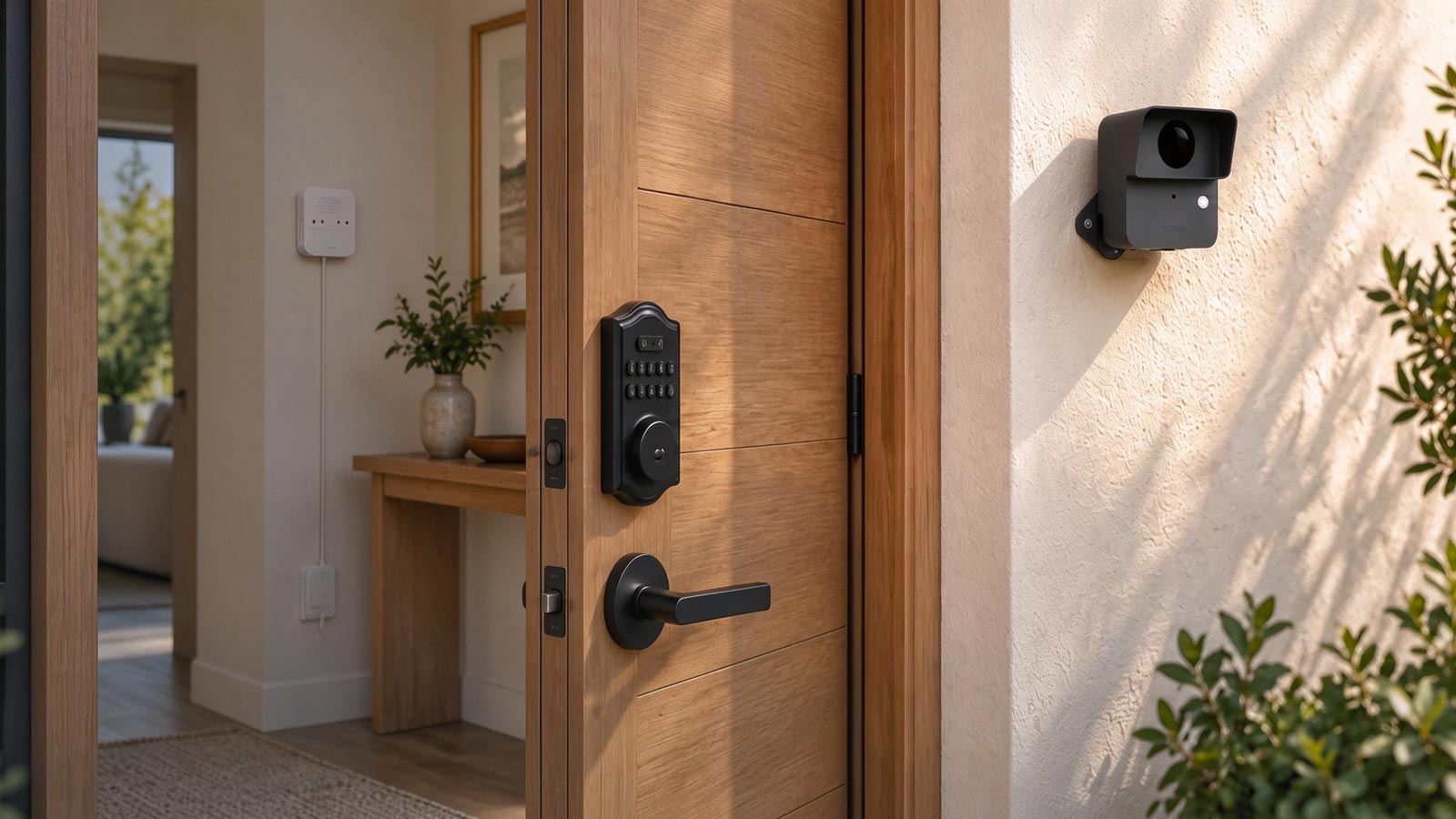
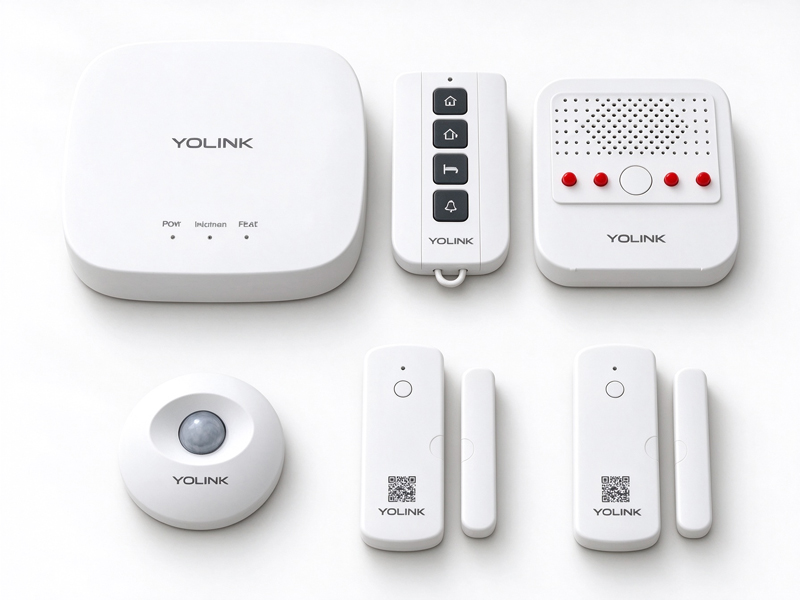
The catalog is deep and quietly quirky. Core security and safety runs on the $15.99-and-up contact sensors and the Water Leak Sensor line — the fourth generation adds a 105-decibel onboard siren and freeze warnings — while the practical imagination shows elsewhere: a motorized valve controller that retrofits your existing ball valve for automatic water shutoff, smart plugs rated for outdoor duty, dimmer switches, motion and temperature sensors, a floating thermometer for pools and hot tubs that one reviewer uses to verify spa readings, and even a deadbolt lock with keypad, fob, and app control. Door-sensor starter kits price the entry at $49.99 for a hub and two sensors, and the complete leak shutoff kit — hub, valve actuator, three sensors — runs $216.57, which one 2026 comparison crowned the lowest-overhead automated shutoff system tested, with a five-year total cost of ownership of $217 and no subscription.
The Hub Tax
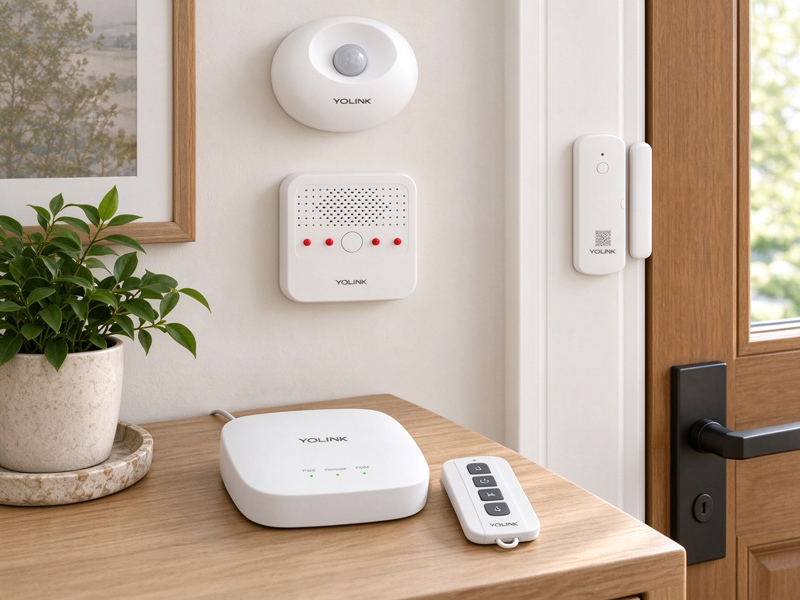
Here is the dimension every shopper must price in. YoLink speaks LoRa and only LoLink: nothing in the store — not one sensor — talks WiFi, Zigbee, or Z-Wave, and there is no Matter or HomeKit support anywhere in the line. Everything routes through one of two hubs: the plain YoLink Hub, which has floated between $23.59 and $29.99 on the store in 2026, or the SpeakerHub at $24.95 against a $39.99 reference price, which adds spoken text-to-speech announcements, sirens, and uploaded audio alerts that many owners call the feature that sold the system. One hub covers a typical property; large-acreage owners report buying a second for five-acre coverage. The proprietary protocol is simultaneously the store's superpower and its cage — your investment only ever speaks YoLink.
The Local Automation Edge
Underneath the cloud, the devices pair directly with each other, and this is the underappreciated headline. A leak sensor can command the valve controller without any internet connection at all — the hub listens to the sensor and actuates locally, a resilience architecture that 2026 roundups ranked as YoLink's most underrated advantage, and one that turns a power-and-internet outage from a disaster into a shrug. Home Assistant users get the most mature community integration in the category for self-hosted control, while Alexa, Google, and IFTTT cover the mainstream voice paths. The official app handles setup, schedules, and notifications; the one privacy gripe in professional testing is that it requests precise location access during WiFi setup.
The Storefront Rules
The direct store's policies read like a company that expects repeat business: most products carry a two-year warranty, returns are advertised as hassle-free, U.S. shipping is free over fifty dollars, and support is lifetime with U.S. phone availability — a vanishing luxury in gadget retail. Bundles lean heavily on starter kits across every sensor family, and the review wall, served by a third-party app and sitting above 4.6 stars across more than 2,200 entries, does real work in a category where trust is the currency.
The Lock-In Ledger
The honest costs, assembled. The hub requirement means no single-device purchases ever, and migrating away from LoRa later means replacing everything. Status supervision runs through the company's cloud, so while local device-to-device actions survive an outage, app notifications and voice control do not. There is no HomeKit or SmartThings path for Apple-committed households. One professional review logged a unit that simply refused to pair, and the smart deadbolt's fingerprint reader draws occasional complaints of flaky first-touch recognition. None of these are deal-breakers for the property-profile the store serves — but all of them are reasons a small urban apartment dweller should buy Aqara instead.
Where We Net Out
YoLink is the specialist store done right: it picked one radio, optimized every product around its physics, and built the deepest long-range sensor wall in consumer smart home. The quarter-mile range, five-year batteries, local device-to-device automation, and a two-hundred-dollar shutoff kit with no subscription make it the default answer for large properties, outbuildings, RVs, and anyone whose floor plan breaks WiFi. The trade is total ecosystem commitment — hub forever, no Matter, no HomeKit, no exit that does not involve a repurchase. For the big-and-difficult house, nothing else comes close; for the tidy apartment, it is more hub than you need.