Twinkly, up close: the italian light show store behind the world's mapped leds

Official homepage: https://www.twinkly.com
Smart home stores usually sell you a color. Twinkly sells you a shape. The Milan-based company — one of Italy's most decorated hardware scale-ups — holds the patent on the trick that turned decorative lighting from a setting into a show: point your phone's camera at any tangle of lights, and the app maps the exact position of every single LED, so effects can chase around your actual tree, follow your actual gutter line, or spell a message across your actual fence. Where Nanoleaf sells geometric panels and Govee sells budget ambiance, Twinkly owns the category nobody else can enter — every-light-mapped decorative strings, curtains, squares, and even pre-lit Christmas trees — and it has spent a decade licensing that mapping tech back to the very industry it disrupted. I went through the catalog, the software, and the honest complaint file. Here is the store across its dimensions.
The Camera Trick That Built a Category
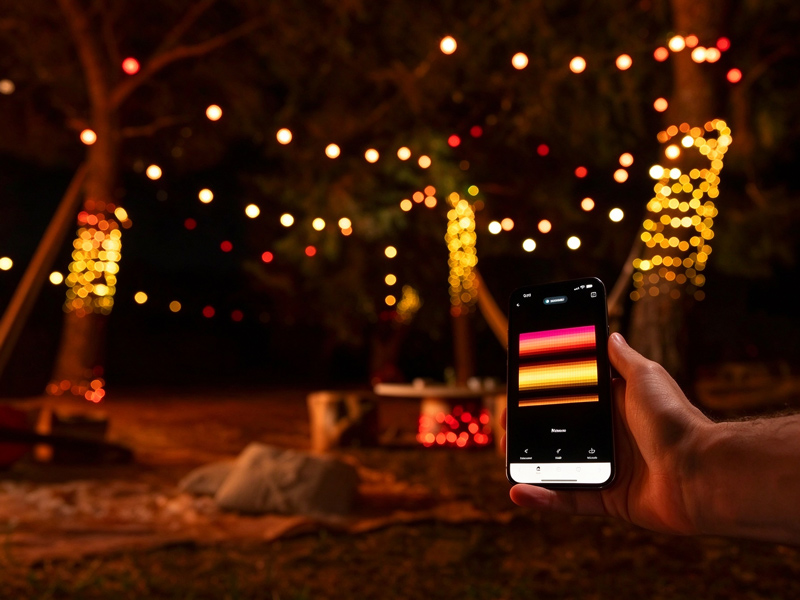
The magic is computer vision. During setup, the app flashes each LED in sequence while the camera watches; from those flashes it reconstructs where every diode sits in real space. Once mapped, a meteor effect rains down your specific tree, a text effect scrolls across your specific fence, and a gesture drawn with a finger plays back exactly across the arrangement you photographed. Every major review of the past five years — Trusted Reviews, The Verge, Reviewed — treats this mapping as the reason Twinkly exists, and the company protects it accordingly, licensing the technology to partners and building a Pro line for professional installers doing permanent architectural installs.
A Catalog Measured in Seasons
The store organizes itself around the calendar. Strings run from roughly 26 to 158 feet — around $113 for a popular mid-size set — with color, color-plus-white, and warm-white variants. Around them: Festoon bulb strings and Icicle runs for exteriors, Dots and Candies for indoor whimsy (Candies ship in four shapes — pearls, candles, stars, hearts — at roughly £50 or its dollar equivalent, USB-C powered), the neon-like Flex at about $35, a 210-LED Curtain for walls and windows, modular Squares panels at $249.99 for six tiles, a Music Dongle that makes any set dance to sound, and pre-lit trees — the flagship Aspen Pine, 390 LEDs on a seven-and-a-half-foot tree — at $840. The current homepage is already dressed for Halloween, a reminder that this store's peak season is a quarter of the year.
The Matter and HomeKit Ledger
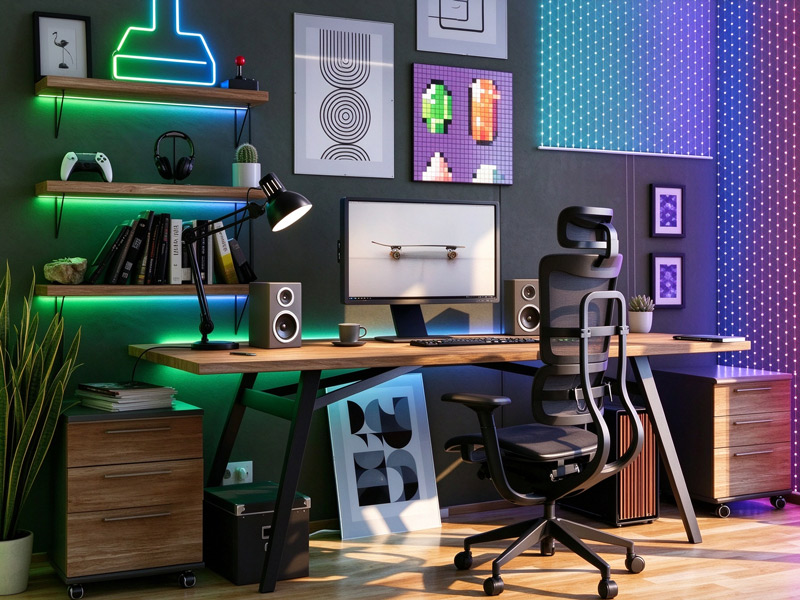
Ecosystem support is broader than the brand's festive image suggests. Generation-two hardware carries Matter certification, and HomeKit support — the detail Apple households search for — runs through most of the line, the Curtain included, with Alexa and Google covering the rest. Setup is Bluetooth-first, then 2.4GHz WiFi, with a physical button on every controller for cycling saved scenes without a phone. Two caveats live here. The Candies are an exception — no HomeKit. And every light requires a Twinkly account to operate, even though the app talks to the lights on the local network — a cloud tether that tinkerers find philosophically annoying.
The Software's Rough Edges
Mapping is brilliant; maintaining it is work. The scan needs conditions dark enough for the camera to see each LED but not so dark that the photo fails — on a long summer evening, one reviewer noted, finding that balance is genuinely tricky, and another needed two attempts before the map beat the default layout. Then there is the effects library: deep, beautifully previewed, and saddled with a playlist system that only holds one list, caps it at fifteen effects, defaults each entry to thirty seconds, and forces effects to load with a few seconds of darkness before they play. Owners who customize heavily end up managing their shows around these quirks.
The Price of a Light Show
Twinkly charges for its patents. A 400-count string runs two to three times the price of an equivalent Govee set, and the modular products punish modest ambitions: the $249.99 Squares starter renders gifs at sixteen-by-twenty-four pixels, which Reviewed found makes marketing images misleading — recognizable animations require nine to twelve tiles and at least one $99 three-tile expansion pack, nearly doubling the sticker price. The Aspen Pine tree asks $840 against generic pre-lit trees at a third of that. The Verge's long-term take captures the trade cleanly: not cheap, occasionally overkill, but five years of daily use without failure made the splurge rational.
The Storefront and the Seasonal Cycle
The Shopify storefront is polished and seasonal — Halloween hero banners now, Christmas by November, sitewide discounts cycling through — with 4.7-star product ratings on best sellers and a Trustpilot average that sits overwhelmingly positive across nearly 250 reviews. Retail runs wide: Best Buy carries the Squares, Home Depot stocks the exclusive LUMATIONS line, and Amazon absorbs the volume, with the direct store reserved for full-catalog access, bundles, and the Pro installer portal.
The Honest Ledger
The complaint file is specific. The cloud account is mandatory, and the undocumented API third parties reverse-engineered supports only on-off and brightness — effects cannot be triggered outside the app, which power users contrast unfavorably with open-source WLED. Candies ship without a power supply in the box. Long strings at scale multiply bulky power adapters, as one Verge editor discovered when one brick blocked an entire power strip. And for most buyers these are thirty-to-ninety-day products that live in a box eleven months a year, which softens — but does not erase — the premium.
Coda
Twinkly is what happens when a real patent meets a festive market: the only store where your lights know their own geometry, the effect gallery is the deepest in the category, HomeKit and Matter are genuinely supported, and holiday displays have become a licensable technology business. What you pay for is that geometry — two to three times the generic alternative, plus software quirks that treat playlists as scarce resources. For the house that takes December seriously, nothing else maps.