Six moons, one sprinter van, and the tents ultralight forgot to price high
Official homepage: https://sixmoondesigns.com
Somewhere on America's highways, the president of a tent company is asleep in a Sprinter van. Ron Moak — trail name Fallingwater, a twenty-year software veteran who thru-hiked the Pacific Crest Trail in 2000 and decided life was too short for corporate code — has run Six Moon Designs from that van for years, designing the shelters he sleeps under when he is not testing them. Founded in Oregon in 2002, the company takes its name from the six cycles of the moon a long thru-hike requires, and it occupies a distinctive corner of the ultralight world: genuinely affordable trekking-pole shelters, built by a founder who wants hikers to succeed rather than to worship gear. This review examines the store where minimalism keeps its prices minimal too.
A 1977 Appalachian Trail Hike Set the Design Standard
Moak's credibility is generational. In 1977, he and his wife were the first couple to southbound thru-hike the Appalachian Trail, starting with thirty-five-pound packs and ten days of food — at a time when, as he points out, there were few pack shops to sell anyone unnecessary gear. He cites Grandma Gatewood, who hiked the AT in tennis shoes with a shower-curtain shelter, as the spirit guide he admired but was not quite brave enough to copy. After cancer in the mid-1990s forced a reconnection with the outdoors, he hiked seven hundred miles of the AT on a twentieth-anniversary reunion and the full PCT in 2000, then made the career change. Six Moon Designs shipped its first product in May 2002. The founding hole he aimed at was simple: ultralight gear that actually existed was scarce, expensive, or both — and he intended to fix the both.
The Gatewood Cape Made One Item Do Two Jobs
The design philosophy is systems thinking before the term was fashionable. The signature example is the Gatewood Cape, introduced in the mid-2000s at around eleven ounces and roughly a hundred dollars: by day a rain poncho, by night a fully enclosed trekking-pole shelter that out-protects any tarp because its walls meet the ground — the wind simply slides past, and the occupant never has to reposition it when the weather turns. Moak designed it because he uses it, still sleeping under his own capes on multi-day Rocky Mountain treks above three thousand meters. The design exemplifies a Moak aphorism: he is one of the few backpackers who hopes to fail on a trip, because as an engineer he can only solve problems he has personally met. Every major innovation in the catalog traces to one of his own failures.

The Lunar Solo and Duo Brought Affordability to Ultralight
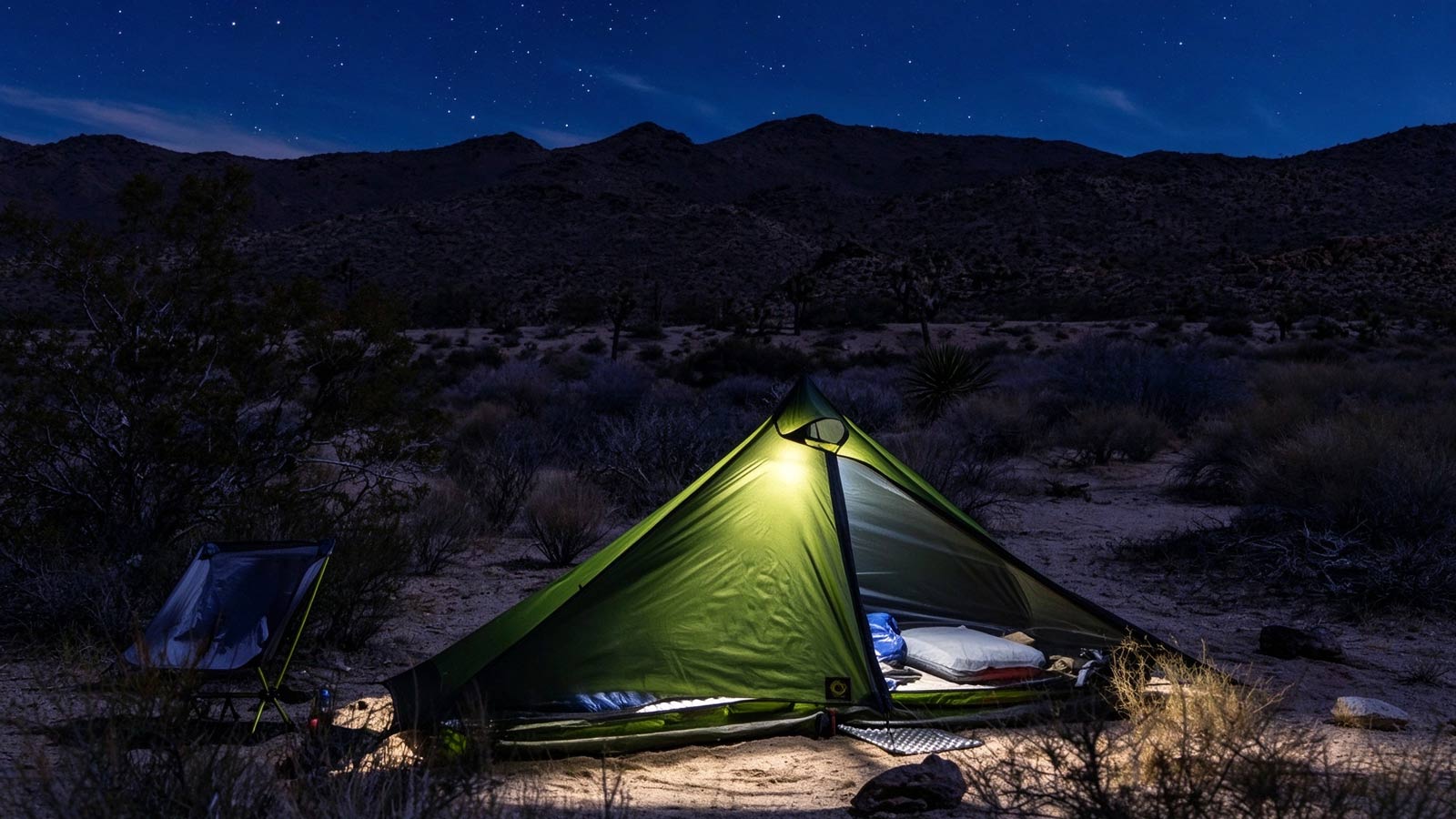
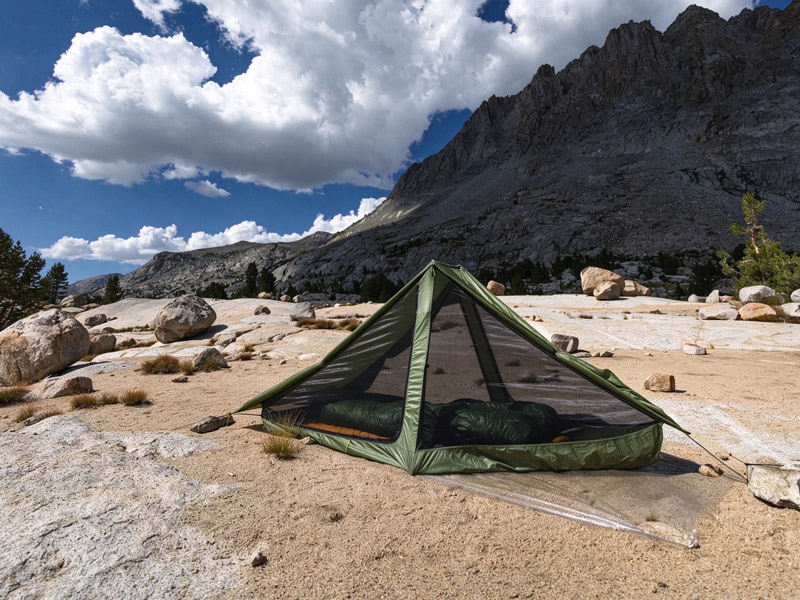
If the Gatewood Cape is the conversation piece, the Lunar line is the business. The Lunar Solo and Lunar Duo — single-wall, trekking-pole-supported shelters that skip dedicated poles entirely and use the hiking poles customers already carry — became the company's bestselling products and award winners in the ultralight press. Around them grew a complete system: Deschutes and Haven tarps for the tarp-and-net-tent crowd, matching NetTents for hikers who want double-wall livability without double-wall weight, carbon and aluminum poles for those who truly carry no trekking poles, footprints, pack liners, and famously featherweight trekking umbrellas. Six Moon was also among the very first manufacturers to build shelters from Dyneema Composite Fabric, beginning in 2008 — earlier than almost anyone except the fabric's sailors. And in March 2026 the company shipped its first fully freestanding, two-pole design, the Lunar Orbiter, reviewed after eight months of field use as a genuine new chapter rather than a reissue.
He Runs the Company From a Sprinter Van
The company culture is inseparable from its founder's lifestyle. Since around 2013, Moak has lived in a converted Sprinter van, traveling the United States while running Six Moon Designs — an arrangement he discusses publicly, including interviews about how he inverted the usual RV logic of cramming a house into a vehicle, preferring instead to let the van contain almost nothing. The setup is not a stunt; it is the same systems discipline applied to shelter as to supply chains. It also keeps the founder permanently close to the trails his customers hike, and customers occasionally report buying a Gatewood Cape by arrangement at a trailhead-adjacent meeting rather than a fulfillment center. The brand story writes itself: the tents are designed by a man whose office has no fixed address.
The Store Sells Systems, Not Just Shelters
The Shopify storefront reflects the systems-first design. Shelters lead, organized by how they pitch — trekking-pole, center-pole, freestanding — with tarps, NetTents, and poles presented as combinable modules rather than separate purchases. Prices sit visibly below comparable Dyneema and silnylon competitors, a deliberate positioning Moak has defended for two decades on the grounds that ultralight principles should reach the widest possible audience, not gatekeep behind four-hundred-dollar shelters. Product pages carry honest single-wall caveats — condensation management, site selection, the skills the minimal forms assume — in the founder's plain engineer's voice. The catalog's quirk (trekking umbrellas) doubles as a signal: this is a company run by people who actually walk.
The Honest Frictions of the Affordable Fringe
Affordable ultralight trades somewhere, and Six Moon's trade-offs are visible. Single-wall trekking-pole shelters assume the user already carries poles and already knows how to manage condensation — first-timers will face a learning curve steeper than the price tag suggests. The brand's cottage scale means limited colorways, occasional stock gaps, and a customer-service cadence that runs on one man's travel schedule. The Lunar Orbiter's move into freestanding design adds weight and price to a catalog whose identity was built on doing without, and longtime minimalists have noticed. And the company is visibly tied to its founder's energy and health — a continuity question every founder-led cottage brand eventually faces, and one buyers should weigh when a shelter is expected to last a decade.
Twenty-Four Years of Six Moons and Counting
Six Moon Designs is the ultralight movement's working compromise: real Dyneema and silnylon shelters at prices a thru-hiker on a budget can pay, designed by a man who hikes what he sells from a van with no fixed address. The catalog — Gatewood Cape, Lunar line, Deschutes, the new Lunar Orbiter — reads like two and a half decades of solved problems, each one priced to be used rather than admired. Buyers who want the lightest shelter they can afford, from the company most likely to be run out of a parking lot near the trailhead, have their store.