A grad-school assignment after haiti's earthquake built the cleverest camp lantern
Official homepage: https://luminaid.com
Most camp lanterns are bought; LuminAID's was assigned. In 2010, two Columbia University graduate students in architecture — Anna Stork, who also held an engineering degree from Dartmouth, and Andrea Sreshta — received a studio-design brief: create something to help after the earthquake in Haiti. They noticed that food, water, and shelter dominated the aid conversation while light — needed for safety, medical treatment, and simple dignity — was an ignored need, and that portable options were heavy, battery-hungry, and bulky to ship. Their answer was a solar-charged LED panel inside an inflatable, waterproof pouch that packs flat, floats, and diffuses light evenly. Fifteen years later, that assignment has become a patented product line sold in more than seventy countries, backed by Mark Cuban, and used by ShelterBox, Doctors Without Borders, and the United Nations. This review examines the store where a disaster-relief invention accidentally became a camping favorite.
Fifty Handmade Lanterns Proved the Assignment Could Ship
The founders' methodology was unglamorous in the way good design often is: they hand-built the first fifty lanterns themselves, field-tested prototypes in India, and filed a patent before they had a company. A 2011 class trip to Tokyo happened to land during the Tōhoku earthquake and the rolling blackouts that followed — a second, unforgettable confirmation that lighting in a disaster is a universal need, and the catalyst to take the project commercial. An Indiegogo campaign raised more than $50,000 against a $10,000 goal, and by 2013 the milestone that defined the company arrived: ShelterBox, the disaster-relief charity that had discovered the two women through their crowdfunding page, included LuminAIDs in aid packages for victims of Typhoon Haiyan in the Philippines. ShelterBox alone would go on to purchase roughly thirty thousand units.
Fifty Lanterns Fit Where Eight Flashlights Used To
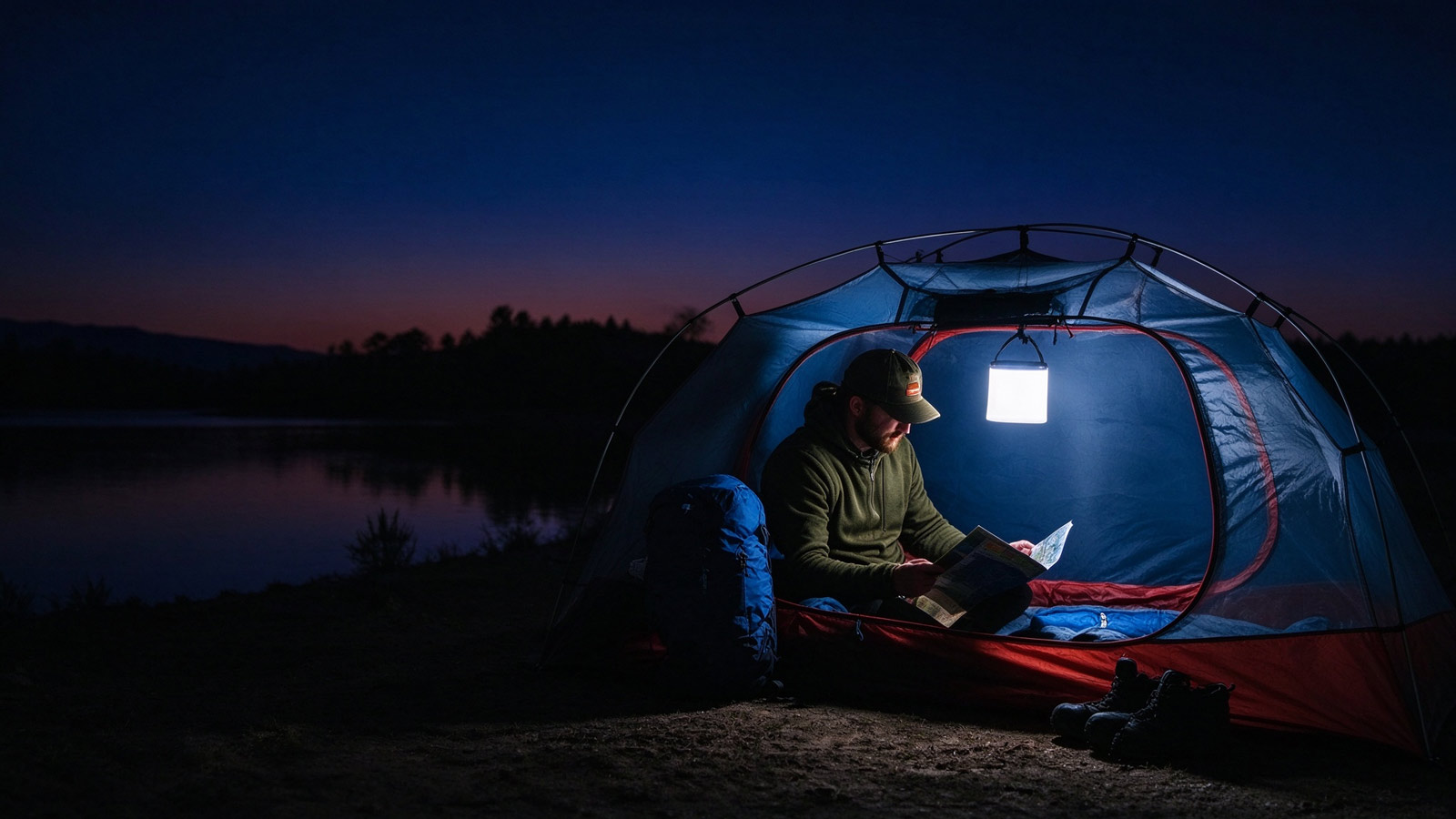
The engineering case for the inflatable form is logistics, which is why aid agencies adopted it so quickly. A standard aid box holds about eight conventional flashlights; the same box holds roughly fifty deflated LuminAIDs — and where a flashlight's batteries deliver twenty to thirty hours of light before becoming dead weight, the solar-charged LED circuit offers ten thousand-plus usable hours over its life. The lanterns are waterproof, dustproof, and buoyant, charge in about six to seven hours of sun, and run up to sixteen hours on a charge across brightness settings. For campers the benefits are the same ones that moved relief agencies: a lantern that disappears flat in a pack, shrugs off rain and rivers, and never needs batteries. The United States Patent Office granted broad protection for the inflatable solar-light design in 2016 — patent 9,347,629 — one of a portfolio that has since grown to a dozen issued patents worldwide.
All Five Sharks Made Offers; Only One Got the Deal
The 2015 Shark Tank appearance remains one of the show's rarest episodes: every shark made an offer to Stork and Sreshta. Kevin O'Leary proposed $200,000 as a royalty play; Lori Greiner, Daymond John, and Robert Herjavec offered equity stakes; and Mark Cuban closed the deal at $200,000 for fifteen percent, with an option to lead the next round. The partners chose Cuban for his emphasis on the technology, and the aftermath validated the choice — retail doors opened at the Container Store, Brookstone, and beyond, and Cuban's team supplied operational support a hardware startup rarely gets. In 2020, ABC's 20/20 named LuminAID one of Shark Tank's greatest-of-all-time companies. Earlier validations had included a White House showcase of American innovation and, for the two women inventors — a demographic holding barely fifteen percent of U.S. patents — a United Nations speaking slot and a children's-book feature.
Give Light, Get Light Links Every Purchase to Relief
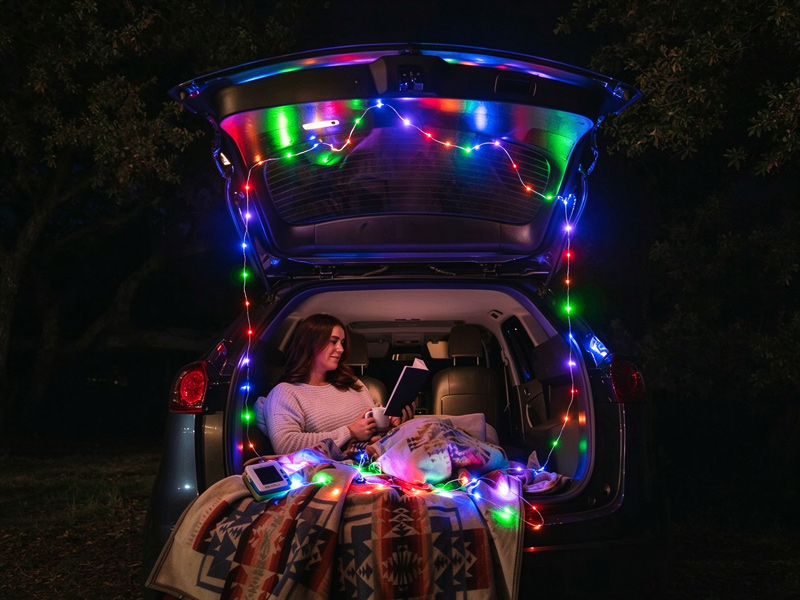
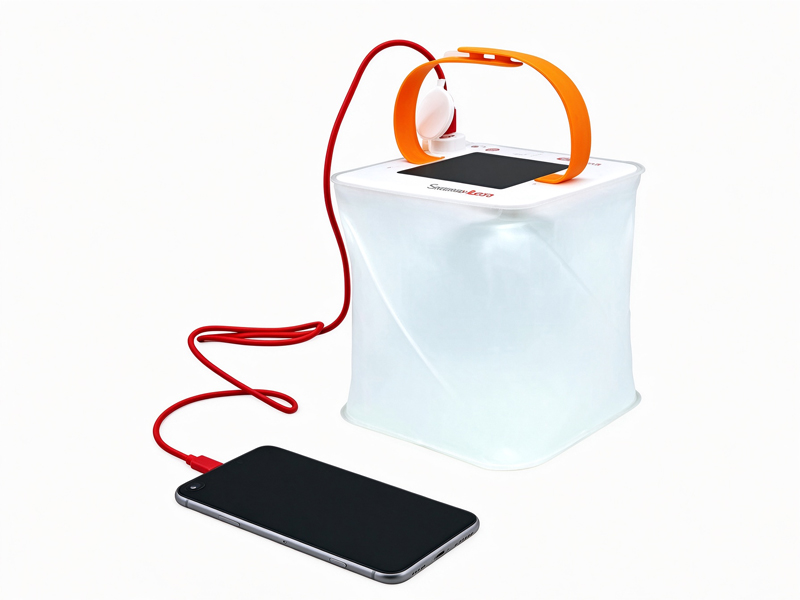
The buy-one-give-one model that became famous through TOMS Shoes operates at LuminAID through the Give Light, Get Light program, which lets customers sponsor lights for families in crisis — tens of thousands of donated units have reached more than fifty countries, from the Nepal earthquakes to the Syrian refugee crisis to Hurricane Maria. Around the donation mechanism, the catalog has broadened from the original lantern into phone-charging models — the Titan line answers the disaster-zone need to reach family and relief agencies — plus string lights, compact packs for backpacking, and multi-lantern bundles for emergency kits. The store serves three distinct buyers at once: campers, preppers, and gift-givers who want the purchase to mean something.
The Honest Frictions of a Purpose-Built Product
A lantern engineered for disaster logistics makes trade-offs in a campground. Solar charging means performance is weather-dependent and the lantern must be deliberately deployed in daylight hours — forget to charge it and it is a flat plastic square. The inflatable pouch, brilliant for packing, can be punctured by sharp gear, and the diffused, glare-free light that makes it perfect inside a tent reads as dim at a group campsite where beam-style lanterns dominate. Battery-free design means brightness levels are modest by consumer-lantern standards, and the product's own aid-first heritage means the store competes partly on mission rather than purely on lumens. None of these are defects; they are the shape of a product optimized for the worst day of someone's life, repurposed for the best ones.
The Assignment That Lit Seventy Countries
LuminAID's store sells a fifteen-year-old answer to a graduate-school brief, and the answer has held: pack-flat solar light that aid agencies ship by the tens of thousands and campers clip to their packs by the millions. With a dozen patents, a Shark Tank deal with Mark Cuban, a buy-one-give-one program with tens of thousands of lights donated, and recognition as one of the show's greatest companies, the brand has done what few student projects manage — become infrastructure. Buyers who want their camp lantern to carry a rescue story have few better options.