The complete buyer's walkthrough of LIFX: wifi bulbs without the hub tax

Official homepage: https://www.lifx.com
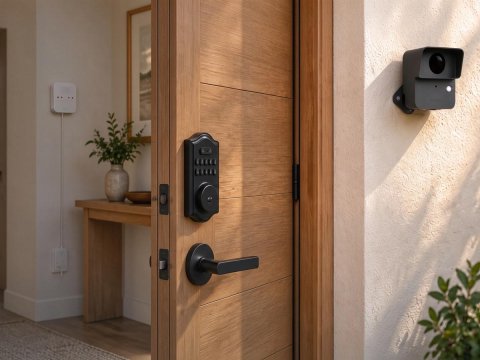
Smart home stores usually want to sell you two things: the bulb and the bridge that makes the bulb work. LIFX has spent fourteen years arguing the bridge is a tax — that a smart bulb should join your WiFi exactly like your laptop does and just work. Born in Melbourne in 2012 as one of Kickstarter's first great hardware campaigns — a WiFi color bulb that raised over a million dollars on the strength of "no hub required" — the company later stumbled through the smart home wars, was acquired by California's Feit Electric in 2019, and spent the mid-2020s in the wilderness. The 2026 LIFX, though, is having a genuine second act: Matter certification rolled out to existing devices, a Thread radio upgrade on the roadmap, a ten-dollar Everyday bulb line, and tactile wall controls. I walked the storefront end to end. Here is the store across its dimensions.
The Kickstarter That Outsmarted the Hub
The founding insight was architectural. Philips Hue was building a beautiful ecosystem around a mandatory bridge; LIFX bet that consumers would rather skip the bridge entirely and give each bulb its own WiFi radio. The trade-offs were always real — more network chatter, more per-bulb cost — but for the apartment dweller buying three bulbs, nothing beat screw-in-and-go. That thesis still defines the catalog, and the store's product pages repeat it like a creed: no hub, no bridge, ready in ninety seconds, Matter certified out of the box with an Apple Home QR code in the manual.
Feit's Second Act
The acquisition story explains the store's rough edges and its current momentum. The years under Feit Electric brought slower app updates and a few firmware releases that broke third-party integrations — longtime owners still swap war stories — but the last eighteen months have reversed the trajectory. CES 2026 brought the Everyday line (a $10 full-color bulb with 90-plus CRI, and a $39.99 twenty-foot lightstrip with a four-button physical controller), a $29.99 Matter-certified Smart Dimmer with gesture controls, and the SuperColor Mirror for bathrooms, plus the promised Thread upgrade that will let current-generation devices choose between WiFi and a low-latency mesh. This is a brand re-engaging with its founding argument rather than abandoning it.
The Wall of Light
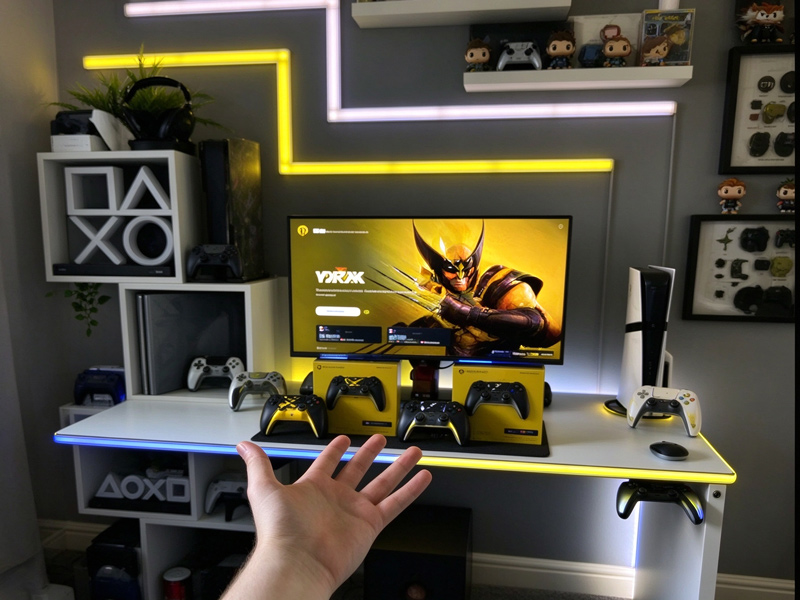
The catalog is priced to undercut its reputation. The flagship SuperColor A21 — 1,600 lumens, a true 100-watt-equivalent and the brightest bulb in its class — lists at $29.98 direct, with the 40-inch SuperColor lightstrip kit at the same $29.98 (extendable to 33 feet in $19.40 increments) and Neon Flex at $149.98. Around them sit the Candle Color for chandeliers, the Beam modular bars at roughly $80, the LIFX+ infrared line for camera night vision, and the new Everyday A19 at about ten dollars — a price point that makes outfitting a whole room with color an impulse decision rather than a project. Product pages carry honest "also at" links to Home Depot, Amazon, and Ace Hardware, and the direct channel offers what retail cannot: bundles, the 30-night trial, and the replacement-first warranty.
The No-Hub Trade
The architecture giveth and taketh. Every LIFX bulb is its own WiFi client, which means five bulbs in an apartment are nothing and forty across a large home are a real load on a budget router — the single most repeated professional criticism, and the reason reviewers tell whole-house buyers to choose Hue's Zigbee mesh instead. Connection is 2.4GHz-only, and combined-band routers occasionally need a temporary band split during pairing. Measured response times over Matter run 200 to 300 milliseconds versus the 80 to 120 of Thread-native rivals. Remote control still routes through LIFX's cloud for app users, though HomeKit and Matter keep local control alive when servers hiccup.
The Storefront Receipts
Direct-buying reads like a company trying to win back trust with policy. Shipping is free over $79. Every product carries a 30-night trial with a flat $14.99 return fee — you can live with a strip for a month before committing. The warranty runs two years with a replacement-first promise: they ship the new unit before receiving the old one, an inversion of the industry's return-and-wait norm. Product pages answer the questions buyers actually ask — cut points, extension limits, CRI, Matter pairing — in plain language, and the checkout offers the usual express-pay spread.
The Color Science Pitch
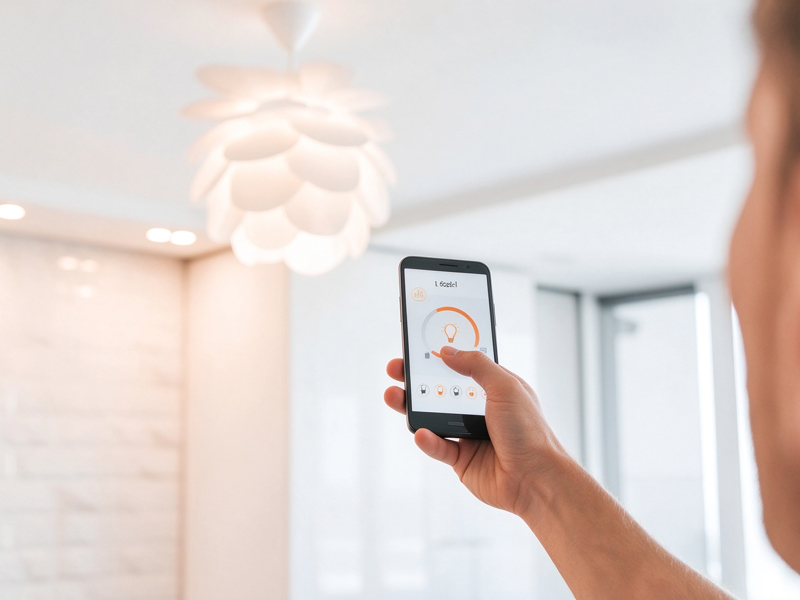
Where LIFX still beats the field outright is photon quality. The current line claims 90-plus CRI — colors and skin tones render truer than Hue's 80-to-82 range — a color temperature spread from 1,500K candlelight to 9,000K arctic daylight that no mainstream competitor matches, and saturation that reviewers consistently describe as Crayola-bright. The SuperColor engine's polychrome zoning lets one bulb render gradients and flame effects rather than single flat color, and the 1,600-lumen A21 is genuinely bright enough to be a room's primary light rather than an accent.
The Honest Ledger
The complaint file, then. The app is the least polished of the major platforms, with the smallest scene library and occasional group-control sluggishness. Firmware history includes updates that broke third-party integrations — forgiven by some owners, remembered by others. There is no motion-sensor line, no outdoor fixture range, and no HomeKit Secure Video-style depth; response latency trails Thread bulbs; and the brand's post-acquisition years cost it some early adopters, as the community forums still attest. None of this is fatal at current pricing; all of it belongs in the buying decision.
Final Call
LIFX in 2026 is the strongest version of the no-hub argument since the original Kickstarter: flagship brightness and color science at under thirty dollars, a ten-dollar entry bulb that makes whole-room color trivial, a two-year replacement-first warranty, and a Matter-plus-Thread roadmap that finally future-proofs the WiFi-first architecture. What you accept is per-bulb network load at scale, an app that lags the leaders, and a cloud still in the loop for remote app control. For apartments, dorms, and small-to-medium homes — or anyone who refuses to buy a bridge — this is the store to beat.