Take less, do more: the scout handbook that built an ultralight brand

Official homepage: https://gossamergear.com
Before ultralight backpacking had a name, a Scout leader in San Diego read a book. Ray Jardine's Pacific Crest Trail Hiker's Handbook passed from a scoutmaster named Read Miller to Glen Van Peski — a consulting civil engineer — and Van Peski spent the next years subtracting: ounces from his pack, then pounds, then assumptions. The packs he sewed in response became the G1 through G4, the G4's free pattern became an internet phenomenon, and the company that grew from those packs, Gossamer Gear, became one of the founding institutions of the ultralight movement. Twenty years on, Van Peski's motto — take less, do more — has grown from a hiking slogan into a book with a foreword by Whole Foods co-founder John Mackey. This review examines the store where subtraction became a business model.
A Scoutmaster's Book Started the Subtraction
The origin story is unusually well documented, because Van Peski tells it often. When his oldest son joined a San Diego Scout troop whose scoutmaster had read Jardine's handbook, Van Peski read it too — and the two men began a friendly competition to lighten their loads, weighing every item and challenging each other trip after trip. His early attempts trace the learning curve of an engineer: the first pack, the G1, was big and ugly but worked for years; the G2, sewn entirely of 1.1-ounce silicone-coated nylon, shredded spectacularly on a John Muir Trail trip with his son (and was later reconditioned and walked the length of California's PCT sections); the G3 and G4 refined the formula. Each generation was lighter, and each generation was born from a problem he had personally failed through.
Fifty Packs Were Supposed to Last Years
The commercial origin is the best accidental-business story in outdoor gear. Van Peski posted G4 sewing instructions online, and strangers began emailing to ask if he would sew one for them. He said no until the guilt of refusing outweighed the effort of complying — then he built a real pattern, and the first production runs were sewn by his wife Francie and other women in the neighborhood, as custom orders with chosen fabric colors. When a Seattle manufacturer told him his minimum order was normally one hundred, Van Peski figured twenty-five would satisfy everyone on earth who wanted one; they compromised at fifty, which he expected to store in his garage for years. Word spread across the young internet, the fifty sold almost immediately, and the ongoing production run has now stretched across two decades. He was running a demanding civil-engineering practice plus thirty unpaid hours a week on the gear company before equity partners and a new president moved operations to Austin in December 2005.
The Catalog Carries Decades of Field-Tested Quirk
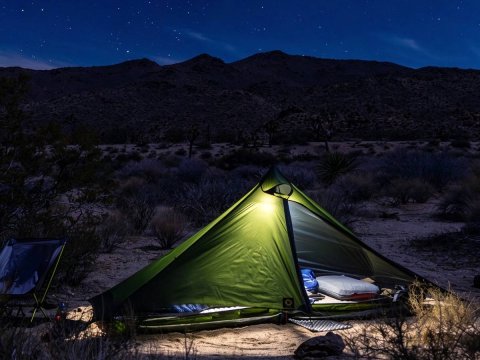
Gossamer Gear's product line retains the founder's experimental fingerprints. The Gorilla pack — for years the company's bestseller and the only one Backpacking Light rated highly recommended in its class — was designed by company president Grant Sible, whose trail name became its name, and serves the transitional hiker lightening from a traditional kit. The One tent compresses shelter design to its logical floor; the Crotch Pot, an insulated pouch that cooks dinner against a hiker's torso while they walk, is exactly the kind of oddity only a company that tests on real trails ships with a straight face. Van Peski, whose trail name is Legend and who has hiked most of the PCT and bikepacked the Great Divide Route, remains chairman and still tests prototypes — a company where every product carries a trail resume.
Take Less Became a Philosophy, Then a Book
What distinguishes Gossamer Gear from other cottage manufacturers is that the founder treats weight as a teacher rather than a fetish. The philosophy he distilled — subtract rather than add, lead with generosity, revise the stories you tell yourself — became a 2024 memoir, take less. do more., with a foreword from John Mackey, himself a strong hiker with the trail name Strider. The book's proceeds support wild places, extending the company's long-standing practice of giving back; Van Peski's public persona — engineer, speaker, author, and cheerful evangelist of the lighter life — gives the brand an almost Patagonia-like philosophical halo without the corporate scale. The store sells gear, but the about pages sell a way of moving through the world.
The Store Organizes Subtraction Into a System
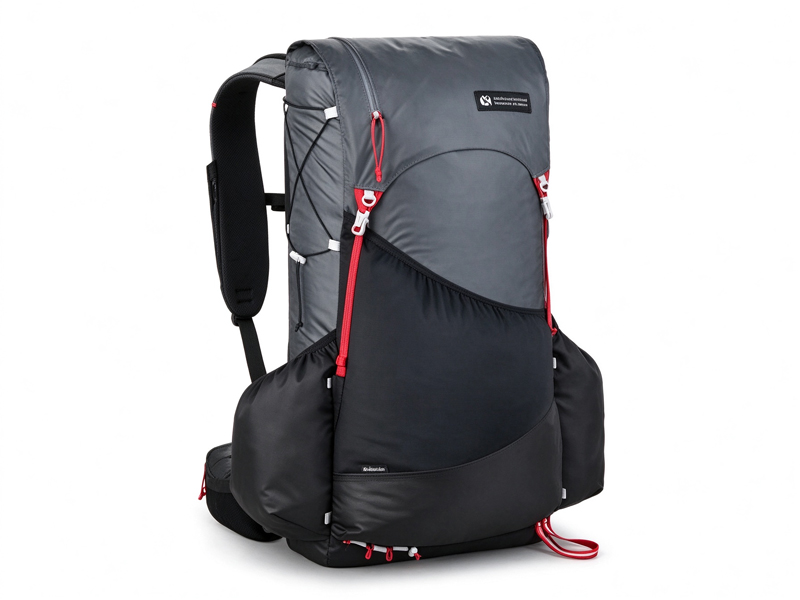
The Shopify storefront reads like the company's values rendered as navigation. Packs anchor the catalog — the Mariposa, Gorilla, Murmur, and The One sit at the canonical ultralight sweet spots — with shelters, sleeping pads, trekking poles, and accessories filling out a complete kit. Product pages carry real weights and honest caveats in the founder's dialect, and the education content — how to lighten, how to subtract — is given away freely on the company blog, because Gossamer Gear's founding insight was that informed hikers become lighter hikers, and lighter hikers become customers. It is content marketing in the purest sense: the curriculum is the product funnel.
The Honest Frictions of the Lighter Path
Ultralight's edges are sharp, and Gossamer Gear's are the same ones the category has always had. Minimalist packs assume a light, compressed load: buyers who pack like it's 1995 will find the comfort floor quickly. The stripped-down shelters trade livability and weather margin for grams, demanding skill that beginners may not yet have. Cottage-scale operations mean narrower colorways, occasional stock gaps, and a brand voice that speaks fluent thru-hiker and only accented beginner. And the philosophy-first positioning, while genuine, occasionally shades into self-help earnestness that gear-first shoppers may find precious. None of this is hidden — the company publishes the caveats itself — but buyers should arrive with eyes open.
Two Decades After the Fifty Sold Out
Gossamer Gear stands as the connective tissue between the ultralight movement's photocopied-handbook origins and its mainstream present: the scoutmaster's book, the shredded G2, the fifty packs that were supposed to last years, and a philosophy that now arrives with a foreword. The store remains the most accessible on-ramp to the lighter life — engineered packs, honest weights, and a founder who still hikes what he sells. Buyers who take less here tend to do more everywhere else.