From a 3d-printed ball to the robot every school wants
Official homepage:https://sphero.com/
Sphero's story reads like a Silicon Valley script: two friends build a smartphone-controlled ball in a Boulder, Colorado garage, ride a Disney Accelerator to Star Wars stardom, sell millions of BB-8 toys — and then deliberately walk away from Hollywood to focus on classrooms. Today the company claims its robots are used in more than 40,000 schools worldwide, and its store sells everything from a screen-free robot for preschoolers to programmable rovers for teens. Here is our review of this educational toy shop from several angles.
Two Friends Turned a 3D-Printed Ball Into a Company
Sphero began in 2010 in Boulder, Colorado, when founders Adam Wilson and Ian Bernstein — veterans of the local Techstars accelerator program — started experimenting with a simple idea: what if a smartphone could drive a physical object? Their first creation was a humble 3D-printed ball controllable from a phone app, shown publicly at CES in 2011 when the company still went by its original name, Orbotix. The ball was fun, endlessly hackable, and strangely mesmerizing to watch roll across a table. What started as a curiosity about phone-controlled gadgets gradually revealed a bigger opportunity: the same ball that entertained adults at tech conferences could teach kids the fundamentals of programming, physics, and robotics through play.
A Disney Accelerator Spot Turned the Ball Into BB-8
Everything changed in 2014, when Sphero was selected for the inaugural class of the Disney Accelerator, receiving funding and mentorship from Disney's leadership. That connection produced the product most people still remember: the remote-control BB-8 droid released alongside Star Wars: The Force Awakens in 2015, a rolling, head-tilting replica controlled by a phone that became one of the holiday season's hottest toys. Sphero followed it with an R2-D2, a Lightning McQueen from Cars 3, and a talking Spider-Man. The licensing era was commercially huge — more than three million Disney-branded robots were sold — but it was also fragile: sales spiked with each movie release and then collapsed just as fast, leaving the company exposed to a cycle it could not control.
Walking Away From Hollywood Taught the Company Its Lesson
At the beginning of 2018, Sphero made a decision that few toy companies would dare: it ended its Disney licensing deals, laid off dozens of employees, and walked away from the blockbuster consumer market to focus entirely on education. The reasoning, explained publicly by CEO Paul Berberian, was that chasing movie-driven toy hits was not a sustainable business, while classrooms offered something better — steady demand, real learning outcomes, and products that stayed relevant long after opening weekend. Teachers had already been adopting Sphero balls on their own for coding lessons, and the company leaned into that pull, rebuilding itself around curriculum-aligned robotics. In hindsight, the painful pivot was the making of the modern company: the toy that had entertained fans became a tool that teaches millions.
Two Acquisitions Quietly Expanded the Classroom Toolbox
The education pivot was followed by two strategic acquisitions. In 2018 Sphero bought Specdrums, a Colorado startup whose wearable rings turned colors into music, adding an arts-and-music dimension to its STEAM lineup. Then in August 2019 it acquired littleBits, the New York-based maker of magnetic electronic building blocks founded by MIT Media Lab alumna Ayah Bdeir — a deal that instantly made Sphero one of the largest STEAM education providers in the world. The combined company reported reaching more than six million students, 65,000 teachers, and 35,000 schools globally, with over $500 million in lifetime sales of robots and electronic invention kits. The littleBits modular circuits and Sphero's rolling robots complemented each other neatly: one teaches electronics and engineering, the other teaches code and robotics.
The Store Sells Robots for Nearly Every Age
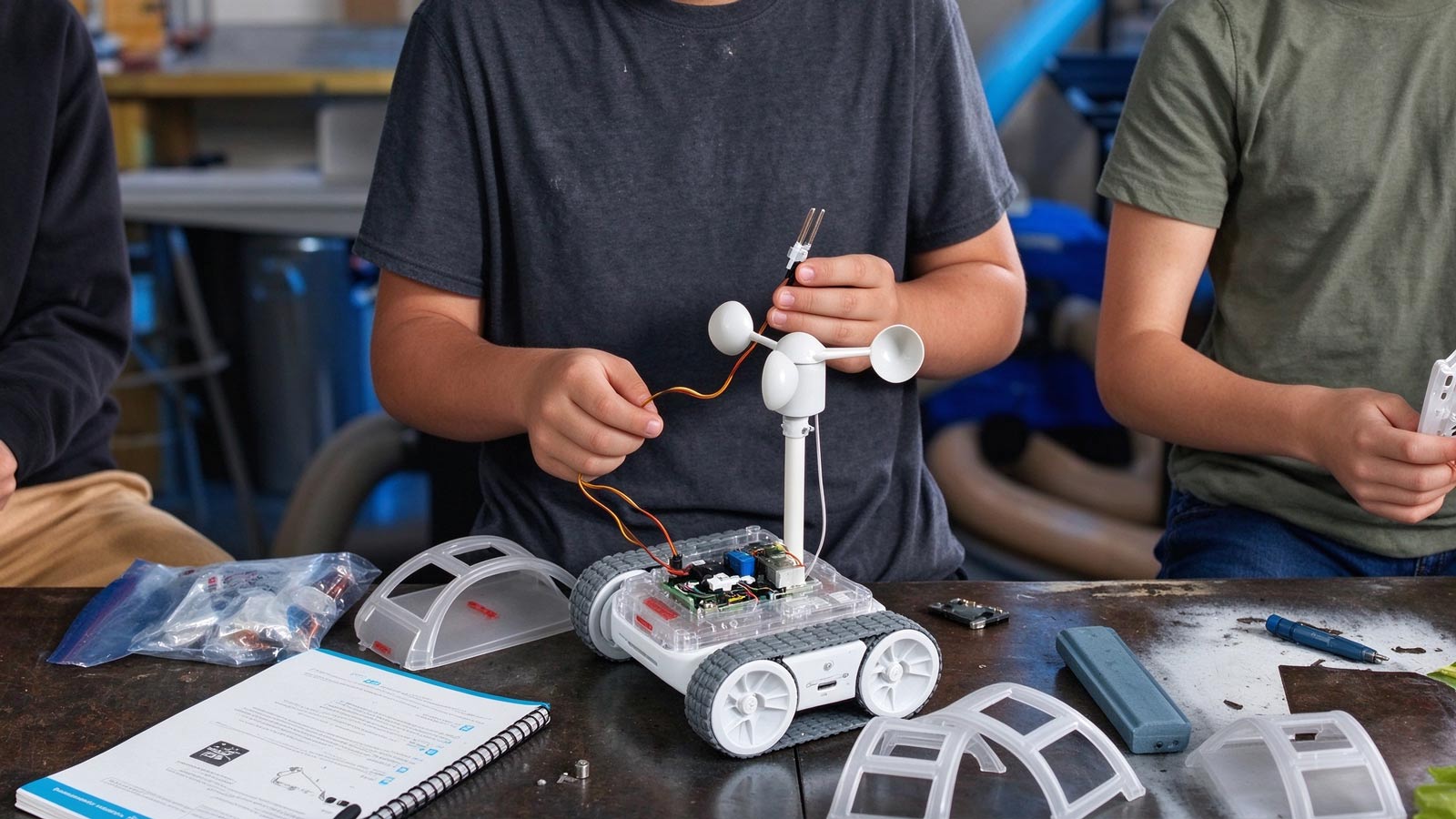
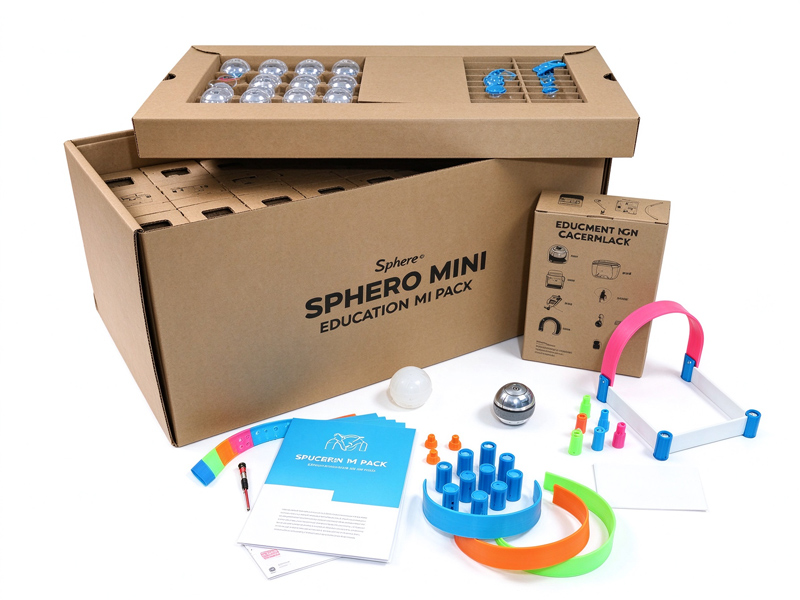
Browsing the Sphero store today, the range is strikingly broad. The BOLT, the modern descendant of that first printed ball, features a programmable LED matrix and remains the workhorse of school computer science labs. The Sphero Mini shrinks the concept to golf-ball size for younger hands and smaller budgets. The RVR+ is a hackable rover aimed at older students, programmable with Python and JavaScript and compatible with third-party hardware like Raspberry Pi and micro:bit. The indi robot is screen-free, using color tiles to teach logic to pre-K through second graders. And the littleBits line offers modular circuits that snap together magnetically. Software ties it all together: the Sphero Edu app and littleBits Classroom provide hundreds of free activities aligned to CSTA and NGSS standards, and teachers can buy classroom packs — including a charging case that powers fifteen robots at once.
The Final Word on Robots That Teach Real Code
Sphero earns its place near the top of the educational toy category by doing something rare: it teaches genuinely transferable skills, not just branded fun. The robots are durable, the programming environments scale from block coding to real text languages, and the free standards-aligned curriculum removes the biggest friction for parents and teachers alike. The honest caveats are price and direction — classroom-grade kits cost noticeably more than casual toys, and families wanting purely screen-free play will find much of the experience app-dependent. But for a household or classroom serious about introducing coding and robotics, this store offers one of the most complete, thoughtfully designed ecosystems available anywhere.