Wicked brick store review: what to know before you buy display cases online
Official homepage: https://www.wickedbrick.com
Display stores usually begin with the object — the set, the figure, the rare card — and treat the case as an afterthought in the checkout flow. Wicked Brick begins with the shelf itself: the storefront sells nothing but acrylic cases and stands, built in Cambridgeshire since 2017, and the about page opens with a confession — we're collectors, and everything we make starts there. I browsed with a Falcon that has been accumulating dust on a high shelf and a growing conviction that the collection was outgrowing its home. Here is the counter, decision by decision.
Door Policy: The Collector as the Customer
The storefront's founding sentence is an identity — we're collectors — and the copy insists it is not a marketing line but the operating procedure: every product is tested against a single question, would we want this on our own shelf? Building the store on the collector's identity rather than the product's features targets the customer who owns the thing being displayed: the set that cost hundreds deserves better than a dusty shelf, the staff own the same sets, and the case becomes the final purchase in a collecting journey rather than an accessory to it. The identity is the trust, and the trust is the entire product page.
The First Product Still Leads
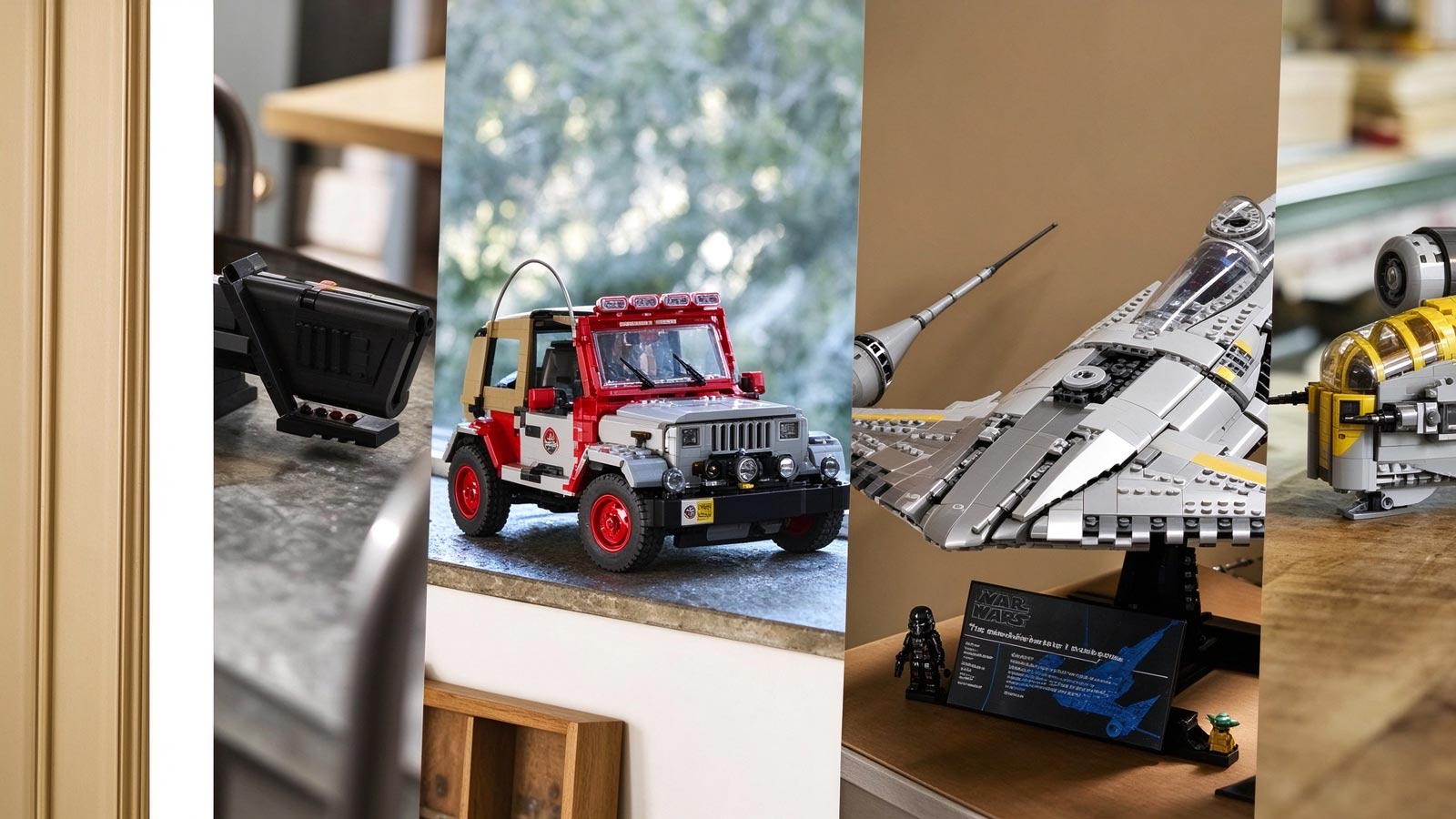
The origin story names a specific object — a display stand for the UCS Millennium Falcon, built because the founders' own Falcon deserved better — and the copy admits it remains a best-seller years later. Anchoring the brand to one legendary set is provenance aimed at the community's shared memory: every serious builder knows the Falcon, the stand that holds it is the entry point into the entire catalog, and the customer who trusts the Falcon stand trusts everything else by inheritance. The first product is the senior partner, and the senior partner never retires.

Four Firsts, Printed as a Ledger
The about page keeps a public ledger of inventions — the first to flat-pack displays rather than glue them, the first to use connector cubes and screws, the first to print immersive backgrounds inside the case, the first to issue limited editions with certificates. Publishing the firsts is innovation positioning aimed at the comparison shopper: the flat pack lowers shipping cost and storage, the connectors make assembly a puzzle rather than a chore, the printed background turns a shelf into a scene, and the limited editions convert protection into collecting. The ledger is the patent portfolio, written for customers, and customers read patents written in their own language.
A Background That Places the Object
The signature feature hides inside the case — a UV-printed backdrop that places the set in its world, a starfield behind a ship, a green curtain behind a museum, a story panel behind a miniature. Printing the background is an experience decision aimed at the customer who has always felt something was missing: the set no longer floats in empty acrylic, it belongs somewhere, and the case has quietly become a diorama rather than a container. The backdrop is the cheapest way to double the perceived value of the collection inside, and the doubling happens the moment the case closes.
The Forge as a Public Roadmap
At the bottom of the page sits the Display Forge — a mechanism that lets the community vote on what the company builds next, with the tagline your collection, your call. Opening the roadmap to votes is demand validation aimed at the collector's desire to be heard: the next case is never a guess, the community that votes is the community that buys, and the store has converted its product development into a participatory event. The forge manufactures demand before it manufactures acrylic, and demand manufactured beforehand is the only kind that never goes unsold.
A License Worn as a Badge
The about page dates a milestone — the first company in the market to secure an official license for a major miniature franchise — and the licensed cases carry the franchise's visual language on their story panels. Securing the license is credibility aimed at the fan who owns the miniatures: the official mark says the case respects the lore as much as the model does, the story panel inside teaches the backstory, and the licensed line converts a display purchase into a fandom purchase. The license is the co-sign, and the co-sign is rare, and rare co-signs are the ones collectors frame.
Numbers That Quietly Impress
The about page closes with its scoreboard — six hundred thousand displays shipped, over two and a half thousand products in the range, more than a hundred countries reached. Publishing the figures is scale credibility aimed at the hesitant first-time buyer: the half-million shipments say the cases survive the post, the two-thousand-product range says the set she owns is covered, and the hundred countries say the operation is a business rather than a workshop. The numbers are the loudest sentence on the page, and the loudest sentence is the one nobody had to write.