England designs, indonesia builds: the wooden toy family crossing continents
Official homepage: https://www.tenderleaftoys.com
Tender Leaf Toys runs one of the shortest supply chains in the toy industry — even though it spans ten thousand miles.
The English brand designs its wooden toys at home, then sends its designers to live at a single family-run factory in Indonesia for two months each year, where every product from raw timber to finished paint is made under one roof. The timber itself is rubberwood reclaimed from exhausted plantation trees, replaced by new plantings — a closed loop that sustainability-minded parents increasingly ask about by name. This review follows the material from plantation to playroom, examines the product families that built the brand, and weighs its place on a block shelf crowded with European rivals.
A Rubber Tree Gets a Second Life
The material story begins where most toy stories never look: the plantation. Rubber trees spend roughly twenty-five years producing latex before they stop yielding and face the chipper. Tender Leaf's factory takes these spent trees and mills them into toy timber — reclaiming a waste stream that would otherwise be burned or landfilled, and giving the wood a second career in nurseries.
The company pairs the reclamation with replanting: for every reclaimed tree used, a new one goes into the ground. The wood itself — rubberwood — is dense, fine-grained, and famously stable, which is why it has become the premium sustainable choice in wooden toys. Parents researching materials will find the claim repeated across the brand's retail partners, from boutique toy shops to big-box listings, with the same consistency that suggests a genuinely documented chain rather than a marketing flourish.
One Factory, One Family, Zero Middlemen
The manufacturing arrangement is the brand's most unusual feature. Everything — timber drying, cutting, painting, assembly, and inspection — happens at a single family-run factory in Indonesia, run by Mentari International, employing hundreds of local villagers with standards of training and wellbeing the company describes in unusual detail. There are no subcontracted finishing shops, no anonymous third-party assemblers: one roof, one accountable family operation.
The benefits compound. Quality control stays in-house because nothing leaves the building until it is finished. The carbon footprint shrinks because components never shuttle between separate facilities. And the ethical claims are auditable — a single factory is inspectable, which is exactly what modern buyers increasingly demand of overseas production.
Designers Who Sleep Two Months Overseas
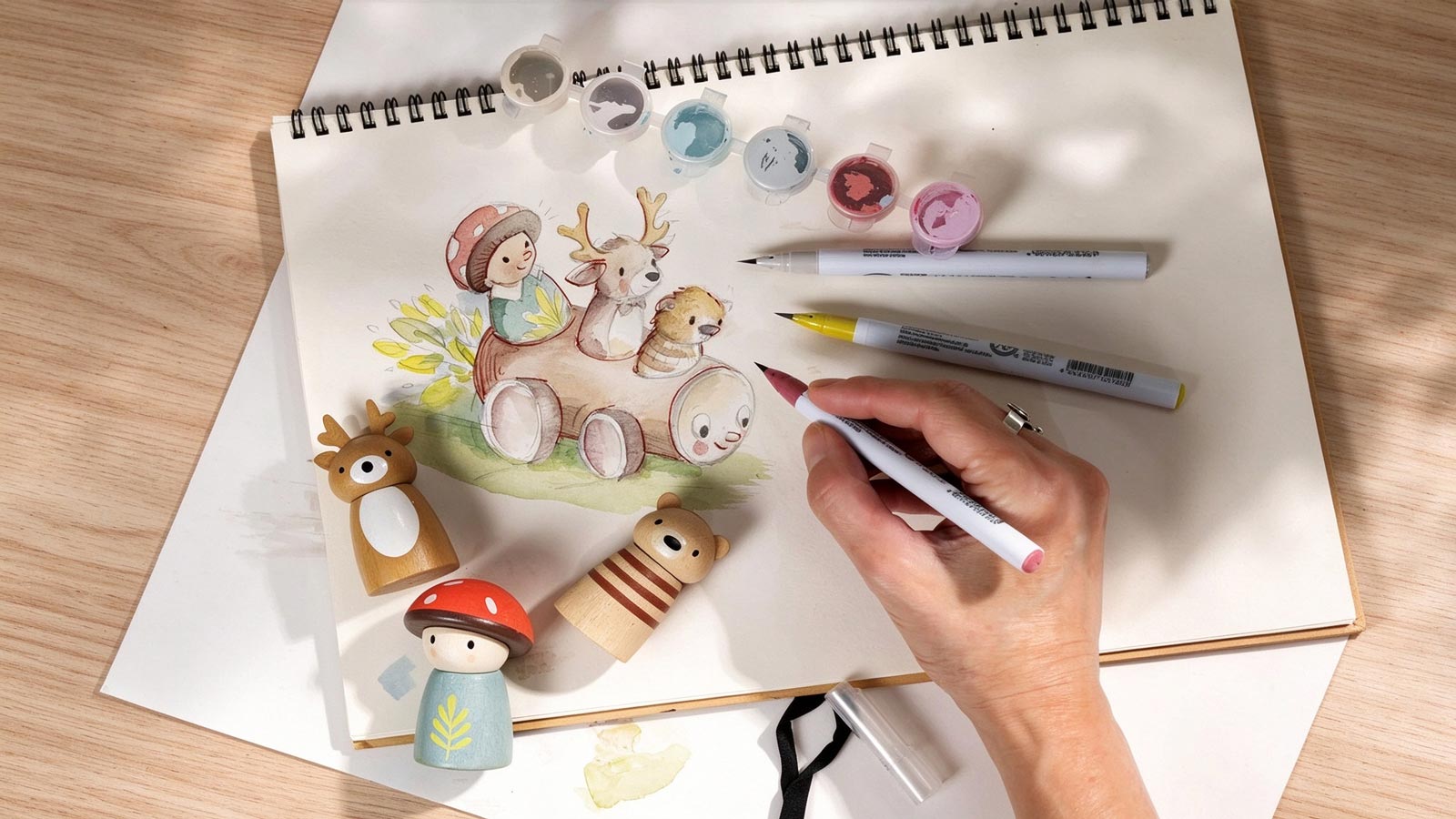
The design process embeds the English team directly in the factory. Each year, the designers spend roughly two months working on-site in Indonesia — sketching beside the machines, prototyping with the actual timber and tooling, and learning what the factory does brilliantly versus what the drawings imagined. Retailers describe the arrangement as directness so thorough that design and production function as one continuous operation.
The effect shows in the products. Details like the grain direction on curved pieces, the finish on small parts, and the way painted elements align with cut ones reflect a team that has watched its own designs being made — a different depth than the email-and-sample-loop that governs most overseas toy production. It is also, not incidentally, a compelling story for the parents and gift buyers who form the brand's direct customers.
Magnetic Faces and Safari Block Kingdoms
The catalog's breakout idea is What's Up — a magnetic face-building set with twenty-eight features that snap onto a wooden head to construct every mood from sleepy to furious. It is characteristically Tender Leaf: a simple mechanical concept with developmental depth underneath, teaching emotional vocabulary and facial recognition through construction rather than instruction. It has become the brand's calling card in specialty shops.
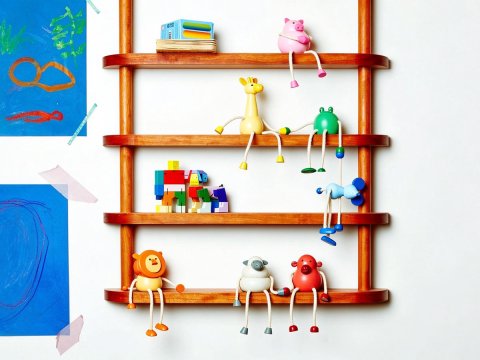
The block lines extend the same sensibility into animal kingdoms and landscapes — safari blocks, woodland sets, and stacking figures in the same rubberwood with the same soft, contemporary palette. The designs favor display-worthy warmth over bright primaries, which positions them in the same nursery-design conversation as Grimm's and the premium European houses, at prices that undercut them.
Boxes Without Plastic Windows Anymore
Packaging is a stated work in progress, and the honesty of that framing deserves credit. The brand uses recycled cardboard across the range and is actively working to eliminate the clear plastic display windows still present on some boxes. It is a small example of a larger pattern: sustainability claims that name their own gaps rather than declaring victory.
For gift buyers, the presentation already reads as premium — matte boxes, restrained typography, and the tactile satisfaction of a product that does not need a plastic porthole to sell itself. For sustainability auditors, the packaging roadmap is public, which converts a weakness into evidence of trajectory.
Safety Certifications Across Three Continents
As an English company manufacturing in Indonesia and selling into North America, Europe, and Australia, Tender Leaf's products carry the triple burden of British, European, and American toy safety regimes. The brand states compliance with the EN71 framework, ASTM standards, and the usual battery of paint, small-parts, and physical-mechanics testing, and its presence on mainstream retail shelves — including major American department stores — implies the documentation exists behind the claims.
The sealed, water-based finishes and solid-timber construction give the safety story a physical logic: there are few places for anything hazardous to hide in a solid rubberwood block with a tested coating. Owners of heavily used sets report the finishes surviving years of mouthing and washing, which is the practical test parents actually run.

The Dollhouse That Funds the Blocks
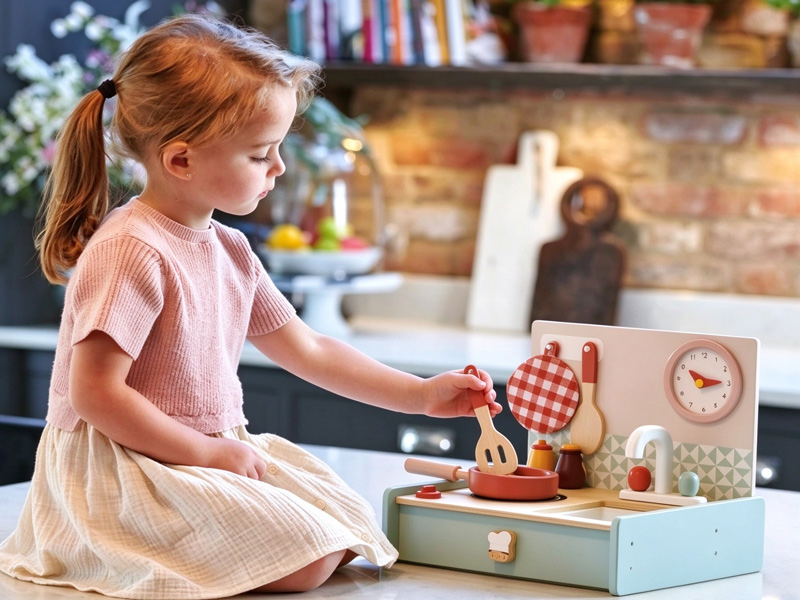
Commercially, the brand rests on two pillars. The dollhouse furniture and accessories line — miniature bedrooms, kitchens, and strollers with the same woodworking standards — outsells the blocks and funds the design calendar between block releases. The blocks, magnetic faces, and stacking sets provide the developmental credibility and the giftable entry points that bring new households into the ecosystem.
This structure explains the catalog's rhythm: dollhouse drops finance the experimental lines, and the experimental lines feed new customers into the furniture. Buyers rarely notice the machinery, but it is why a small English design team can sustain a catalog this wide on one overseas factory.
Retail Partnerships From Walmart to Faire
Distribution runs on three rails: big-box and department store listings that give the brand mainstream reach, independent toy shops that anchor its premium reputation, and Faire wholesale that puts it into thousands of boutiques without a sales force. The Shopify store serves as the direct channel — full catalog, bundles, and the seasonal drops that retailers cannot stock completely.
For families, this means the products are easy to find in person, easy to verify in hand, and easy to replenish online. For the Building Blocks shopper comparing against marketplace generics, the multi-channel presence functions as a trust signal: brands with department store relationships have compliance departments that generics do not.
Who Should Build With This Timber
The Tender Leaf household is the design-conscious family that wants sustainability claims with an addressable factory behind them — Montessori-adjacent parents, gift buyers hunting for something more original than the block bin at the mall, and grandparents who remember when wood was the default. The aesthetic rewards households that display their toys rather than hide them in bins.
The verdict from the category evidence: Tender Leaf turned a reclaimed plantation tree, a single Indonesian family factory, and an English design studio into one of the most coherent material stories in modern wooden toys. The blocks are lovely, the faces are clever, and the supply chain is the rare kind a parent can actually trace — from the plantation row to the playroom floor.