Fred fein's one-room workshop still equips american classrooms after sixty years
Official homepage: https://www.guidecraft.com
Guidecraft has been on preschool shelves since 1966 — longer than most preschools.
The company began when Fred Fein started making small wooden figures in a one-room shop in Garnerville, New York, turning a woodworking hobby into a business. Sixty years later, Guidecraft is a global educational brand whose unit blocks, magnetic construction systems, and learning furniture outfit classrooms and playrooms across the English-speaking world — still trading on the same promises of safety, quality, and durability. This review examines the Caroline Pratt lineage behind its classic blocks, the construction systems that modernized the catalog, and how a school-supply company built a direct-to-consumer storefront without losing its classroom soul.
A Woodworking Hobby Becomes a Business, 1966
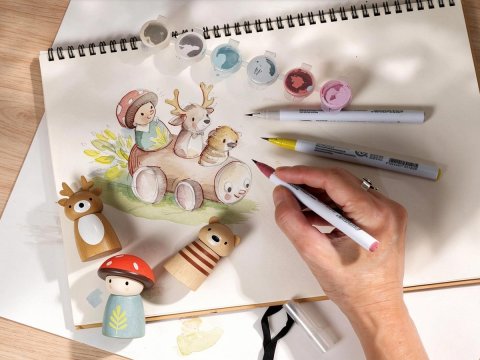
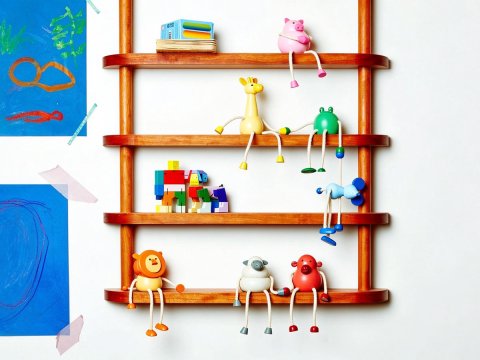
The founding detail that matters is not the year but the setting: a one-room workshop, a craftsman, and wooden figures made one at a time. Fein's hobby became a business the slow way, and the company still tells the story on its own about page, sixty years on, as the anchor of its identity. The location moved, the catalog multiplied, but the framing never changed — products built to enrich childhood rather than fill it.
That origin shaped the company's channel instincts early. From the beginning, Guidecraft sold where children actually spent their days: nursery schools, daycare centers, and the catalogs that stocked them. When the modern Shopify storefront arrived, it layered a direct-to-parent channel onto that institutional base rather than replacing it — which is why the site reads like a school supplier that happens to welcome families, not a toy store that tolerates teachers.
Unit Blocks From the Caroline Pratt Tradition
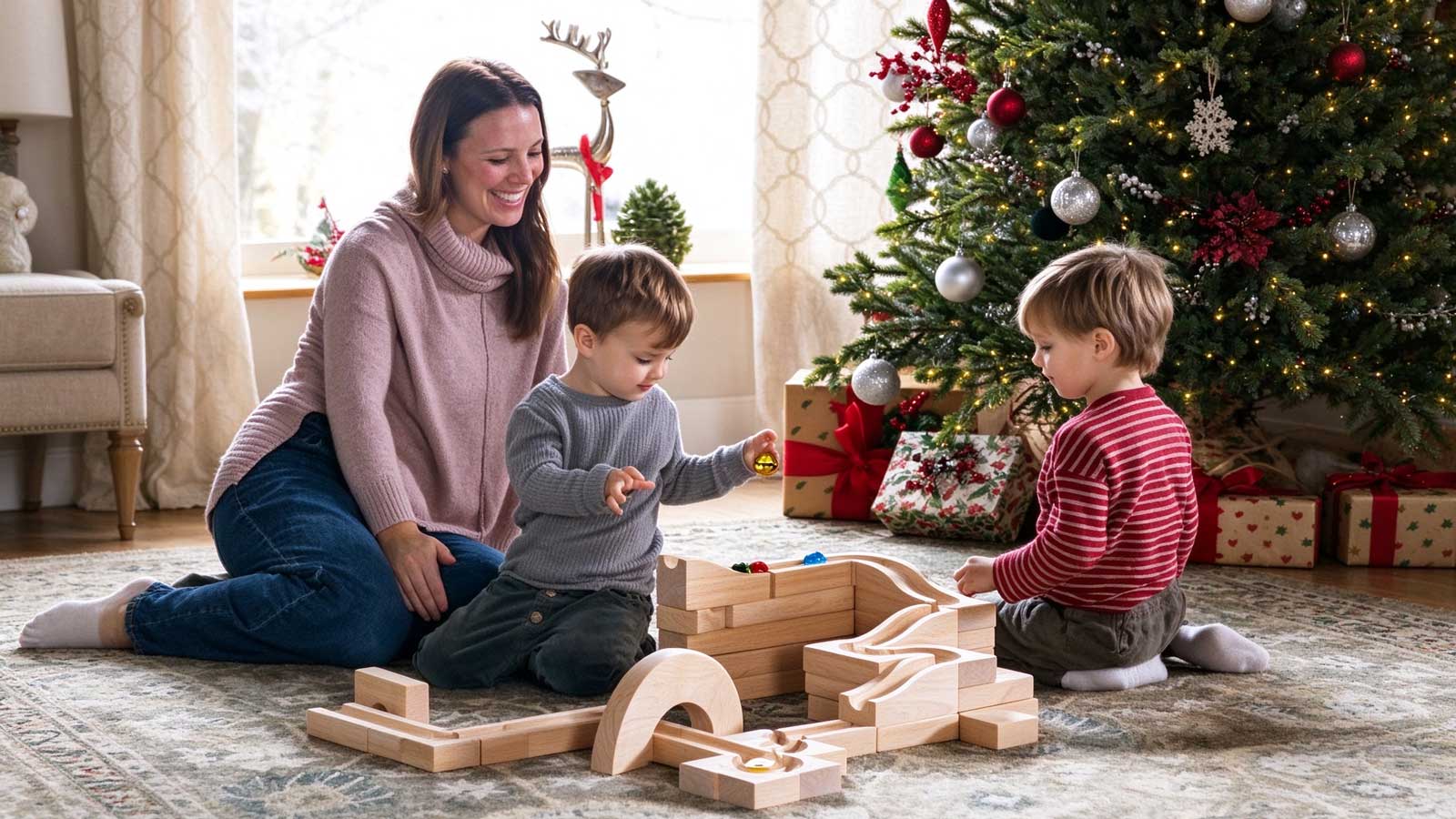
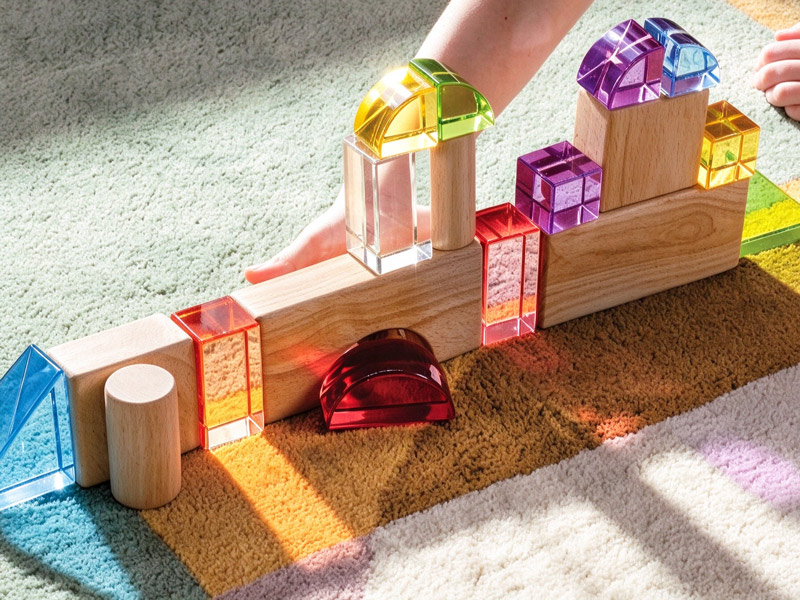
The centerpiece of the block line descends from one of the most important ideas in early education. Unit blocks were first developed in 1914 by Caroline Pratt, the progressive educator who founded New York's City and Country School and designed a system of proportional wooden blocks to support open-ended, child-directed learning. Guidecraft's unit block offerings continue that tradition with the standard proportional relationships — the half-unit, the double-unit, the pillar and arch — that let children discover geometry, balance, and fractions through building rather than worksheets.
For the Building Blocks shopper, this is the line's deepest credential. A hundred and twelve years after Pratt's design, proportional unit blocks remain the reference standard in early-childhood education, and Guidecraft sells them in the classroom-scale quantities — tubs of dozens of pieces, starter sets that grow into collections — that daycare operators actually order.
Better Builders, PowerClix, and Magnetic Physics
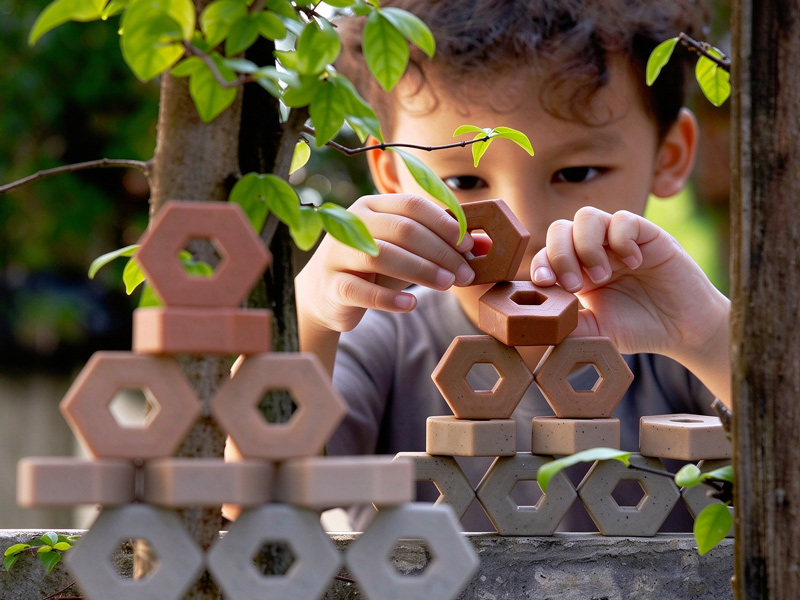
The modern half of the catalog came later, and it came with a mission: translating the unit block's open-ended logic into new materials. Better Builders applies the philosophy to magnetic construction for the youngest builders — chunky rods and balls with embedded magnets that let toddlers experience attraction, repulsion, and structural instability without the dexterity demands of tiles or studs. PowerClix extends the idea upward with frame-and-panel magnetic pieces that let older children engineer more complex skeletons and moving forms.
Both lines earned industry attention as award-recognized construction systems, and they share the company's educational signature: the toy teaches physics experientially and the design never dictates a finished model. Sensory and STEM lines round out the range, keeping the catalog legible to the teachers who stock it.
Tables and Chairs Beside the Toy Bins
Guidecraft is not only a toy company, and the furniture line explains much of its classroom credibility. Art tables, easels, chairs, book displays, and dramatic-play furnishings share the toy catalog, designed to the same construction logic as the blocks: rounded edges, anti-tip feet, pinch-free hinges, and secure wall brackets. The safety details are specific rather than generic, the way facility managers and licensing inspectors prefer them.
For the family buyer, this means the store solves whole rooms rather than single shelves — a reading corner, an art station, a block corner with the storage to match. For schools, it means one vendor relationship covers the space. The furniture also gives the brand a durability showcase: the same hardwood that survives kindergarten tables survives the block tubs.
A Design Language Teachers Recognize Instantly
Educational buyers are the brand's original audience, and the catalog is designed for their professional judgment. Products are organized by learning objective — manipulatives, block play, STEM, sensory, dramatic play — and described in the vocabulary of early-childhood education rather than consumer marketing. Constructivism and inspiration from nature and art appear in the company's own description of its design philosophy.
The practical effect for parents browsing the same storefront: unusually honest product information. Age gradings reflect real developmental stages, sets are sized for group play rather than solo unboxing, and the photography shows products in classroom contexts. It is a refreshing contrast to toy marketing built around character tie-ins and unboxing dynamics.
CPSC Standards as the Baseline, Not the Ceiling
Safety claims in the toy industry are cheap; institutional buyers are the reason Guidecraft's carry weight. The company states that its products meet or exceed CPSC and CPSIA standards, and its design details — rounded edges, pinch-free hinges, secure wall brackets — read like the audit checklist those frameworks produce. Independent retailers echo the same claims, which suggests consistency rather than a single compliance page.
Longevity is the other half of the safety story. The company frames quality explicitly as an environmental position: products built to last generations and not end up in a landfill. In a category where broken plastic toys dominate landfill statistics, a supplier whose classroom blocks circulate for decades is making a claim that institutional buyers verify every school year.
Classroom Durable Versus Living-Room Pretty
The honest trade-off in the Guidecraft aesthetic is that it optimizes for the institution, not the design magazine. Blocks arrive in sturdy tubs rather than collector packaging; furniture finishes favor cleanability over heirloom texture; colors are chosen for classroom calm rather than nursery photography. Parents arriving from the premium European wooden-toy world may find the presentation utilitarian.
The counterweight is function. Unit blocks that survive three decades of preschool rotation will outlast any child's interest in them, and the furniture's cleanable finishes matter more at snack time than design awards do. The brand's bet — validated by sixty years of reorders — is that buyers eventually prefer the thing that works over the thing that photographs.
Buying Direct Versus the School-Supply Channel
The storefront serves two shopping modes with different expectations. Schools and daycares buy through educational distributors in classroom quantities, with the drop-ship arrangements the industry has used for decades. Parents and gift buyers use the direct store for single sets, bundle deals, and the full catalog — including items that regional distributors may not stock.
Pricing follows the institutional model: honest, stable, and unflashy, with value concentrated in set size rather than discount theatrics. International buyers can order direct, though shipping costs for furniture and block tubs reward consolidation — a consideration for overseas classrooms ordering in quantity.
The Preschool Shelf That Never Goes Out of Style
The Guidecraft customer is, first, the institution: preschool directors, daycare operators, and school districts equipping rooms that must serve hundreds of children a year. The family buyer follows — often a parent who encountered the blocks at a child's school and tracked down the same set for home, or a grandparent hunting for a gift with classroom credibility.
The verdict after sixty years of evidence: Fred Fein's workshop produced a company that understood its customer from day one, and never confused that customer with a trend cycle. In the building block world, where novelty recycles annually, a supplier that still sells Caroline Pratt's 1914 proportions to the classrooms of 2026 has earned its shelf the only way that lasts — by being restocked.