Warming the forgotten wires at mysa: baseboards, savings calculators, and eleven thousand receipts
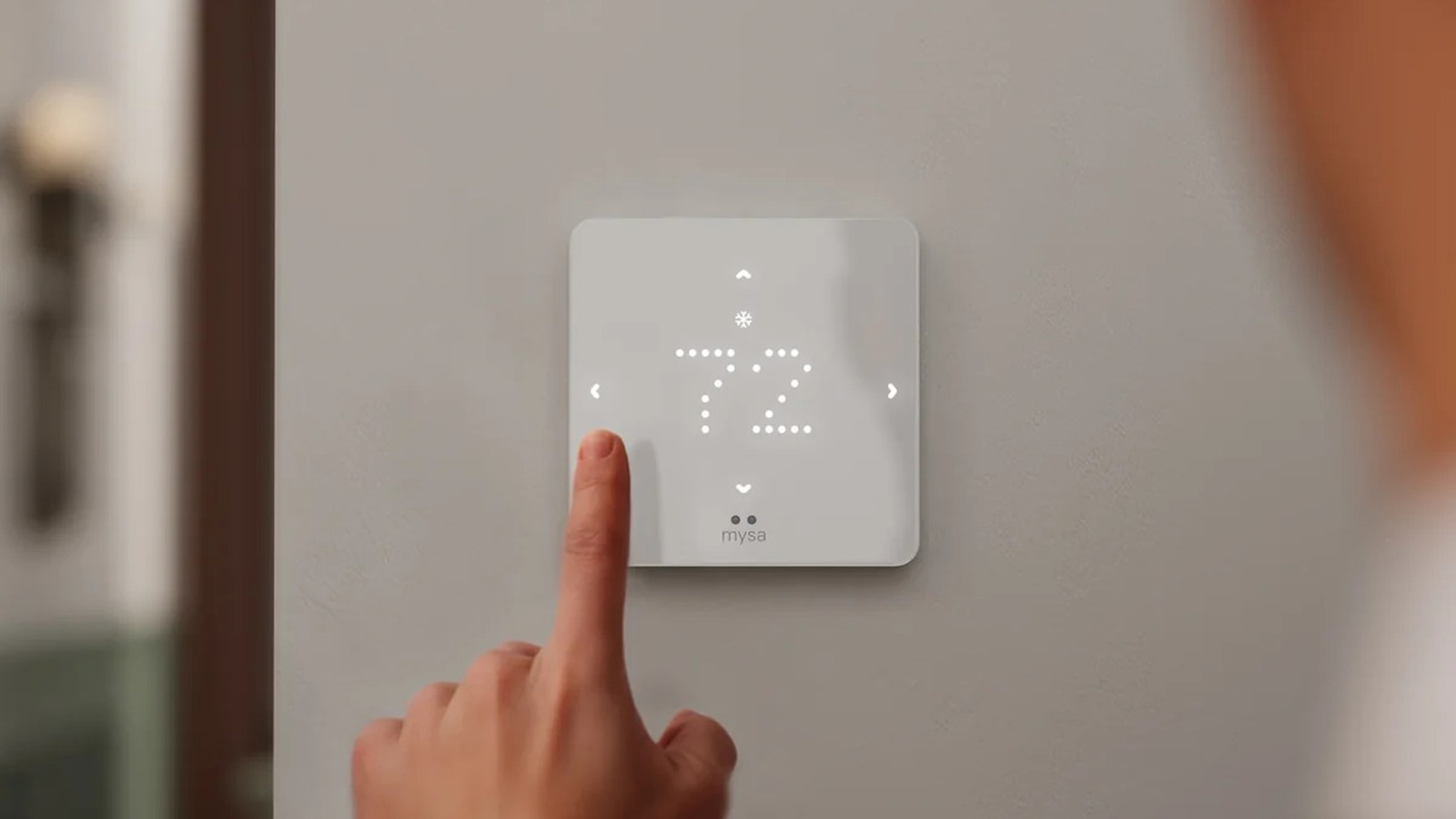
Official homepage: https://getmysa.com
Smart-home stores usually compete for the same pristine furnace room. Mysa's Shopify shop starts in the wall cavity everyone else skips. I browsed it with a flashlight and mild electrical anxiety, examining each of the store's systems in turn. Here is how the shop is wired.
The Positioning and Copy System
The headline performs the entire positioning decision in one line: "Built for baseboards, furnaces, heat pumps, air conditioners, and more." Competitors bury that list in spec PDFs; this store wears it as its name tag. Leading with baseboards — the electric periphery the flagships underserve — turns a compatibility table into an identity, and the trailing "and more" holds the door open without diluting the claim. One sentence of copy doing the work of an entire category strategy — and freeing every product page beneath it from having to explain which house it belongs in.
The Product-Page Photography System
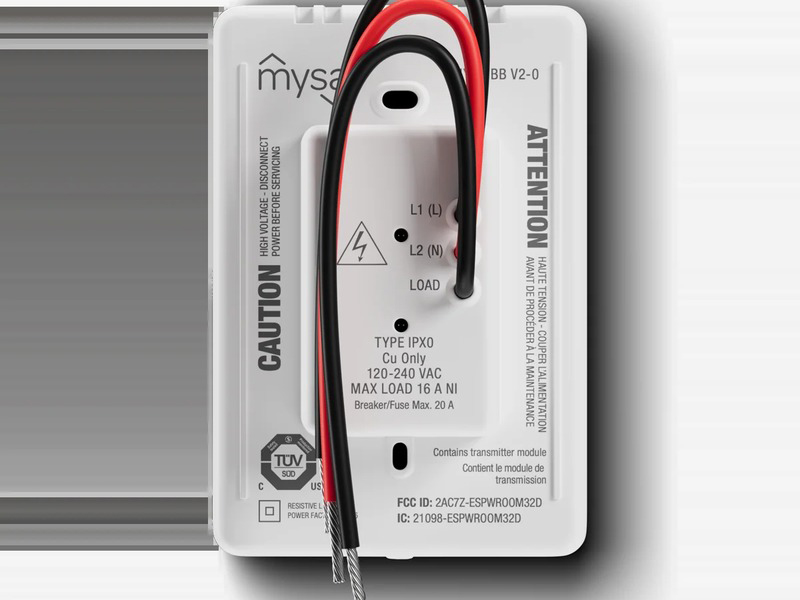
The imagery includes an angle most brands avoid: the back of the device. The baseboard unit's rear shows red and black leads, a high-voltage caution in two languages, certification marks, and a QR code beside the terminal blocks. The photography system treats the wall as part of the documentation and the documentation as part of the product — telling the shopper, before purchase, exactly what the installation afternoon will look like.
The Social-Proof Strip
Four counters run in a row beneath the hero: "11,000+ verified 5-star reviews," "320,000+ homes connected," "Trusted by leading utilities," "Backed by 5-year warranty." Scale, endorsement, coverage — trust compressed into one strip, the five-year term quietly outlasting a category standard of two. The system lets numbers introduce the store before any paragraph does, and the utilities badge borrows institutional trust the way a startup borrows a famous advisor.
The Interactive Conversion Tool
The store's most persuasive instrument is a calculator: "Mysa users save an average of 15% on heating and cooling costs," paired with a "Calculate your savings" button. An efficiency claim turned into a personal equation — your house, your rates, your result — moves the burden of proof onto the shopper. A visitor who has just computed their own payback period has, functionally, already bought — the tool converts by letting the customer author the pitch.
The Software Evidence System
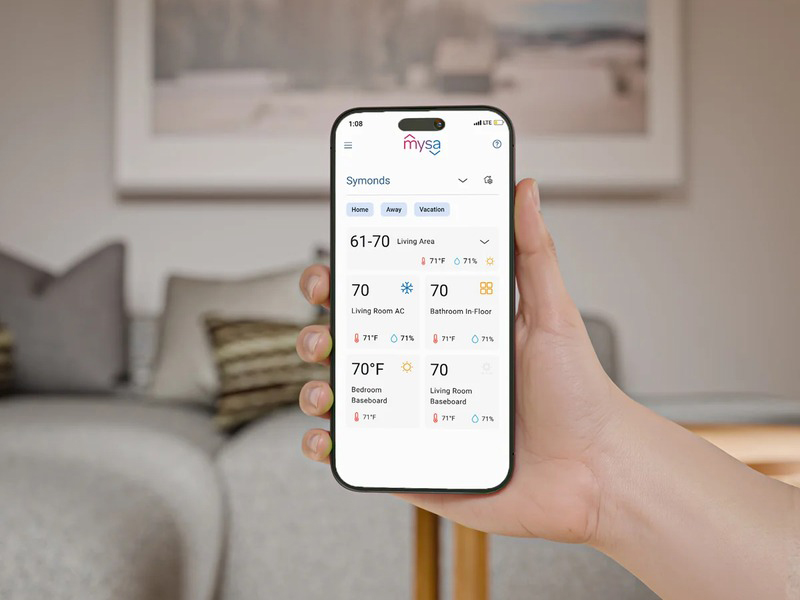
The app screenshots function as the product line's proof of breadth: one home screen — labeled "Symonds," like a neighbor's — listing Living Room Baseboard, Office Baseboard, Basement Baseboard, Living Room AC, Bathroom In-Floor, and Bedroom Baseboard in a single column, under Home, Away, and Vacation modes. A house running three heating technologies from one pane is the sentence the whole store is built around; the screenshot is its punctuation.
The Localization Operations
Two details admit a two-country operation without making either country feel exported: the dashboard mixes a 21° living area with 71° bedrooms in one glance, and the hardware carries English and French on the same backplate — "CAUTION / ATTENTION" sharing one screw row. Localization this unremarkable-looking is a storefront decision executed at the factory level.
The Candor-as-Filter System
The honest circuit doubles as market filtering. High-voltage baseboard installation sits beyond many shoppers' comfort, and the store's frankness about leads and load ratings screens out the tool-averse before they strain the support queue. Fifteen percent is stated as an average, never a promise; education about line voltage is a tax paid cheerfully, on every conversion, in advance.
Final Thoughts
Mysa's store is legible system by system: a copy system that wears its compatibility table, a photography system brave enough to show the back, a proof strip, a calculator that lets the customer close, a screenshot that summarizes the line, localization run at factory depth, and candor deployed as a filter. If your home heats itself through wires the smart-home giants never courted, every system here was built for your wall. If your ideal thermostat ships with a white-glove installer and no wire nuts, the store's honesty is a mirror — and it shows a person holding a screwdriver.