Uncle goose store review: what to know before you buy ABC wooden blocks

Official homepage: https://unclegoose.com
Building-block stores usually compete on systems — how the pieces connect, what the sets build, how many configurations the box claims. Uncle Goose competes on a square inch of basswood printed with a letter. The store's entire catalog descends from the most classical toy in the American nursery: the alphabet block, and the homepage says the quiet part first — one hundred percent made in the USA, in a workshop at a numbered industrial park in Michigan. I browsed with a nostalgia for the blocks I gnawed as a toddler and a suspicion that the oldest toys are the ones that survive every trend. Here is the counter, decision by decision.
Door Policy: A Flag Instead of a Funnel
The storefront leads with provenance — the words made in the USA printed at the top of the page, the address at the bottom, and nothing between them that needs translation. Leading with a country of origin rather than a feature list targets the grandparent and the godparent, the buyers most likely to purchase heirloom toys: the flag promises the wood is local, the address promises the workshop is real, and both together promise the toy was made by people who could be visited rather than by a container. The provenance is the marketing, and it costs nothing to print, nothing to defend.
The Alphabet as Operating System
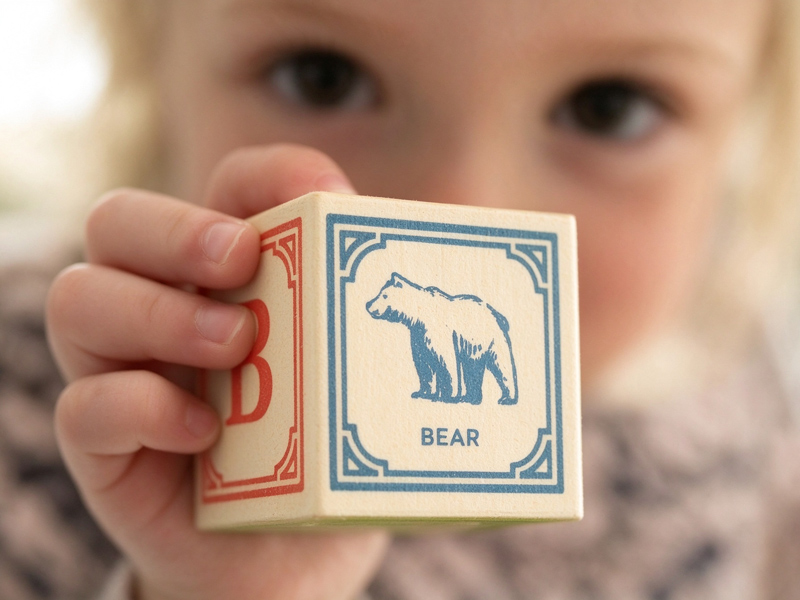
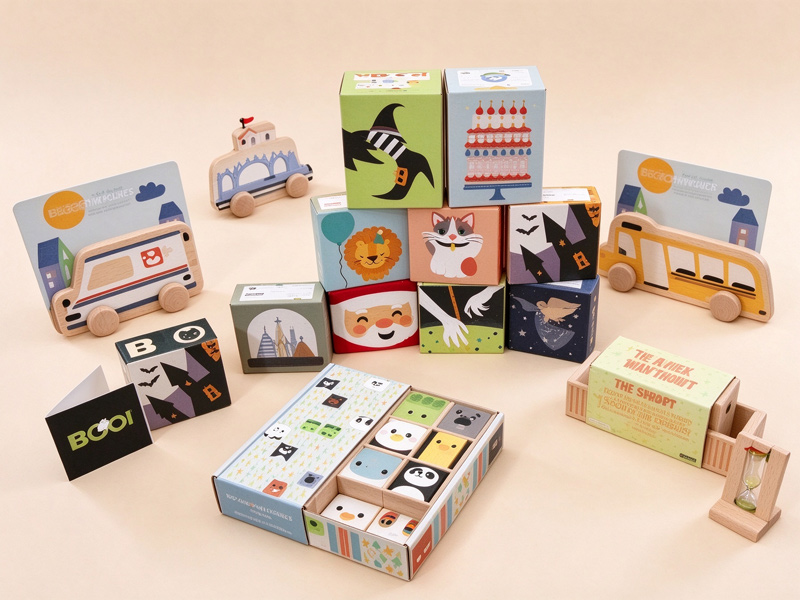
The catalog's core unit is the lettered cube — twenty-six characters, numbers, animals, punctuation, printed in non-toxic ink on sustainably harvested wood. Building a store around the alphabet block anchors the brand to the first literacy rather than the first engineering: every other product in the shop — the periodic table sets, the language blocks, the constellations — is the same cube wearing a different curriculum, and the customer who buys the ABC set has been introduced to the entire product line without knowing it. The letter is the operating system; everything else is an app, and the apps all fit the same hand.
Twelve Skills Printed as a Promise
The copy under the hero enumerates what blocks teach — sorting, matching, ordering, language, logic, spatial relations, recognition, organization, planning, balance — a twelve-item curriculum printed without a single pedagogical buzzword. Listing the skills instead of citing a child-development study targets the parent tired of toys that promise to raise geniuses: the list is humble, observable, and verifiable on the living room floor by anyone watching a two-year-old, and the absence of claims about IQ or accelerated development is itself a credibility signal. The list is the warranty, and it is a warranty anyone can test with their own eyes.
Heirloom as a Number of Lifetimes
The tagline promises the toys will last several lifetimes, and the copy expands without hesitation — built to last several lifetimes, heirlooms from the moment they arrive. Framing the purchase as a multi-generational object converts artisan pricing into estate logic: the block that survives to the grandchild divides its cost by decades rather than months, the set becomes an estate rather than an expense, and the customer who buys for a first birthday has quietly purchased for a first grandchild. The lifetime math converts a toy into an asset, and the asset appreciates in sentiment every year it survives.
Safety Printed in Two Words
The product details repeat the same two material promises — non-toxic inks, sustainable wood — across the catalog without variation or elaboration. Keeping the safety language to two words per material targets the parent who reads labels: the ink is safe enough to chew, the wood is harvested without guilt, and the brevity implies the testing is done rather than described. The store does not argue about safety; it states it and moves on, which is what confidence sounds like in a category where everyone else writes paragraphs.
One Address, No Mystery
The footer prints the workshop's street address — a numbered industrial park in Grand Rapids — and nothing obscures it. Publishing the address plainly targets the small minority of customers who will look: the workshop exists, it is in a named city, it is in a building with a number, and anyone passing through Michigan can knock. The address is the quietest and most durable trust signal in e-commerce, and this store prints it where most hide behind a contact form. A building you can find is a brand you can believe.
The Curriculum Widens Without Changing Shape
Around the ABC cubes sit the expansions — the periodic table for older children, Spanish and Mandarin for bilingual households, constellations for the night-sky curious — each set identical in size and feel to the original. Expanding the curriculum while freezing the form factor converts a single purchase into a decade of birthdays: the block that taught the toddler her letters teaches the six-year-old her elements, the set on the shelf grows with the child rather than being replaced, and the family that starts with the alphabet has every gift occasion already solved. The shape stays; the knowledge changes; the gift keeps working, year after year after year.