Thirty years at sennheiser, one name on the door: grell audio begins
Official homepage: https://grell.audio
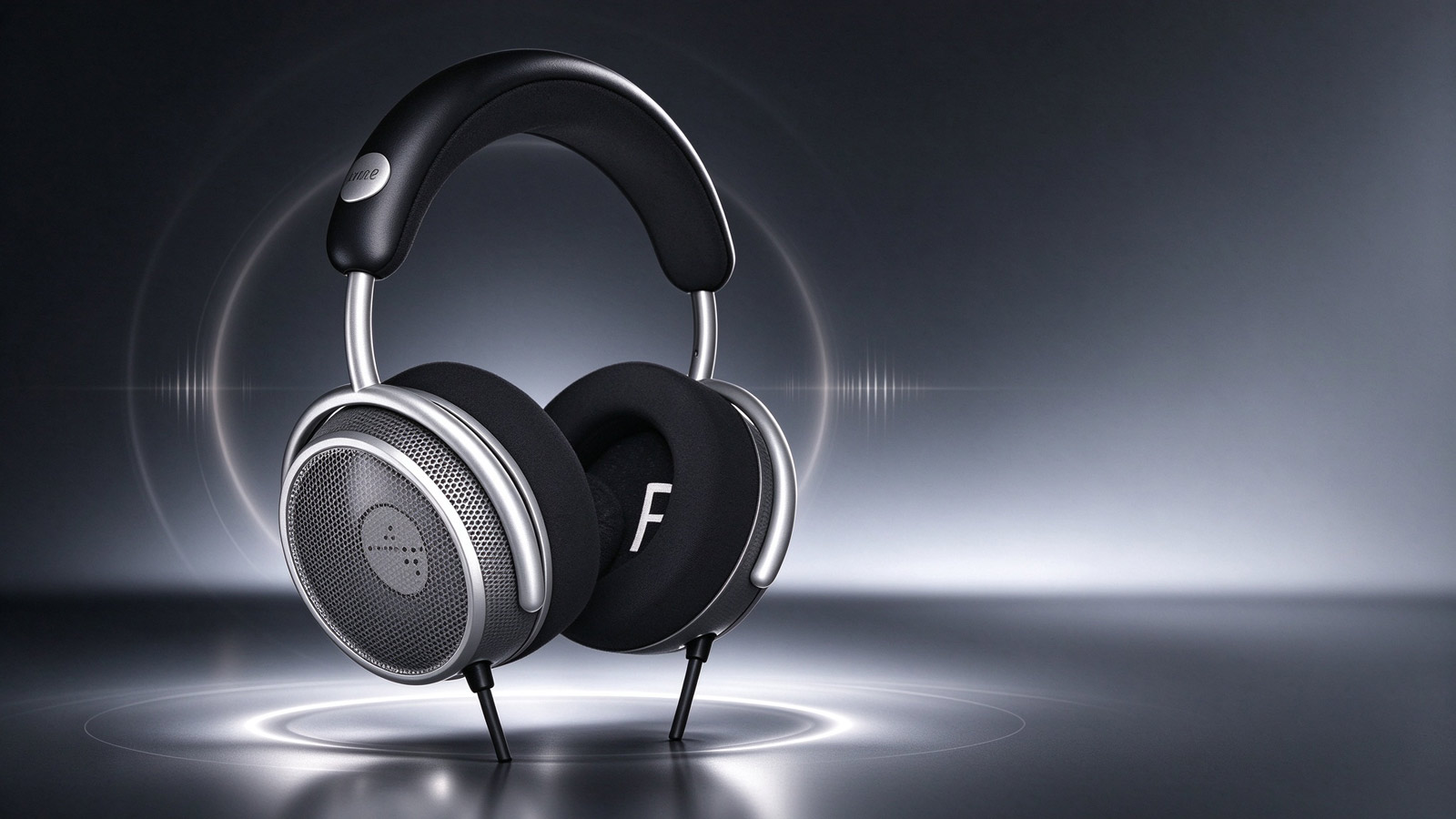
Axel Grell spent three decades designing the headphones audiophiles still argue about. His first project at Sennheiser was the HD580; his portfolio grew to include the HD600, HD650, HD800, IE800, and the $59,000 Orpheus electrostatic system. In 2019 he left, and in 2020 he founded a company carrying his own name — a family business with one stated mission: put the best possible sound into products at prices ordinary listeners can reach. The launch product, a $199 true-wireless earbud called TWS/1, was engineered like a reference headphone and criticized like one. Five years on, the second act is the OAE2, an open-back headphone that puts its drivers in front of your ears instead of on top of them.
The HD580 Was His First Assignment, Not His Peak
Grell's origin story within audio starts almost comically early. He built his first loudspeakers at age twelve, earned an engineering degree in Germany, and joined Sennheiser in 1991 — where the first assignment handed to a young acoustic engineer was the HD580, the open-back headphone that would define neutral reference sound for a generation. He calls the HD800, released in 2009, the hardest and most rewarding project of his career: a ring-radiator driver built from scratch, years of development, and a design still considered the benchmark for soundstage width. The IE800 in-ears and the HE-1 Orpheus electrostatic system followed. By the time he left in 2019, after nearly thirty years, his name was spoken "in hushed tones" in audiophile circles, as Forbes put it.
Consulting First, Then Betting the Family Name
The immediate post-Sennheiser years were deliberate. Grell ran an independent consulting practice advising well-known audio brands — he has said he enjoyed the variety — while quietly deciding what his own company should be. The founding idea, published on the brand's site, is disarmingly plain: "It was time to create our own headphones." Grell Audio launched in 2020 as a young, family-run firm with Grell himself as chief engineer, backed by a business model he insists is itself a technology choice — selling online only, shipping in simple economical eco-friendly packaging, and redirecting every dollar that would have gone to retail markup into acoustics. The founder's framing: create the best possible acoustic experience for the money, whatever the price point.
TWS/1: Reference DNA in a $199 Bud
The October 2021 debut product made its ambition obvious. The TWS/1 pairs a custom 10.1mm dynamic driver — matched to within one decibel of tolerance, the kind of spec normally quoted for studio monitors — with an unusually strong codec suite (aptX, aptX Adaptive, LHDC, AAC, SBC), 34 hours of battery with ANC on, wireless charging in an aluminum case, and Bluetooth 5.2 with class-leading range. Grell's personal stamp is the NAR feature: Noise Annoyance Reduction, a patent-pending psychoacoustic mode that scans the ambient noise spectrum and reshapes the ANC so that strong low-frequency cancellation does not make remaining high-frequency hiss more audible. Reviews from PCMag, Engadget, and Trusted Reviews converged on the same verdict — the sound is genuinely excellent for the price, competitive with earbuds costing far more, though the ANC itself is mid-pack and early firmware needed updates.
The Measurements Fights He Chooses to Have
A Grell product cannot be reviewed without measurements, and the measurement community has not been kind. SoundStage's lab objected that the SoundID personalization partnership, which plays A/B comparisons to build a custom EQ profile, then boosts average output by nearly six decibels — making "before and after" impressions meaningless without level matching. Audio Science Review's forum measured channel matching notably worse than the claimed tolerance, with one critic concluding Grell should "stick to tuning headphones." Defenders note the TWS/1's native response sits close to the Harman target curve and that its distortion performance was superb. The honest summary: these are credible, well-engineered earbuds whose marketing claims have occasionally outrun their lab results — a tension the founder, thirty years deep in measurement culture, seems entirely comfortable debating publicly.
OAE1: A Driver Where Ears Actually Are
The 2024 collaboration with Drop marked Grell's return to over-ears — and his most radical industrial-design statement. The Drop + Grell OAE1 Signature, limited to 1,000 units at $349, places its dynamic drivers forward of the ears, angled so that the ears' own geometry folds the soundfield into the ear canal rather than firing drivers directly at eardrums. Grell's explanation is physiological: "Our ears are as individual as fingerprints, so when you put a driver right on top of the eardrum like most headphones do, it will sound good for some and bad for others. By positioning the driver in front of the ear, we're bringing the natural geometry of the ear into the sound-forming process, allowing the brain to equalize the sound." The open-around-ear enclosure minimizes reflections and pressure, aiming for the stereo image of near-field studio monitors. Frequency response runs 6–44,000 Hz with 0.05% distortion at 1 kHz — studio numbers at a community price.
OAE2 and the Hannover Partnership
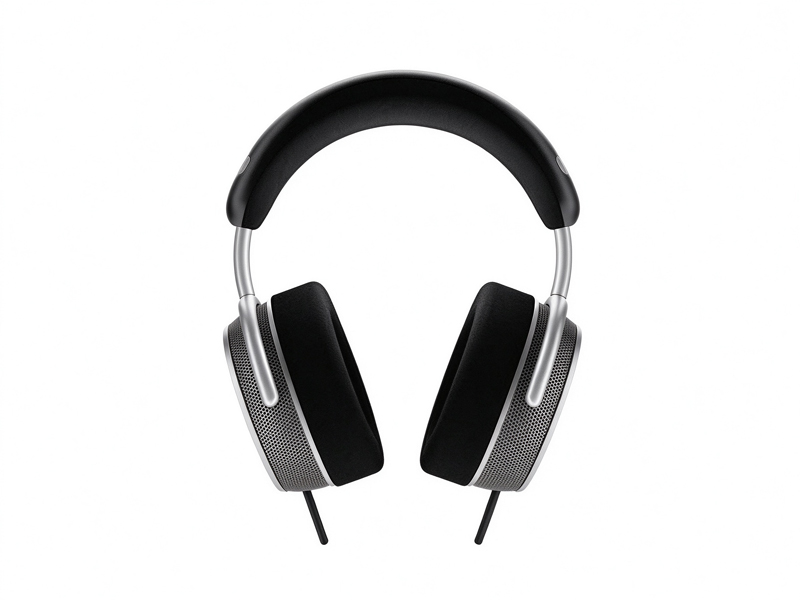
On March 31, 2026, the second generation arrived: the OAE2, priced at $599, built around what Grell calls Front-sided Sound Field Modulation — developed with the Leibniz University Hannover. The concept extends the OAE1 idea to its logical conclusion: 40mm bio-cellulose dynamic drivers mounted fully in front of the ears at a steep angle, behind a German-made stainless steel mesh, feeding an open baffle twice the area of comparable headphones. The frame mixes steel and polyamide to control resonance, with damping that pushes low-frequency resonance down to 40 Hz. Early 2026 reviews call it neutral, natural, and among the most convincing "speakers in front of you" presentations available at the price — the closest commercial realization yet of Grell's long-stated belief that headphones should disappear into the music.
The Store Sells Philosophy Before Product
The Shopify storefront is as minimal as the packaging: the OAE2 and TWS line, accessories, and a brand story told through the founder's Sennheiser legacy. There are no lifestyle campaigns, no athlete partnerships, no colorway churn — Grell's bet is that a name earned over thirty years plus measurable engineering is the entire funnel. The approach worked with the Drop community — both the TWS/1 and OAE1 launched through exclusive pre-orders there — and the direct-only model keeps prices at what the founder considers honest levels. For a shopper weighing it against bigger brands, the pitch is simply inverted: you are not paying for a brand; you are paying for the person whose last name is on the box, and his three decades of listening.