One love, recycled plastic: inside the house of marley sound experiment
Official homepage: https://houseofmarley.com
Most headphone brands compete on specs. House of Marley competes on values — and has since 2010, when it launched in collaboration with Bob Marley's family to carry the reggae legend's ethos of unity and earth-love into electronics. Fronted by his son Rohan Marley, the brand builds headphones, earbuds, speakers, and turntables from bamboo, FSC-certified wood, REGRIND recycled silicone, and an upcycled fabric spun from organic cotton, hemp, and plastic bottles. Fifteen years in, with Sol Republic under the same roof and over 340,000 trees planted through Project Marley, it remains the audio industry's most literal attempt to sell sustainability as sound.
A Family License Became an Audio Company
The company did not begin as Rohan Marley's idea alone. It was created in collaboration with the Marley family around 2010 to extend Bob Marley's legacy beyond music into products people use daily, with Rohan — a former University of Miami linebacker, Marley Coffee founder, and serial entrepreneur — signing on as director and the brand's public face. The family's involvement was structural, not cosmetic: the values encoded in the products — respect for the earth, craftsmanship, communal joy in music — are drawn from how Bob Marley actually lived, as Rohan tells it, "a unity with people, the earth, and music." Industry veteran Alon Kaufman has steered the company as CEO while the family anchors its identity.
Three Signature Materials Define Every Product
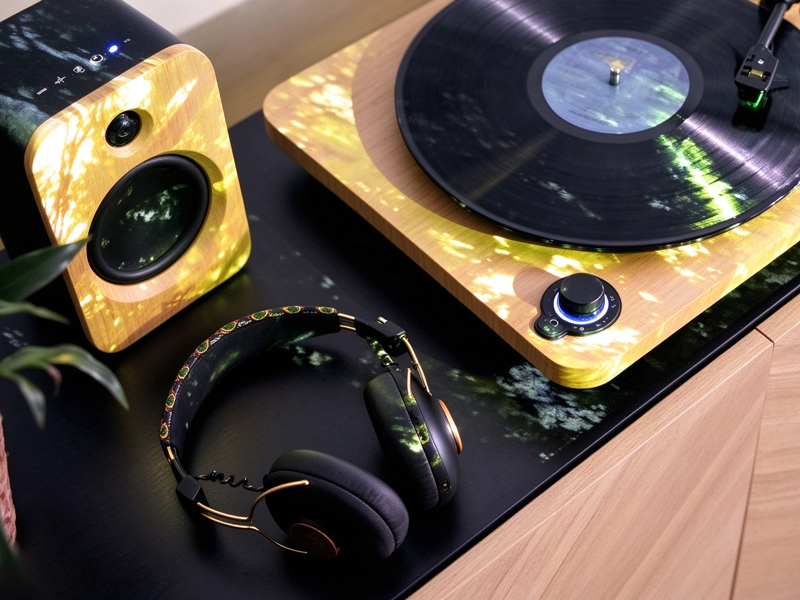
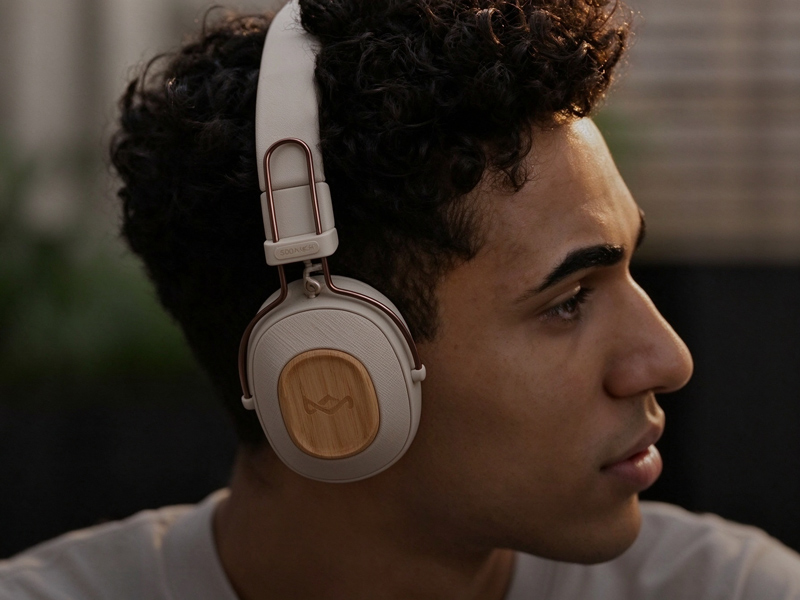
House of Marley's sustainability is material, not offset-based. The first signature is FSC-certified bamboo and wood, used in earcup accents, speaker enclosures, and turntable platters — chosen for stiffness, warm acoustic character, and renewability. The second is REWIND fabric, an exclusive textile woven from roughly 30 percent reclaimed organic cotton, 30 percent reclaimed hemp, and 40 percent recycled PET, used in headbands, grilles, and carry bags. The third is REGRIND, a silicone compound reclaimed from post-industrial and post-consumer scraps, molded into earbud tips and earcups. Recycled aluminum frames the housings, sawdust-and-polymer composites replace virgin plastic in earbud bodies, and everything ships in 100 percent recyclable, plastic-free packaging.
The Line Runs From $35 Buds to Bookshelf Speakers
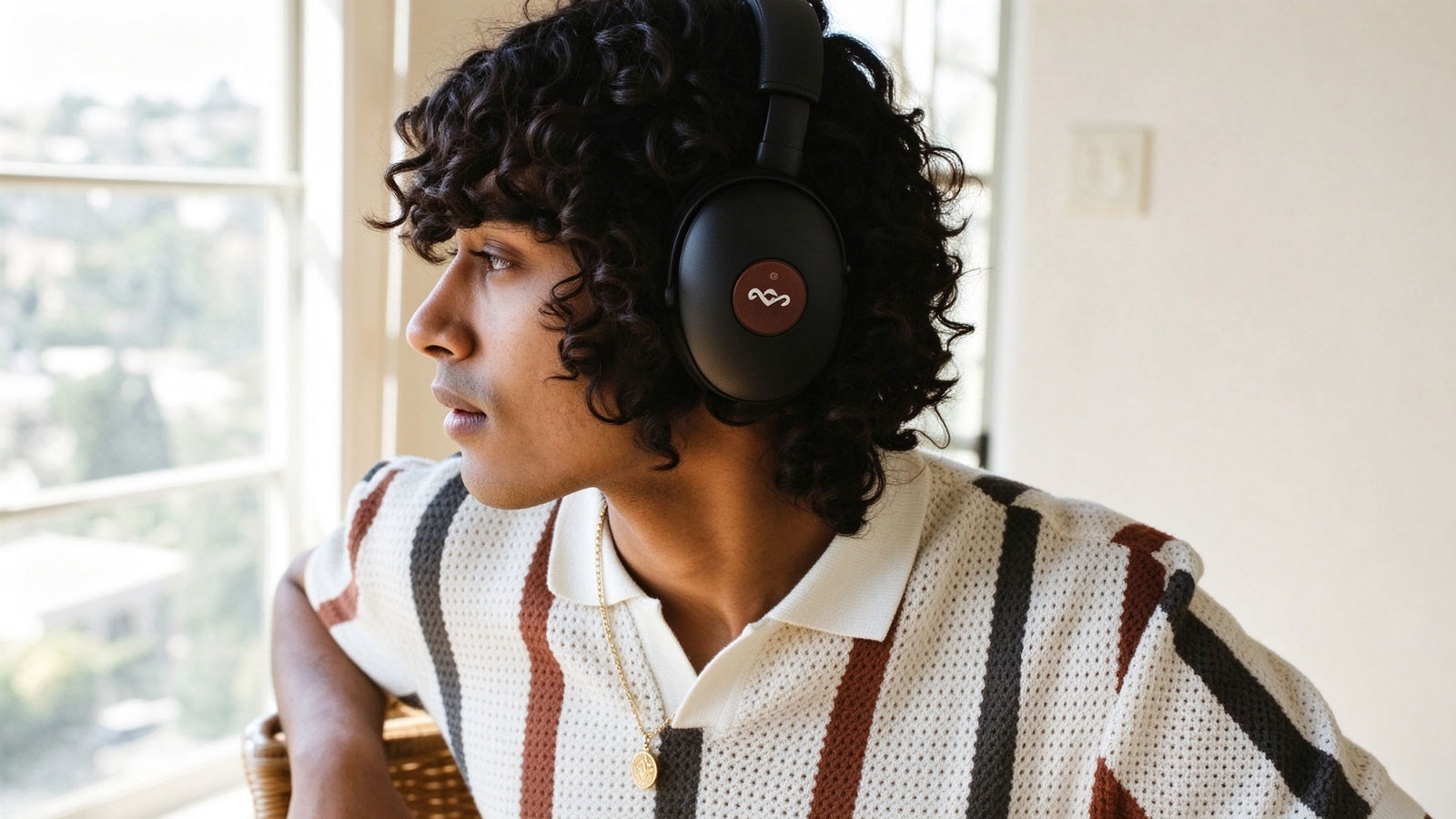
The catalog is deliberately mid-market. Headphones span the Positive Vibration over-ear series — the Frequency model offers 34-hour battery life and 40mm drivers for around $120 — the Exodus ANC with its marathon 80-hour battery, and the sport-focused Uprise wireless in-ears at $90. The true-wireless range includes the bamboo-bodied Liberate Air and the Champion 2, which pairs 35-hour total playtime with a Qi-charging case and app-based EQ. Around the headphones sit Bluetooth speakers like the Get Together 2, the Duo bookshelf pair, the Stir It Up turntables, and a family of charging accessories — most products landing between $35 and $200, a conscious decision to keep conscious consumption affordable.
Project Marley Funds Forests and Oceans
The give-back program gives the brand its third leg. Project Marley directs a share of proceeds — reported at around 5 percent of profits — to global reforestation through One Tree Planted, with more than 340,000 trees planted since 2017 across projects in California, Canada, Indonesia, and beyond, and to ocean preservation through the Surfrider Foundation. Packaging is plastic-free and recycled-fiber throughout. For shoppers who treat sustainability claims with justified skepticism, the program's longevity and named charity partners offer more verifiable substance than most competitors' vague "green" marketing, even if the brand does not publish full lifecycle audits.
Warm Sound Tuned for Reggae Roots
The house sound signature matches the material story: warm, bass-forward, and forgiving, tuned to make long listening sessions pleasant rather than analytically precise. Reviewers consistently note the Positive Vibration line's big, bold low end and comfortable fit — the Frequency weighs just 212 grams with moisture-wicking fabric on the headband — while conceding that treble detail and noise cancellation trail Sony or Bose at similar prices. The honest positioning is lifestyle audio with character: custom-tuned 40mm drivers, decent isolation, and call-ready mics, chosen by buyers who prioritize vibe and values over spec-sheet supremacy.
Sol Republic Sits in the Same House
Ownership breadth distinguishes the company operationally. House of Marley's parent also owns Sol Republic, the youth-oriented headphone brand known for bold colorways and celebrity collabs, letting the group serve two audiences — eco-conscious lifestyle buyers under the Marley name, streetwear-leaning listeners under Sol Republic — from one infrastructure. The arrangement gives the Marley brand retail muscle and shared engineering it could not sustain alone, while keeping its sustainability narrative cleanly separated from Sol Republic's more conventional plastics.
Retail Everywhere, Direct at Home
Distribution mirrors the mid-market strategy: Amazon carries the full range, regional partners stock it from Australia to Scandinavia, and the Shopify store serves as brand home. The direct channel leads with the sustainability story — materials pages, Project Marley counters, tree-planting tallies — before price, and sweetens first orders with newsletter discounts. International buyers get localized storefronts in several markets, a rarity for a brand this size. For a company that began as a family licensing exercise, the store reads like a mission statement with a checkout button: every product page names its materials, its charities, and the ancestor whose name is on the box.
Fifteen Years of Preaching Without Greenwashing
The brand's longevity is itself the argument. Launched before "sustainable tech" was a shelf category, House of Marley has outlasted a decade of greenwashing cycles by never pretending to be more than it is: mainstream-priced audio gear made measurably better for the planet, with named materials, named partners, and a named percentage of profits. It is not audiophile gear, and it does not try to be. It is the rare electronics brand where the story behind the product — one love, one planet, recycled plastic bottles — is as engineered as the driver inside it.