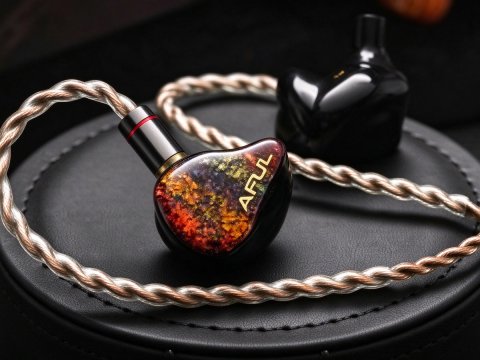
The orca on your ear: how hidizs tuned a whale into an IEM

Official homepage: https://www.hidizs.com
Hidizs spent its first years as the kind of company audiophiles knew but never talked about at dinner: a Shenzhen brand making $99 digital audio players and $70 USB dongles that quietly punched above their price. Then, in the middle of the 2023 "planar war" — the industry pile-on of affordable planar-magnetic in-ear monitors — the brand released the MP145, a $159 set built around an enormous 14.5mm planar driver shaped like a whale's tail, in partnership with the Whale and Dolphin Conservation charity. Community reviewers called it the planar that finally sounded soulful. Three years later, the MP145 Pro has made the formula near-neutral, and a tenth-anniversary Golden Titanium edition has capped the line at $339.
A Decade of Dongles Before the Whale
The company's origins are modest and distinctly Shenzhen. Founded in the early 2010s, Hidizs built its reputation on value digital audio players — the AP80, a tiny $99 player that won a loyal following through crowdfunding around 2018, and its successors — plus the S-series of USB-C DAC dongles, like the S9 Pro and S8 Pro Robin, that reviewers treated as the default budget answer to the question "how do I make my phone sound better?" This ecosystem history matters, because it explains the MP145's design brief: the IEM was engineered from day one to sound complete when plugged into a $70 dongle, with 104 dB sensitivity and 30-ohm impedance that any phone accessory could drive. The company spent a decade learning exactly what its entry-level source hardware could and could not do, then built an IEM to match.
The 2023 Planar War Needed a Naturalist
Between 2021 and 2023, planar-magnetic IEMs went from exotic to ubiquitous, and the market developed a stereotype: fast, analytical, exciting — and a bit mechanical, with shallow-sounding bass and treble that could turn glassy. Hidizs entered the fight in 2023 with the MP145, a single 14.5mm planar — one of the largest drivers ever fitted to an IEM at the time — tuned to the H-2019 target curve but voiced, in the brand's words, in "Hidizs style." The community response was immediate and unusually warm for a planar: one reviewer wrote that he "did not know vocals and pianos could sound so life-like" on planar technology, hearing the speed of his Fostex T50RP combined with the soulful mids of his NAD HP50. Another gave it a 9.7 sound rating and called it the best planar under $250 for soundstage. The planar stereotype, at least at this price, had been broken.
Whale Tails Are Acoustic Architecture, Not Decoration
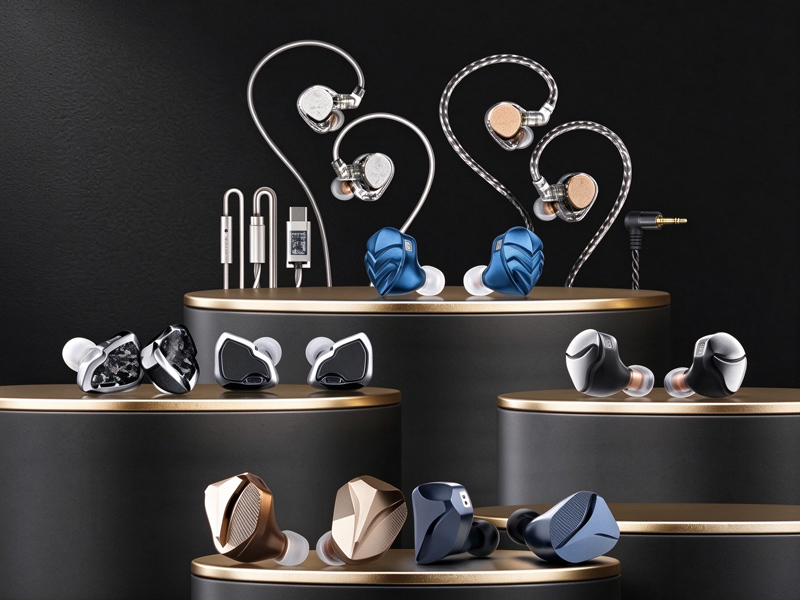
The design is the engineering. The MP145's faceplates are sculpted into the fluke of a whale's tail with rorqual pleats — an aesthetic chosen in partnership with the Whale and Dolphin Conservation (WDC), the UK charity for which the product line raises funds and awareness. But the bionics are functional: hidden breathing holes in the shell vent the enormous planar driver's backwave, shaping the semi-open presentation that reviewers credit for the IEM's unusually vast, three-dimensional stage. The fully symmetrical magnetic circuit arrays seven N-series neodymium magnets per side. Even the name carries the theme — the original colorway was nicknamed "Orca." Buying a pair supports marine conservation messaging; wearing one signals that you read the spec sheet.
Three Filters for the Undecided Listener
Rather than choose one voicing, Hidizs ships the MP145 with screw-on pneumatic tuning filters that shift the balance between bass weight and treble air. Reviewers found the differences tasteful rather than transformative — a modest bass/treble tilt across the three options — but the inclusion doubles as a statement of philosophy: the listener, not the brand, should make the final call. The filter threads are standard, spare filters are available from the company (one reviewer who lost his filter bag wrote in and received replacements free, alongside a set of the brand's sea-anemone silicone tips — a small story the community repeats more often than any advertisement). The MP145 Pro, released in 2026, ships with three filters as well, including one that pushes the signature toward near-neutral with mildly elevated treble.
Golden Titanium for the Tenth Anniversary
February 2025 brought the commemorative edition: the MP145 Golden Titanium, limited to 199 pairs at $339, marking roughly a decade of Hidizs. The shell upgrades from aviation aluminum to Grade 5 titanium with a gold-plated finish, and the tuning moves deliberately in the other direction from the Pro — warmer, more laid-back, trading the original's treble sparkle for density and luxury. Headfonics' review scored it 8.3, praising the unique design and filter flexibility while noting the weight of the titanium shells and a treble that now errs on the polite side. As anniversary pieces go, it is a coherent one: the same whale, a decade older, swimming slower.
MP145 Pro: Same Whale, Sharper Mind
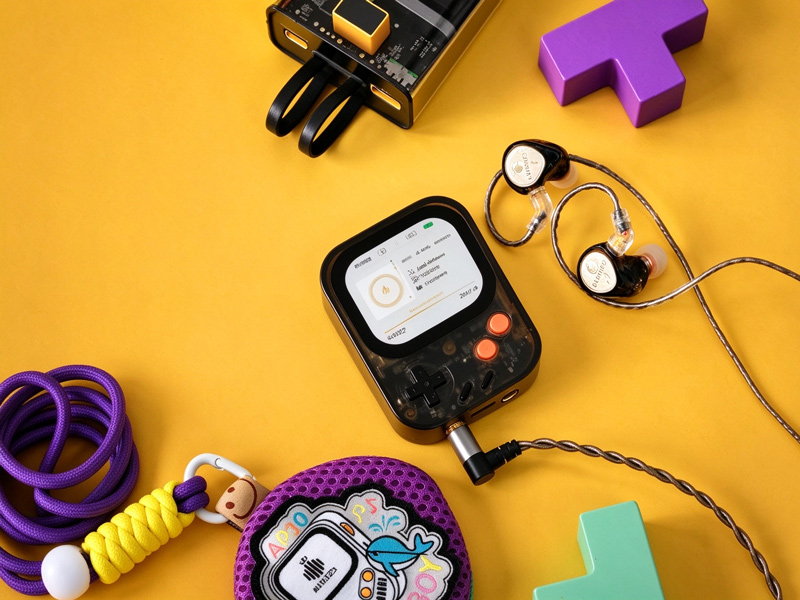
The March 2026 MP145 Pro ($169 Kickstarter, $209 MSRP) keeps the whale-tail industrial design but re-engineers everything inside. The driver gains 20 to 30 percent more copper in its traces, the magnets step up from N52 to N54H neodymium in a 7+7 array with 40 percent more magnetic flux, and the result measures at 0.05 percent THD across a 20 Hz–40 kHz range. Early reviews converge on a near-neutral, subtly V-shaped signature — clean and fast as a planar should be, but with a midrange presence that keeps vocals forward and a treble that extends without fatigue. Headfonics awarded it 8.4 with a reader score of 8.1; mobileaudiophile went further, whispering that it has "the best planar stage available under $250." The package rounds out with a 6N silver-plated single-crystal-copper modular cable (3.5mm and 4.4mm plugs), a genuinely good carrying case, and the anemone tips.
The Honest Cons: Size, Peaks, and Fit
Every strong consensus has a shadow. The MP145 shells are enormous — milled aluminum built to house a 14.5mm driver — and reviewers with smaller ears consistently flagged fit as the deciding factor, some finding the seal precarious and the cable earhooks reluctant to stay put. The treble carries a peak around 5–8 kHz depending on insertion depth, which can show an edge on already-bright recordings; one reviewer advised pairing with smoother sources. Some owners recommend burn-in before judging, and the Golden Titanium's added weight drew complaints. None of these caveats sank the product — but they are the difference between the MP145 being a universal recommendation and a "try before you buy" one.
The Store Sells an Ecosystem, Not Just IEMs
The Shopify storefront is the hub of a deliberate ladder: dongle DACs at the bottom, the MP145 family in the middle, anniversary editions at the top — every product designed to plug into the next. MP145 pages lead with sensitivity and impedance numbers alongside the WDC partnership, making the "works with your dongle" pitch without saying it. Customer service anecdotes circulate through the community as a soft differentiator — free replacement filters, tips thrown in — and the product line's marine-conservation angle gives the brand a story that pure spec-chasing competitors cannot copy. For a company that spent a decade as a footnote in budget DAP reviews, the whale has turned out to be a very good idea.