Therapist by day, kitchen chemist by night: the camille rose origin story

Official homepage: https://camillerose.com
Janell Stephens never set out to build a beauty empire. A licensed therapist and mother of five in Macon, Georgia, she started mixing remedies in her kitchen in 2010 when her children developed severe eczema and every doctor offered prescriptions she considered temporary fixes. She launched Camille Rose in 2011 — named after her grandmother — with skincare staples like diaper-rash cream, and added hair care the following year. Fifteen years on, the brand is America's number-one Black woman-owned textured hair care label by Nielsen rankings, stocked across Target, Walmart, CVS, and international shelves, with its bestsellers still mixed in small batches using food-grade ingredients.
A Dermatologist's List Started Everything
The founding tool was not a business plan but a shopping list. After watching her kids struggle with eczema and diaper rash, Stephens consulted a dermatologist who gave her a list of ingredients to avoid and alternatives to use; within two weeks of following it, her children's skin cleared. That result sent her down a rabbit hole of research — studying under an herbalist, learning to read labels, and questioning why anything applied to skin or hair should contain ingredients unsafe to absorb. Her guiding principle became the brand's founding promise: what you put on your body should be good enough to go in it. She credits her therapy background with shaping her leadership, arguing that listening and empathy are the core skills of both counseling and brand-building.
From Diaper Cream to Curl Milk
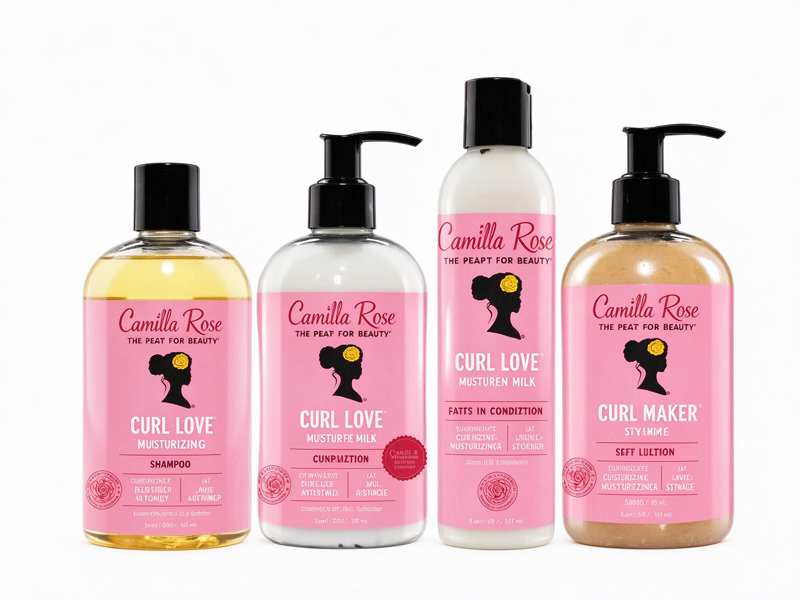
The 2011 launch was skincare first — a natural diaper-rash cream and a nursing cream for mothers — because those were the problems in front of her. Hair care followed in 2012, when she realized her children's hair needed the same food-grade nourishment as their skin. Two of those early formulations became permanent bestsellers: the Curl Love Moisture Milk, a rice-milk-infused leave-in that detangles and elongates curls, and the Almond Jai Twisting Butter, a sweet-almond-and-honey blend that remains a twist-out holy grail in the natural-hair community. The naming convention set the tone — ingredients listed like a recipe, products named for what they feel like rather than what they claim.
A Trade Show Accidentally Built the Company
There was no pitch deck and no investor outreach in the early years — just Facebook posts, local hair and gift shows, and a website that started taking orders organically. The inflection point came at a beauty trade show, where Stephens was displaying a small lineup still made and packaged in her home. A Target buyer stopped at the booth, heard the story, and invited her to meet the buying team. The meeting produced an order for 100 stores. Stephens has said she understood almost nothing of the retail language used in that room — she pretended she did, then went home and Googled every term. What she did understand was her own limits: she accepted only the volume she knew she could hand-produce.
One Year in Target, Zero Profit
For the first year supplying Target, Stephens continued handcrafting every unit herself, with her dining room doubling as the production floor. The economics were punishing — she bought drums and pallets of raw ingredients and shipped them to her lab because contract manufacturers refused to source her unconventional natural materials. Camille Rose spent its first year in Target without turning a profit, but the structure held. Her stubbornness on formulation was absolute: when chemists pushed back on food-grade ingredients or suggested cheaper synthetics, her answer was that she would never put her name on a product she would not use herself. She eventually found a laboratory partner willing to honor that philosophy, and the pair are still working together more than a decade later.
Five Collections, Forty-Plus Recipes
The product architecture reads like a pantry. The Coconut Water collection hydrates with aloe and tropical butters; the Rosemary Oil line targets strengthening and growth with castor and peppermint; the Signature collection anchors the range with the Curl Maker jelly, Curl Love shampoo and conditioner, and the Algae Renew Deep Conditioner built on blue-green algae and mango butter; the Almond Jai family handles twisting and sealing; and dedicated kids' and scalp-care items round out the shelf. Prices run roughly $9 to $22 — squarely in the mass-tige band that lets customers build a full routine without sticker shock. The gourmet framing is literal: caramel cowash, brown butter melts, honey nectar treatments. Everything is vegan, cruelty-free, and made in small batches in the United States.
Nielsen's Number One, Built Without Venture Capital
Stephens' growth path matters in an industry where Black founders receive under three percent of venture capital. Camille Rose scaled on retail revenue and reinvestment alone for its first decade-plus, becoming what Nielsen data identifies as the top Black woman-owned textured hair care brand in the United States. The retail map now spans Target, Walmart, CVS, Walgreens, and Duane Reade in the US, plus Shoppers Drug Mart and London Drugs in Canada, Amazon, and specialty international distributors that carried the brand into Europe. By industry estimates the line reaches hundreds of thousands of retail locations — achieved while Stephens remained majority owner and CEO, a counter-narrative to the recent acquisition wave among textured-hair brands.
One Step Matters: Sustainability as a Small-Business Brief
In 2021 the brand announced "One Step Matters," a multi-layered sustainability campaign developed with sustainability consultant Dr. Tanya Rawal. The framing was deliberately modest: small, attainable steps that other small Black-owned businesses could realistically copy, from packaging choices to sourcing, rather than net-zero proclamations the company could not yet honor. Community engagement follows the same pattern — Camille Rose runs elevated pop-up experiences for its devoted fan community (the brand calls them Rosettes), and Stephens frequently speaks to founders about the value of moving at your own pace. Her oft-repeated line on growth: innovation and consistency go hand in hand.
The Store Itself: Small-Batch Freshness, Afterpay, and International Reach
The Shopify storefront is the operational hub for freshness and community. Products ship directly from Georgia, with international shipping to markets underserved by the brand's retail partners, and Afterpay available on orders over $35. The blog doubles as an education channel — knotless braid tutorials, wash-day guides, ingredient explainers — maintaining the therapist's habit of teaching rather than selling. For a shopper comparing it with conglomerate-owned competitors, the differentiator is structural: recipes owned by their creator, small-batch production, and a supply chain short enough that the person whose name is on the label still approves every batch.