He tore apart his own earphones for love: inside 64 audio's vancouver lab
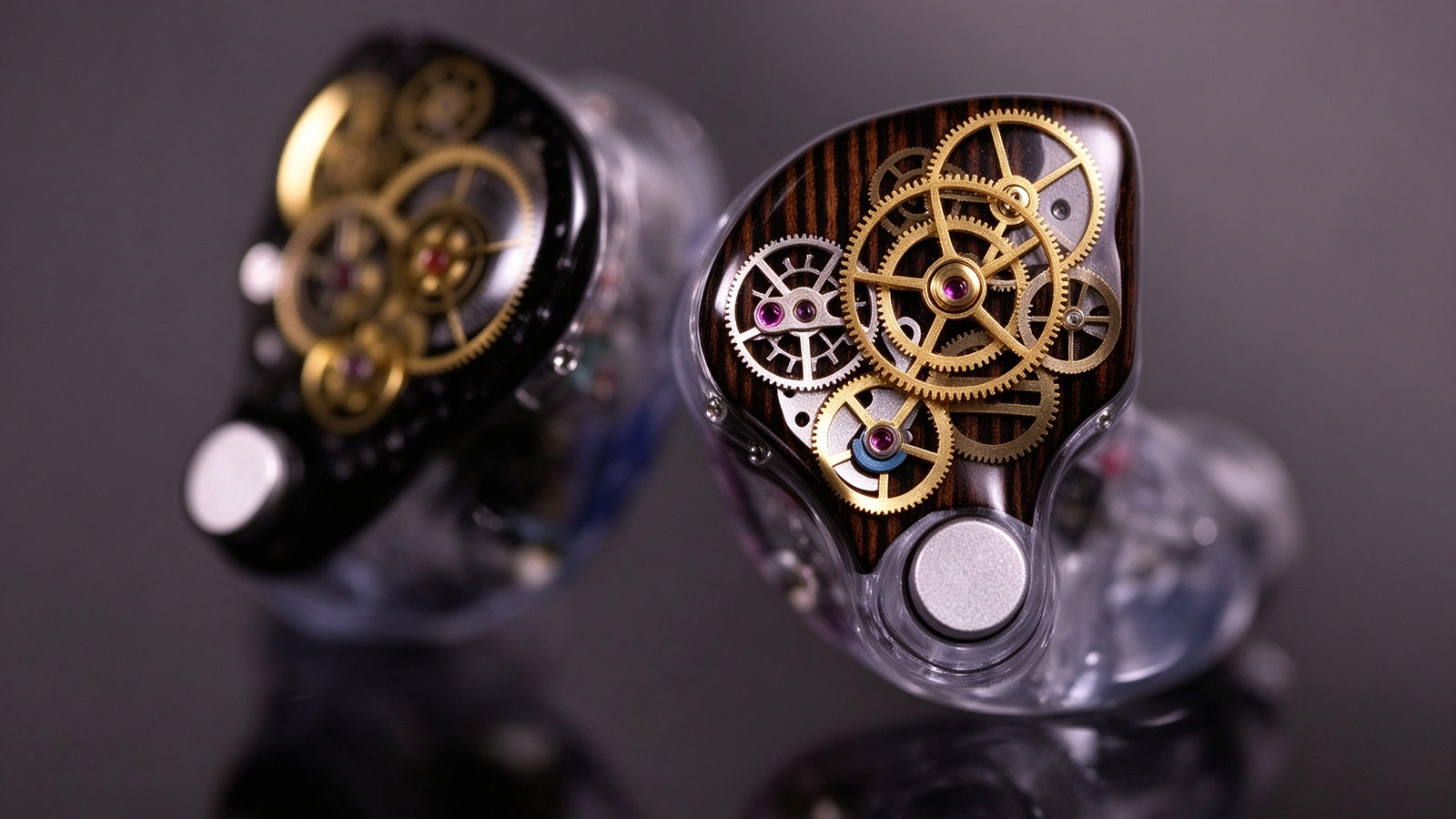
Official homepage: https://www.64audio.com
Vitaliy Belonozhko immigrated from Ukraine at age ten with his parents and seven siblings, worked jobs as humble as driving a bus, and founded what became 64 Audio in a Portland spare bedroom in 2010 — by dismantling his own pair of in-ear monitors to build a better-fitting set for his wife, Anastasia. Fifteen years later, the family-run company from Vancouver, Washington, supplies custom and universal monitors to Beyoncé, John Mayer, and Bon Jovi, sells in 92 countries, and holds the patents on several technologies that reshaped how in-ear monitors are built. This is the rare audio brand where the founding story and the engineering story are the same story.
A Bus Driver's Family Built a Monitor Empire
The Belonozhkos' American story runs through survival jobs and music. Vitaliy arrived in 1992 with limited access to music in his childhood, discovered electronics and synthesizers as a teenager — he built his own instruments at 14 — and eventually spent nearly two decades as a sound engineer for musicians and production companies in the Pacific Northwest. The company that emerged was never a solo act: Vitaliy's three brothers, Roman, Vlad, and Bogdan, all musicians and sound engineers, formed the core team. The family memoir on the brand's site describes taking whatever work was available, including driving buses, and holding together through "the density of blood and water." That family structure still defines the company, which employs between 70 and 80 people in Vancouver, Washington.
1964 Ears Started With One Custom Pair
The company began as 1964 Ears on July 16, 2010, and the first customer was Anastasia, Vitaliy's wife. Frustrated by the fit and sound of universal monitors, he pried open his own pair, harvested the parts, and built her a custom-fit set. Word spread through the Portland music scene, artists started asking for their own, and a basement operation became a business. The name was a nod to the golden era of recorded sound — the brand still cites the soulful, vintage sounds of the 1960s and 70s as its tuning influence, delivered through the most modern driver technology. In September 2015 the company rebranded as 64 Audio and crossed the Columbia River to Vancouver.
apex Is a Second Eardrum Inside Your Ear
The first of the company's landmark technologies addresses a problem every sealed earphone creates: pneumatic pressure. A fully sealed in-ear monitor traps air pressure against the eardrum, causing fatigue and, over long sessions, potential hearing strain. 64 Audio's apex — Air Pressure eXchange — is an open module with a viscoelastic foam filter that vents that pressure at a controlled rate. The company describes it as functioning like a secondary eardrum placed in the audio path before your own. The benefits compound: less fatigue, a wider, more open soundstage, and hearing protection — the reason the technology became standard across both the artist and audiophile lines.
tia Removed the Tubes Entirely
Conventional balanced-armature drivers fire their sound down a narrow tube into the ear canal, adding resonances and distortion. 64 Audio's tia system — Tubeless In-ear Audio — rebuilt the driver itself as an open-radiating design that vents directly into a single large acoustic bore, closer to how a loudspeaker behaves in a room. Combined with tia acoustic chambers that control the driver's behavior, the result is measurably lower distortion and a more lifelike treble. The tia Fourté, launched in 2017, was the first product to carry the full system and remains one of the most acclaimed universal monitors ever reviewed — the model that moved 64 Audio from pro-audio supplier to audiophile household name.
LID Makes One Sound Signature Survive Every Source
Professional musicians plug their monitors into wildly different equipment — high-output-impedance mixing consoles, wireless bodypacks, laptop interfaces — and most multi-driver earphones change their tonal balance depending on the source's output impedance. 64 Audio's LID, Linear Impedance Design, flattens the monitor's impedance curve so the intended sound signature survives whatever it is plugged into. For touring artists this is a reliability feature; for audiophiles it means a $2,000 monitor sounds the same from a phone dongle as from a dedicated amplifier. It is a pro-audio solution that quietly became an audiophile selling point.
Two Product Families, One Workshop
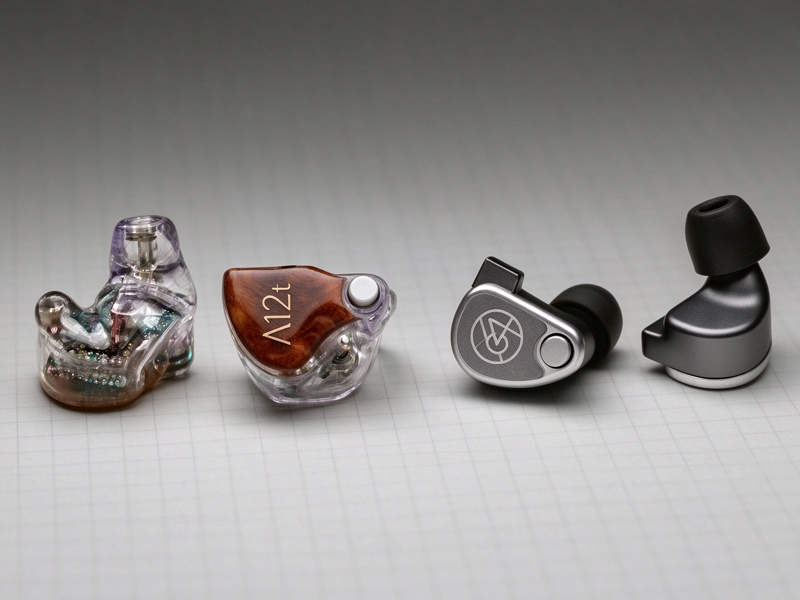
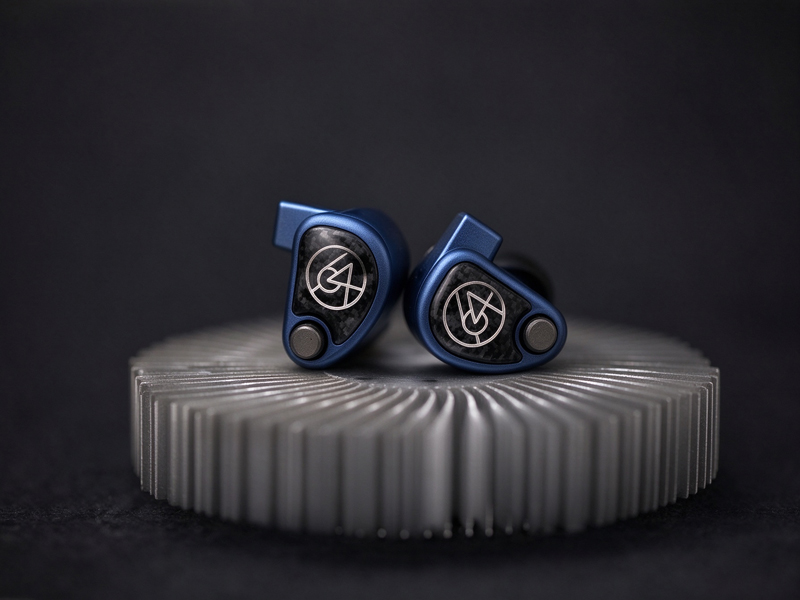
The catalog splits cleanly into custom and universal. The custom A-series — from the entry dual-driver A2e up to the A18s with eighteen drivers per side, sculpted from ear impressions using the company's 3D-Fit process — remains the gold standard for performing artists, priced from roughly $1,000 past $3,000. The universal U-series brings the same technologies to off-the-shelf shells machined from solid aluminum: the six-driver U6t at $1,299, the benchmark U12t, and hybrids like the Duo, a $1,199 open-design two-driver model voiced to feel like an open-back headphone. In 2025 the Aspire series pushed universal pricing down to a few hundred dollars for the first time, completing a range that now spans entry-level to flagship.
Patent Wars and the Cost of Being First
Being first has legal consequences. In 2019, 64 Audio won a patent decision defending its innovations, with Vitaliy publicly framing the fight as one for fair competition rather than exclusion: "One of 64 Audio's core strengths has always been innovation." The company has continued to patent aggressively around tia, apex, LID, and 3D-Fit, and its willingness to litigate has cemented its status as the reference boutique IEM maker — the brand others measure themselves against. The U12t in particular has spent years as the community's default benchmark for technical performance, cited in reviews of virtually every competing flagship.
The Workshop-to-Doorstep Experience
The Shopify store is the direct extension of the workshop. Universal models ship from Vancouver with the full accessory suite — TrueFidelity tips, apex modules in two strengths, detachable cable, hard case, and dehumidifier. Custom orders begin with an impression kit or a 3D ear scan at an audiologist, which the Vancouver lab turns into a sculpted shell in a few weeks. The site runs detailed technology explainers for each patent, artist testimonials from GRAMMY-winning clients, and a trade-up path from universal to custom. For a company that began with one improvised pair for one person, the funnel is remarkably intact: every order still ends at the same family-run lab where Anastasia's pair was built.