The internet decided this $35 earbud was king: kiwi ears' rise
Official homepage: https://www.kiwiears.com
No marketing department decided Kiwi Ears would succeed — a forum did. The Shenzhen-based brand, launched in the early 2020s under the Linsoul distribution umbrella, released a $35 single-driver earbud called the Cadenza whose 10mm beryllium diaphragm and honest Harman-adjacent tuning turned r/headphones, Head-Fi, and the budget-IEM review circuit into a volunteer sales force. Four years later, Kiwi Ears fields more than a dozen models from $35 to $350, has collaborated with the community's most influential reviewer, and holds what its parent calls a track record of honest tuning that the audiophile underground consistently respects.
Born in Shenzhen's Chi-Fi Ecosystem
Kiwi Ears did not emerge from a founder's garage story or a celebrity backing — it emerged from the most productive anonymous corner of the audio industry. Shenzhen's Chi-Fi scene, a dense cluster of driver factories, acoustic labs, and fast-turn manufacturers, has spent a decade flooding the sub-$100 market with astonishingly competent in-ear monitors. Kiwi Ears is the house brand built inside that ecosystem by Linsoul, the Guangzhou-based distributor that had spent years shipping other people's Chi-Fi to the West and decided to design its own. The brand's founding bet was characteristic of the scene: skip the story, spend the money on drivers, and let reviewers measure the result.
Cadenza: The $35 Benchmark Nobody Planned
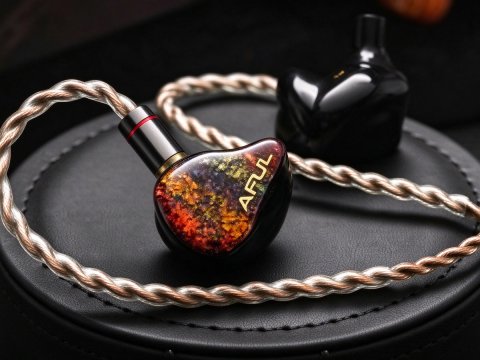
The product that made the brand arrived in late 2022. The Cadenza pairs a custom 10mm beryllium-coated dynamic driver with a 3D-printed resin shell, a detachable two-pin copper cable, and a tuning that tracks the Harman in-ear target with unusual discipline for the price. Reviewers reached for superlatives they normally reserve for $300 IEMs — one Audio Science Review listener scored it 7.8 out of 10 with a bass rating of 9, while Head-Fi threads crowned it "the absolute budget IEM king" after it beat the Moondrop Chu and CCA CRA in community shootouts. The recurring verdict: bass that is deep, clean, and punchy without bleeding into the mids, clarity well beyond the price, and a fit that works for most ears. The caveats were equally consistent — a slightly recessed midrange and a lower-treble energy that can fatigue at high volumes — but at $35, the Cadenza reset what an entry-level earbud was allowed to be.
Crinacle's Name Went on the $79 Singolo
The brand's second act borrowed credibility rather than building it. Crinacle — the anonymous Australian reviewer whose in-ear measurement database and rankings list are the community's de facto constitution — co-developed the Singolo, released in 2023 at $79. The collaboration's signature technology is KARS, the Kiwi Acoustic Resonance System: an internal labyrinth of tuned tubing that regulates airflow to the driver like a band-pass filter, tightening the sub-bass shelf, lowering distortion, and reducing in-ear pressure without conventional resistor-capacitor crossovers. The driver itself is a custom 11mm Japanese liquid-crystal-polymer unit chosen, in the brand's telling, for transients as crisp as metal diaphragms but without their metallic tinge. When the internet's most trusted ear lends his name and his tuning philosophy, the product inherits an audience.
Quartet Brought Switches to the Masses
Later in 2023 came the Quartet, a four-driver hybrid — dual dynamic drivers for bass, two balanced armatures above — whose defining feature was a pair of physical dip switches on each shell offering four tunings. Reviewers described the permutations as four different IEMs: the factory V-shaped setting for bass lovers, a balanced and mellow neutral, a brighter and more energetic voicing, and one configuration deemed too dark and bass-heavy to bother with. At roughly $110, the Quartet demonstrated that Kiwi Ears was learning the mid-range game — more technicalities than the Cadenza, refinement in the treble, and switchable personalities that budget competitors could not match.
The Ladder Grew One Rung at a Time
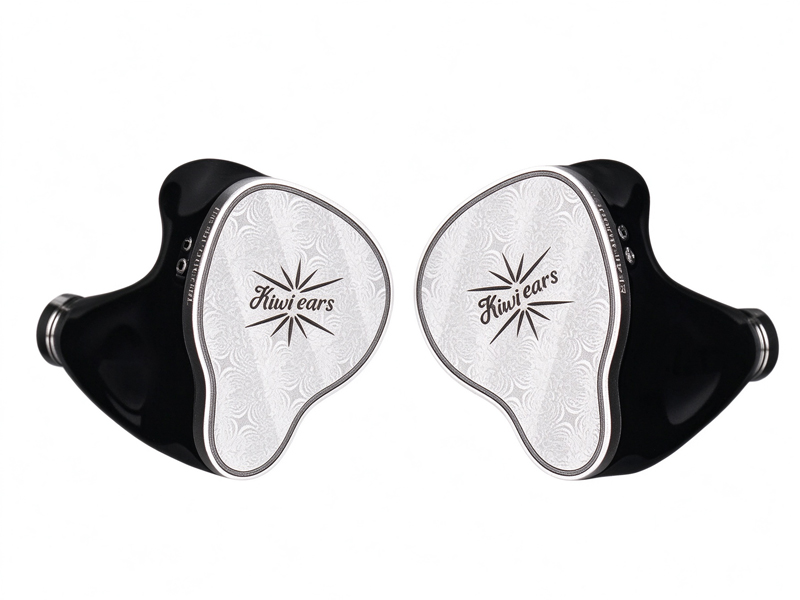
From 2024 onward, the catalog filled in with a new model roughly every quarter. The $59 Forteza triple-driver hybrid led the expansion; the $89 Canta fused a dynamic driver with dual planar magnetic tweeters; the $129 Airoso stepped up to five drivers with physical and RC crossovers; and the $199 KE4 arrived in 2025 with an isobaric dual-dynamic subwoofer system fronting a Knowles tweeter. The KE4 earned the strongest single review in the brand's history — one veteran critic called it "one of the most seductively tuned IEMs" he had heard at the price, praising its microdynamics and ability to make albums disappear into long listening sessions. Above it, the $219 Quintet stuffed four driver types into one shell — diamond-like-carbon dynamic, balanced armatures, a micro planar tweeter, and a piezoelectric bone conductor for air and microdetail — while the eight-driver Orchestra Lite closed the IEM ladder at $249.
Beyond the Canal: Aether, Atheia, and Headphones
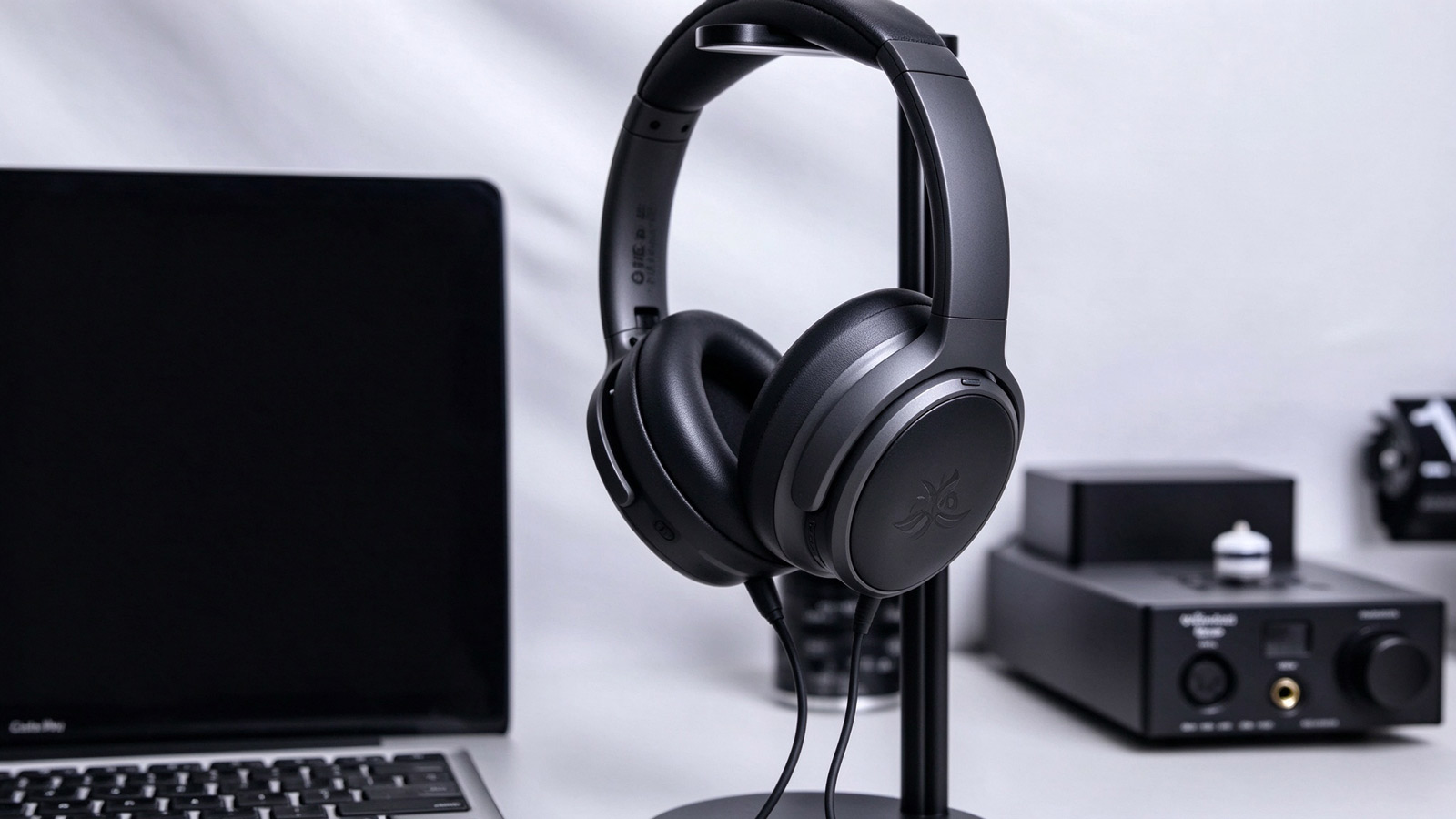
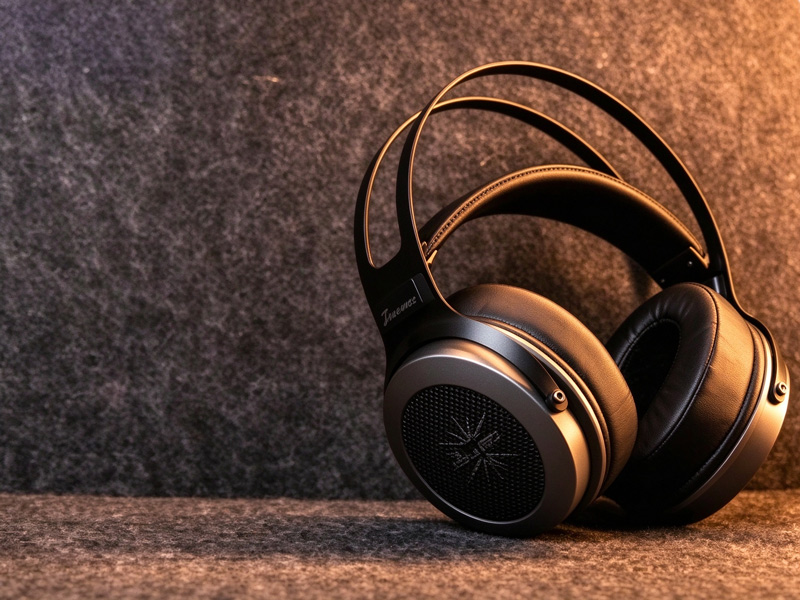
The brand's most recent expansion breaks out of the in-ear format entirely. The Aether, priced around $170, packs a 15.3mm planar-magnetic driver into an IEM shell with strong early community scores. The Atheia goes further — a full-size 50mm dynamic over-ear headphone at $349, the company's first circumaural and its most direct challenge to the established budget-headphone order. The moves signal confidence: a brand born on $35 earbuds now believes its tuning reputation can carry a product three times the price of its former flagship, competing against names like Sennheiser and Philips in the entry-audiophile over-ear bracket.
Honest Tuning as the Brand's Entire Marketing
What the community consistently credits — and what Linsoul itself claims — is not perfection but honesty. Kiwi Ears tunes to measurable targets, publishes specifications, ships 12-month warranties, and accepts the measurement-driven criticism that defines Chi-Fi culture. When the original Cadenza's staging limits surfaced in reviews, the answer was not defensiveness but the Cadenza II at $50, explicitly addressing the shortcomings. The Singolo was not universally loved — one prominent review found its frequency response too flawed despite excellent driver quality — and the brand let that criticism stand in public threads without astroturfing. In a category riddled with paid placements and specification theater, a distributor-backed brand behaving like an open-source project has turned out to be a durable strategy.
The Store as Community Front Door
The Shopify storefront is built for the way Chi-Fi actually gets bought: every model page leads with the driver architecture and tuning intent, prices sit under $350 across the board, and the catalog is organized as a ladder — Cadenza at the bottom, Atheia at the top — so a first-time buyer can climb within one brand. Regional partnerships extend the reach where direct shipping is awkward — Headphone Zone in India co-branded its own Cadenza edition with an exclusive kaleidoscopic faceplate — and Amazon carries the hero SKUs for buyers who want next-day delivery. For a company whose entire reputation was earned in forums, the store is less a sales funnel than a front door into a conversation the internet started without them.