The man who put music in your ear canal: etymotic's 43-year story
Official homepage: https://www.etymotic.com
In 1991, a small Illinois acoustics laboratory released the ER-4 — the first noise-isolating, high-fidelity earphone ever made — and in doing so invented the product category now worth billions: the in-ear monitor. Etymotic Research was founded in 1983 by Dr. Mead Killion, an audiologist and inventor who spent over twenty years at Knowles Electronics before building his own company in Elk Grove Village. More than a hundred patents, a Grammy-adjacent legacy in hearing science, and 43 years later, the brand is still the reference point for what accurate sound should be — though the deep-insertion fit that makes it possible remains as polarizing as ever.
True to the Ear, in the Original Greek
The name is the mission statement: Etymotic, from the Greek, means "true to the ear." Killion founded the company in 1983 alongside Edwin DeVilbiss with a deliberately unglamorous purpose — designing research instruments that could accurately detect and assess hearing loss. The first products were not for consumers at all: the ER-1, ER-2, and ER-3 insert earphones, invented in 1984, were tools for diagnostic testing and precision auditory research. That clinical origin matters, because it explains everything about the company's later consumer products: they are hearing instruments first, lifestyle accessories never.
Knowles to Elk Grove: The Killion Pedigree
Mead Killion's path to the ear ran through mathematics and medicine. Born in Woodstock, Illinois in 1939, he earned bachelor's and master's degrees in mathematics before completing a PhD in audiology at Northwestern University, then spent more than twenty years as a design engineer at Knowles Electronics — the company whose miniature microphones and balanced-armature receivers powered the hearing-aid industry. Hugh Knowles personally supported Killion when he left to found Etymotic in 1983, and the relationship later led the Knowles family to endow Northwestern's hearing center. Killion's contributions ran far beyond earphones: the K-AMP hearing-aid circuit he co-developed in the 1990s became one of the most widely implemented designs in the industry. He remained active until his death on November 3, 2025, aged 86.
ER-4, 1991: The Earphone Category's Big Bang
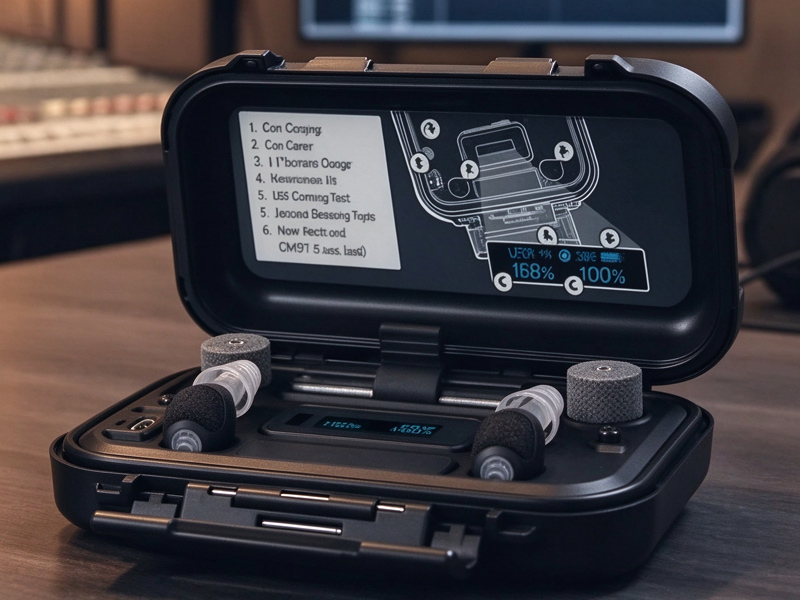
The pivot from lab instrument to consumer product came in 1991, when Etymotic engineer Steve Iseberg produced the ER-4 — the first noise-isolating high-fidelity earphone for music playback, built around a single balanced-armature driver, a technology borrowed from hearing aids. The ER-4S stereo-reference model followed with a flatter target response and 100-ohm impedance, while the 1994 ER-4P traded some accuracy for the sensitivity portable cassette and CD players could actually drive. The design proved so right that the ER-4 line is still in production, still channel-matched to within one decibel in Etymotic's US labs. Every IEM since — from stage monitors to $4,000 audiophile customs — descends conceptually from that black plastic barrel.
Deep Insertion Is the Whole Point
Etymotic's signature fit is its most debated feature. Where most IEMs sit shallow in the outer ear, Etymotic earphones insert deep into the ear canal using triple-flange silicone tips, delivering 35 to 42 decibels of passive isolation — better than most active noise cancellation, without batteries or processing. The trade-offs are real: insertion takes practice, some listeners find the sensation uncomfortable, and the signature can read as thin to ears trained on bass-heavy consumer tuning. For the brand's devoted users, though, that isolation is the product — the ER-4 philosophy holds that blocking noise passively protects hearing by letting you listen at lower, safer volumes. Killion liked to say the company had helped save more than ten million ears.
The Modern Ladder: ER2, ER3, ER4, EVO
The current lineup extends the same accuracy-first logic down and up the price ladder. The ER2 series (~$100) was the company's first move away from balanced armatures to a single dynamic driver, in flat-reference SE and extended-bass XR tunings. The ER3 slots in around $170, the ER4SR/XR around $300 with metal nozzles and detachable cables. In 2021 the EVO broke form with a multi-driver configuration in a shallow in-concha shell — the first Etymotic designed not to vanish into the canal — and a collaboration with Drop produced the ERX, a community-priced ER-4 descendant with user-replaceable Estron T2 cables. Across every model, the diffuse-field-derived target curve that Killion's team established in the late 1980s remains the tuning north star.
Earplugs Are Half the Business
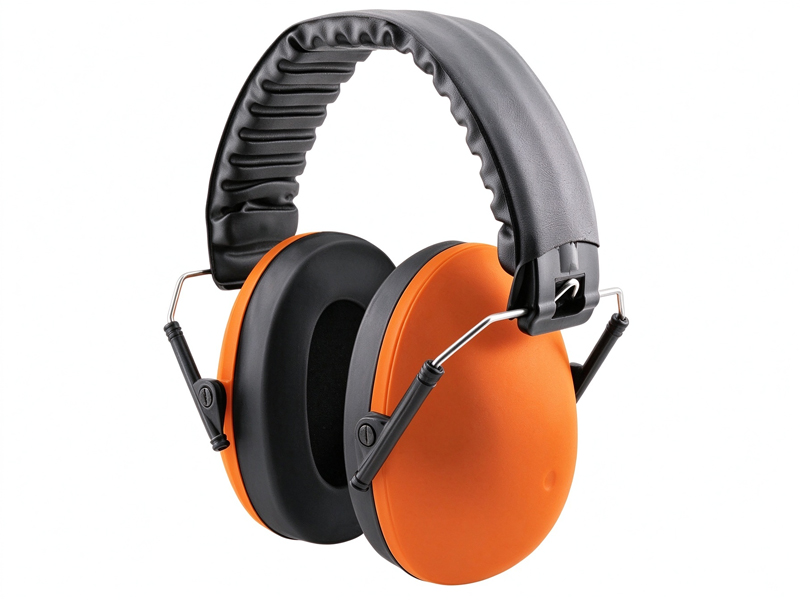
What separates Etymotic from every headphone competitor is that hearing protection was never a side project — it was the founding mission. The ER20 universal high-fidelity earplug, priced around $13, attenuates sound evenly across frequencies so music stays musical at lower volume, and became an industry standard for musicians, bartenders, and concertgoers. Above it sit the ER15 and ER25 custom-molded musician plugs, electronic shooting and hunting earplugs, the Gunsport line, and the ETY Kids safe-listening earphones that cap volume for children. The Bean, launched in 2013, brought affordable personal sound amplification to people with early hearing loss without prescriptions or audiologist referrals.
Lucid, Then Fidelity Collective: Ownership Chapters
The brand has changed hands twice in eight years. In 2018, Etymotic was acquired by Lucid Audio, joining a family of hearing-focused companies — a pairing that made strategic sense given the shared mission. In May 2026, Fidelity Collective, a newly formed personal-audio holding company, acquired both Etymotic and custom-IEM pioneer Westone Audio, installing leadership from Dekoni Audio and Grell Audio and announcing plans to rebuild Chicago-area engineering labs and Dallas sales operations. For a heritage brand whose founder passed away in late 2025, the transition is either a second life or an open question — the community is watching whether the ER line's uncompromising neutrality survives new ownership, as it survived the last one.
The Store as a Quiet Counterargument
The Shopify storefront is almost defiantly unflashy — no lifestyle imagery, no celebrity athletes, just model families organized by intent (Earphones, Musician Plugs, Electronic, Kids) with frequency-response graphs and isolation data doing the persuading. That restraint is itself the pitch: in a headphone market addicted to spec inflation and marketing claims, Etymotic's forty-three years of audiological rigor, hundred-plus patents, and willingness to keep selling a 1991 design because it is still correct amount to the rarest thing in audio — a brand whose story needs no embellishment.