The japanese art of stacked stones, reborn in a missouri garage
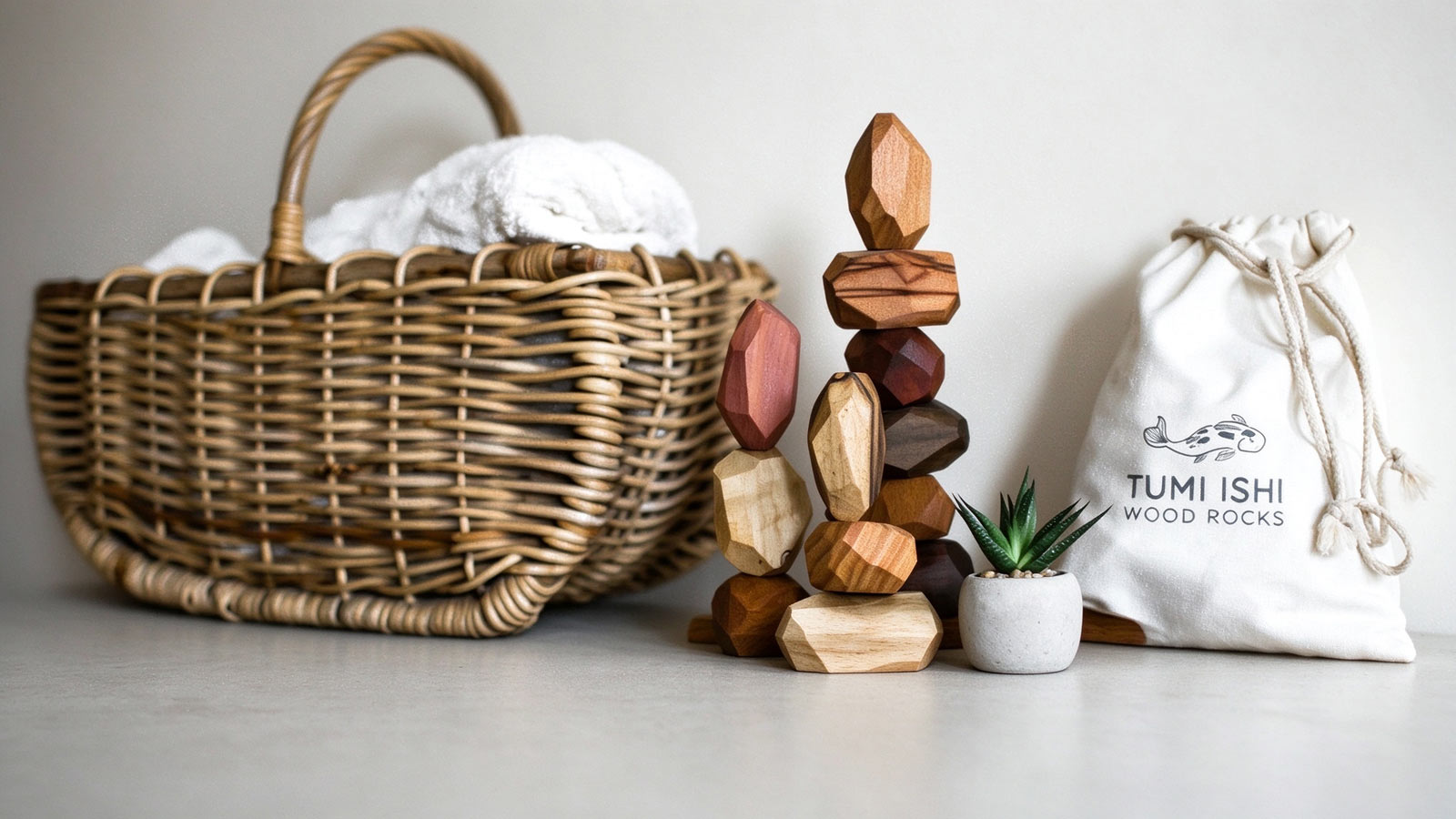
Official homepage: https://tumiishi.com
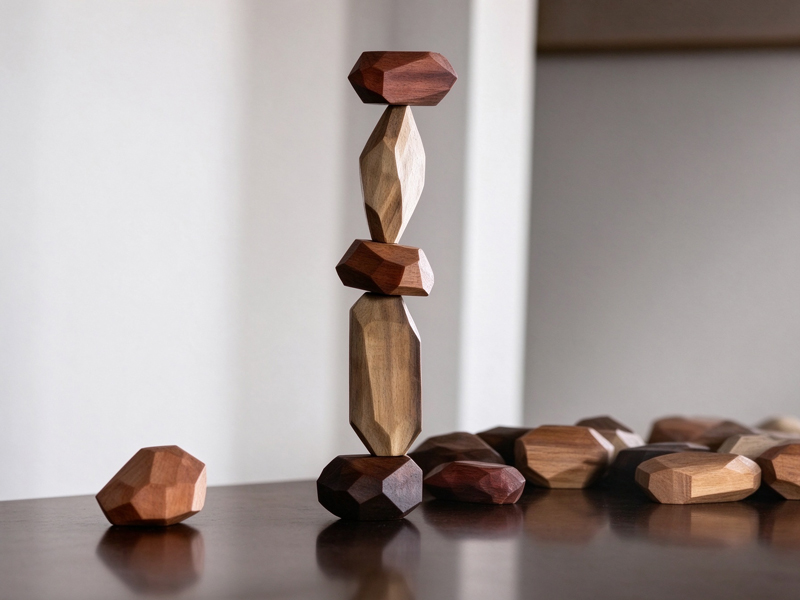
Tumi Ishi took a centuries-old Japanese meditation and rebuilt it as a wooden block.
In Nara, Japan, the design studio A4 spent years hand-beveling irregular blocks from local Yoshino cedar, calling the result tumi-isi — Japanese for "piled stones" — and winning Good Design Awards for a toy with no instructions at all. Seven years later and an ocean away, a family in St. Charles, Missouri started carving their own version from American hardwoods, and the idea found a second home. This review examines the two origins of this store, why every block is cut by hand, and what a set of wooden stones offers that a bin of plastic bricks cannot.
The Original Stones Come From Nara
The concept predates the store. Around 2008, the Nara-based design studio A4 conceived a set of five asymmetric blocks, each hand-beveled by local artisans from Yoshino cedar and cypress, coated in natural pigments meeting European toy safety standards. Everything was processed, painted, assembled, and inspected in Higashiyoshino Village — a 100-percent Japanese product that went on to collect Good Design Awards and Good Toy Awards.
The genius was the constraint: with no flat surfaces and no repeating shapes, stacking demands attention, patience, and a feel for balance — the same qualities as balancing real stones by a river. The original remains a premium import at around $200 for five pieces, which created the opening that the American family workshop walked through.
A Family in St. Charles Carves by Hand
The American Tumi Ishi describes itself plainly: family-owned and operated in St. Charles, Missouri, a suburb of St. Louis, making blocks since 2017. The founding impulse was homespun — the family loved stacking stones and believed the asymmetrical shapes of rocks could be mimicked in wood. They made a set for themselves, loved them, and the hobby grew into a business.
The blocks are shaped individually by hand with no set pattern — a deliberate rejection of machine production, which the company notes cannot produce this kind of variety. Each block carries countless facets, guaranteeing that no two are alike, and that no set is either. The operation stays small and personal, with the family doing the carving, finishing, and fulfillment.
Hardwood Species Chosen, Never Painted
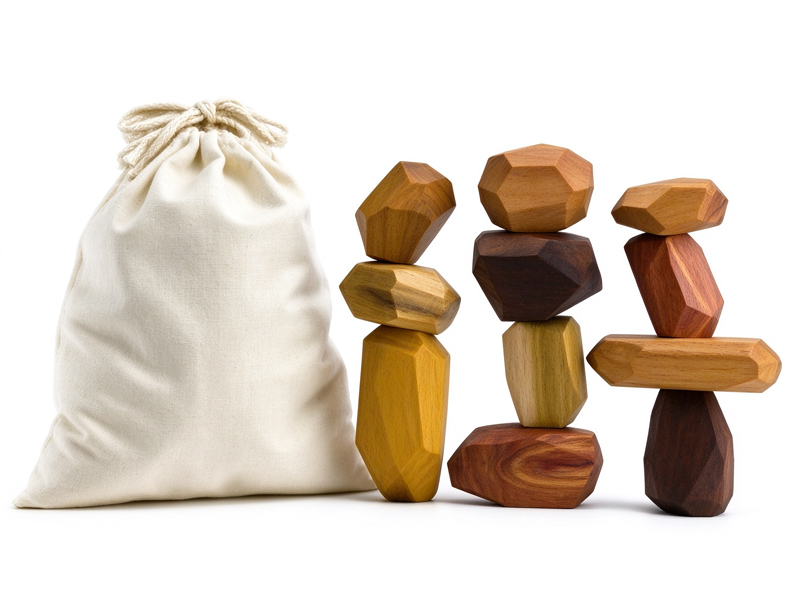
Material philosophy is the store's clearest differentiator. The blocks come from a diverse selection of sustainably sourced native hardwood species, chosen to showcase the natural colors and textures of each wood — walnut, maple, cherry, oak among them. The company uses no paint and no stain; instead, each block receives its own blend of non-toxic, natural finish that brings out the true color of the grain.
For buyers auditing materials, this is about as clean as the category gets: solid domestic hardwood, a food-safe-adjacent natural finish, and nothing hidden under pigment. It also means every set photographs differently — grain patterns vary block to block, and the sets grow more beautiful with handling and natural oiling over the years.
Two to Four Inches, Safe by Design
Size is a safety strategy here, not an accident of production. The American blocks run approximately two to four inches on any side — substantially larger than the factory-made balancing stones flooding marketplaces — and the company tests that its blocks do not fit in a small parts tester, the standardized choke-hazard gauge used for toys.
This positions the blocks as genuinely all-ages in a way most balancing stones cannot claim: toddlers can handle them under ordinary supervision, and adults use the same sets. The heft of solid hardwood adds a sensory dimension — cool, dense, smooth — that lighter woods and plastics never replicate, though it also means a toppled tower lands with a satisfying thump best kept away from glassware.
No Two Blocks Alike, No Machine Patterns
The handmade process is the product. Machine-made balancing stones repeat a fixed pattern, which experienced stackers learn to solve and then abandon; the company argues that hand-cut facets are what keep stacking challenging and creative across years of play. The claim holds up in practice — irregular asymmetry forces improvisational problem solving rather than memorized sequences, and the difficulty scales naturally as children grow.
There is a philosophical echo here of the Japanese original: the blocks reward the same qualities river-stone balancing does. Concentration, patience, small corrections, and the quiet satisfaction of a tower that holds. Families report the sets pulling adults into play as reliably as children, which is rarer than toy marketing suggests.
Calming Adults and Challenging Children Equally
The dual-audience dynamic defines the store's appeal. For children, the blocks develop fine motor control, spatial reasoning, and persistence through a challenge that cannot be brute-forced. For adults, the sets function as desk objects and decompression tools — a few minutes of stacking between meetings, a tactile alternative to a fidget spinner with far more dignity.
Gift buyers exploit this directly: the sets land as corporate gifts, therapy-office tools, nursery decorations, and grandparent bait in equal measure. The same blocks serve a mindfulness practice and a competitive family game — stack highest, build strangest — without changing anything about the product.
Natural Finishes Parents Can Pronounce
Care and finish deserve mention because the company invests in both. The natural finish blend is non-toxic by design, appropriate for the mouthing phase that terrifies parents of wooden toys, and maintenance is simple — an occasional refresh with food-safe oil keeps the grain lively, following the same ritual as any quality wooden toy or cutting board.
The blocks arrive ready to use with no break-in, no smell of solvent, and no off-gassing concerns. Compared to the lacquered, painted, or glued-laminate imports that dominate the budget tier of this category, the material honesty is the entire sales pitch — and for the households that prioritize it, no pitch is needed.
What Handmade Costs Versus Factory Copies
Handmade American hardwood carries a premium. Sets from this store sit well above the marketplace generics — where tumi-ishi-style stones sell for the price of a pizza — and moderately below the Japanese original. The price buys sustainably sourced species, hand shaping, safety-tested sizing, natural finishes, and the irregularity that makes the play last; the cheap versions buy uniform shapes that experienced stackers tire of in a week.
Buyers should also know what the premium does not buy: sets arrive as the family makes them, so color mixes vary by what hardwood is on hand, and restocks follow workshop pace rather than warehouse schedules. For patient buyers this is character; for gift buyers on a deadline, it requires planning ahead.
Who Stacks These Stones and Why
The Tumi Ishi customer spans the Montessori parent building a natural-materials shelf, the office worker wanting a desk ritual, the gift buyer hunting something handmade, and the grandparent who remembers when toys came from workshops. It fits households that already own Grimm's rainbows or Kapla planks — the same low-plastic, high-longevity philosophy at a smaller scale — and households that simply want a calmer alternative to screen time.
The verdict after watching the category from both sides of the Pacific: the Nara studio invented a beautiful idea, and the Missouri family executes it with American hardwoods, honest finishes, and sizing safe enough for the whole house. In a market flooded with factory copies of both, the hand-carved original-American version holds its ground — one unrepeatable block at a time.