The $30 speaker that embarrassed $100 ones: tribit's nine-year value mission

Official homepage: https://www.tribit.com
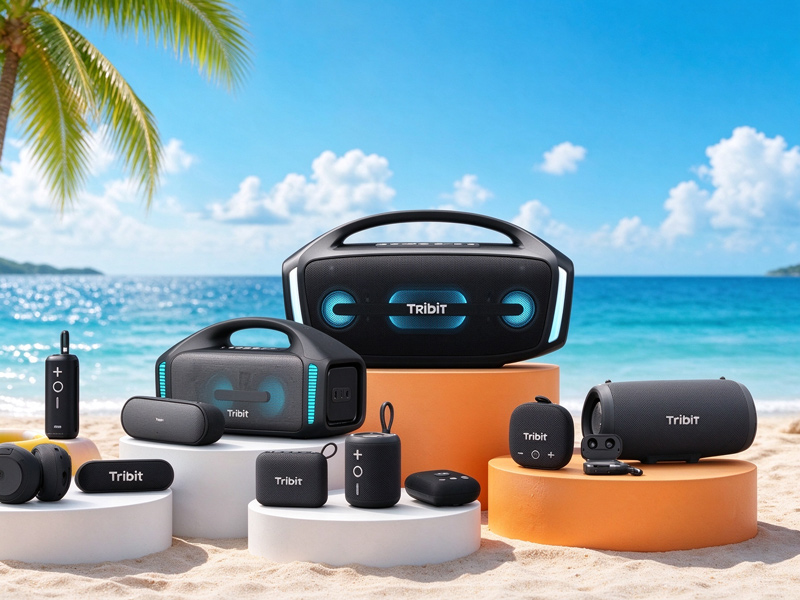
Tribit launched in 2017 with a single conviction: great sound should not require a premium price. Founded by a group of audio engineers around a music-obsessed founder known publicly as Sam, the brand made its formal debut at CES 2018 with a $30 portable Bluetooth speaker, the XSound Go, that reviewers found outperforming models costing three times as much. Nine years on, Tribit sells portable speakers, earbuds, and headphones across Amazon and its own storefront in roughly 150 countries, built around one product thesis — maximum battery, maximum durability, maximum bass per dollar — tuned by a former Harman Kardon acoustic engineer.
A Founder Named Sam, a Team of Engineers
The origin story is deliberately low-key. Tribit was started in 2017 by Sam, described in the brand's telling as a music enthusiast who could not find audio gear good enough for his adventures at prices that made sense, and staffed from day one with acoustic engineers and industrial designers. The founding concept, "great beats to the masses," framed the company as a counterweight to both overpriced premium brands and the anonymous flood of white-label electronics filling Amazon's marketplace. Manufacturing runs through Shenzhen-based partners — the brand's parent operation, Thousandshores, runs its own factories — while tuning, industrial design, and product definition happen in-house. An Indian subsidiary, Tribit Technologies, separately incorporated in Bengaluru the same year, manages the brand's regulatory and channel presence in that market.
Rocky Deng, the Engineer Behind the House Sound
The person most responsible for how Tribit sounds is Rocky Deng, the brand's chief designer and acoustic tuner. He began experimenting with speakers in high school and amplifiers in university, spent more than fifteen years in audio research and development, and worked most recently at Harman International designing Harman Kardon soundbars before joining Tribit. Reviewers who tested the early XSound Go and the $50 XFree Tune headphones in 2018 noted the same thing: neutral, natural midrange and well-controlled bass that punched far above the price, with ergonomics better than many $200 headphones. Deng's tuning signature — clear mids, restrained treble emphasis, bass boosted through DSP rather than brute driver size — still defines the catalog.
The XSound Go Changed What $30 Should Sound Like
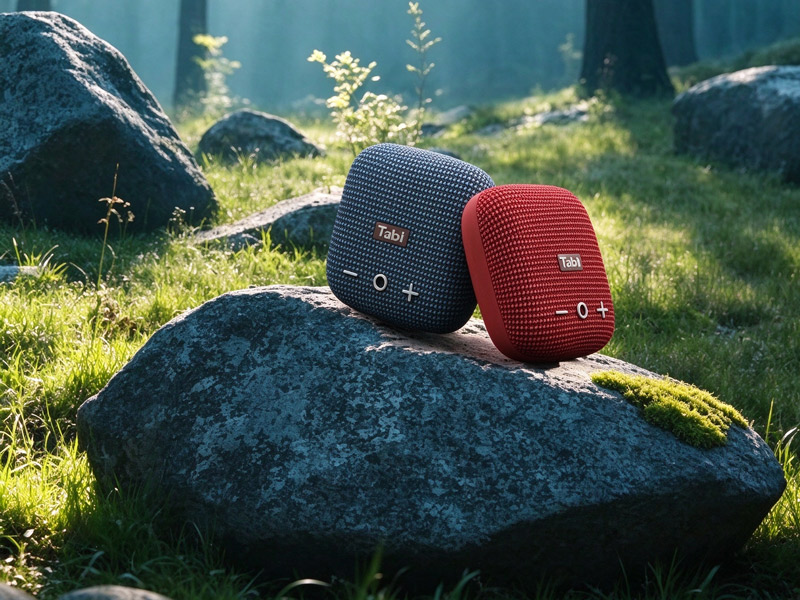
The product that put Tribit on reviewers' desks was the XSound Go: a compact speaker with two 6-watt stereo drivers, IPX7 waterproofing, 24-hour battery life, and a list price around $30. Audio critics benchmarked it against $60 to $100 speakers from established brands and found it winning, which is precisely the comparison Tribit engineers design for. The StormBox line scaled the formula up — the StormBox Micro 2 measures bass extension to -6 dB at 72 Hz in independent lab testing, remarkable for a speaker of its size — while the XBass algorithm became the brand's signature DSP, boosting 60–120 Hz in real time with dynamic compression to prevent distortion. The design philosophy is consistent across every model: spend the bill of materials on drivers and battery, not on logos.
Battery Life as a Competitive Weapon
If Tribit has a spec it refuses to lose, it is playtime. The early XFree Tune headphones claimed 40 hours; current over-ear models have stretched that to cartoonish lengths — the QuietPlus 81, an ANC over-ear priced around $49, claims 110 hours of playback with noise cancellation off and 70 with it on, with a 10-minute charge returning five hours. Portable speakers similarly prioritize multi-day endurance over marginal weight savings. For the brand's target buyer — commuters, campers, students, and gym-goers who forget to charge things — this is the specification that matters most, and Tribit treats it as a core engineering discipline rather than a marketing number.
Durability and Ratings Built for Outdoors
Every Tribit product is engineered to IPX7 or better — submersible in a meter of water for 30 minutes — with nano-coating on earbuds, rubberized bumpers on speakers, and metal hinges on folding headphones. The outdoor positioning runs through the whole brand: product photography features trails, beaches, and campsites; the marketing language addresses "adventurous companions"; and the color palette favors the bright orange of high-visibility gear. The approach earned the brand a Red Dot Design Award in 2021 and recurring placements on CNET's best-budget lists, including calling the XFree Tune among the best headphones of its year — a citation the company still leads with on retail packaging.
The Honest Trade-Offs at Budget Prices
A fair review has to say the quiet part. Independent measurement-driven assessments of Tribit's products find the tuning pleasant but not transparent: frequency-response deviations of ±5 dB or more on some models, thin and "glassy" treble under close measurement, and distortion appearing past roughly 80 percent volume. Reviewers consistently conclude the same thing from the other direction — at $30 to 50,thesoundisexcellentforthemoney,andthe110−hourbatteriespluswaterproofbuildsaddvaluenopremiumrivalmatchesattheprice.Tribitcompetesinthesub−50, the sound is excellent for the money, and the 110-hour batteries plus waterproof builds add value no premium rival matches at the price. Tribit competes in the sub-100 tier where its combination of battery, durability, and respectable sound is genuinely hard to beat, not at the fidelity tier where its measurements would be criticized more harshly.
Amazon First, Own Store as Brand Home
Distribution is Amazon-centric, where Tribit has accumulated tens of thousands of reviews across its hero SKUs and built the social proof that budget buyers filter by — more than 289,000 Facebook followers attest to the funnel's scale. The Shopify storefront serves as the brand's direct channel: full catalog, bundle pricing, the 18-month replacement-or-refund warranty and 30-day money-back guarantee stated clearly, plus firmware updates and the companion app for EQ and multipoint management. International buyers get localized storefronts in several markets, with shipping concentrated in the US, Europe, and India. For a company whose founding insight was that distribution margin inflates prices more than engineering does, keeping a lean direct channel alongside Amazon is less a concession than a demonstration of the thesis.
Nine Years of the Same Promise
The brand's ninth-anniversary messaging, published in early 2026, restates the 2017 founding idea almost verbatim: better sound, better value, better beats. That consistency is Tribit's real asset. The personal audio market churns through brands that promise disruption and vanish in two funding cycles; Tribit has spent nine years quietly shipping 30–30–100 products that reviewers keep describing with the same surprised sentence — it sounds better than it should. For buyers who measure headphones in battery hours and cost per adventure rather than frequency-response purity, that is exactly the promise worth keeping.