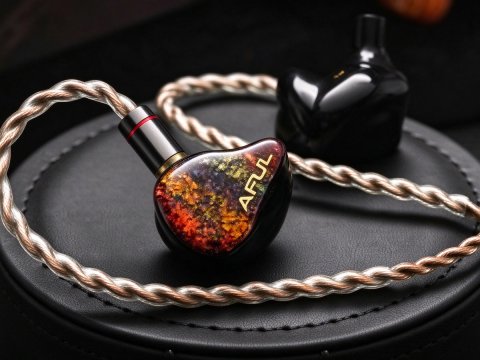
Ten people, one workshop, $7,500 earphones: inside campfire audio's portland lab
Official homepage: https://campfireaudio.com
Campfire Audio operates out of a small workshop in Portland, Oregon, with a team of about ten people who design, tune, and hand-assemble every earphone the company sells. Founder Ken Ball built the business on an unusual path — from plant pathologist to basement cable maker to self-taught acoustic engineer — and on an even more unusual philosophy: earphones should be tuned by ear, not by spreadsheet. The result is a cult brand whose emerald-green Andromeda became one of the most influential in-ear monitors of the past decade, and whose 2026 flagship, the $7,500 Chimera, competes at the absolute top of the audiophile market.
From Plant Pathology to a Basement Cable Lab
Ball's first career had nothing to do with audio. He studied biological sciences and spent years running a lab as a plant pathologist for the Department of Agriculture — respectable, stable, and deeply unfulfilling. His real obsession was hi-fi, and it found an outlet when the iPod era created a specific problem nobody sold a solution for: extracting the line-out signal from a 30-pin iPod dock into a 3.5mm plug. He taught himself to build the cable in his basement, built a rudimentary website with a PayPal button, and watched orders arrive. That side project became Audio Line Out — ALO Audio — founded in 2009, which grew from hand-built dock cables into one of personal audio's most respected boutique brands for cables and amplifiers.
The Cable Business Taught Him to Pivot
By 2012 or 2013, Ball could see the cable market contracting. Smartphones were absorbing the jobs that external amplifiers and docks once did, and the accessory ecosystem was consolidating. Rather than defend a shrinking niche, he reinvested everything into the dream that had been too expensive to attempt at the start: designing his own earphones. He spent the intervening years teaching himself acoustic design — tooling, measurement, driver behavior — and in 2015 launched Campfire Audio with the same small team from ALO. The name evoked the outdoors of the Pacific Northwest and the maker ethos of the workshop; the plan was to build earphones that sounded like nothing else on the market.
Phase Harmony Replaces the Target Curve
The engineering philosophy is Campfire's defining trait. Most earphone manufacturers design to a target frequency-response curve; Ball has said flatly that he doesn't use one, quipping that earphones voiced to a flat graph "sound like wilted cabbage." Instead, the company measures a library of individual drivers, then selects combinations whose natural strengths complement each other — a concept it calls phase harmony. The team minimizes resistors, capacitors, and crossovers that would constrain the drivers, tuning instead through physical acoustic plumbing: chambers, resonators, and 3D-printed internal architectures. Each model takes eight months to a year of iterative voicing, and some designs never leave the lab. The result is a house sound described as layered, transparent, and "just north of neutral."
Andromeda's Emerald Shell Redrew the Map
The 2016 launch of the Andromeda was the turning point. While the market ran on plastic and resin shells, Campfire machined its housing from solid billet aluminum, anodized it an unmistakable emerald green, and packed five balanced armatures behind its Tuned Acoustic Expansion Chamber technology. The industrial design was as distinctive as the sound, and the Andromeda quickly became a benchmark: celebrated for its clarity, speed, and vast soundstage, and endlessly imitated. Over a decade the model cycled through refinements and collectible limited editions — stainless steel, brass, titanium, ceramic collaborations — without losing its character, a rarity in an industry that refreshes flagships on two-year cycles.
One Workshop, Ten People, Every Pair
Manufacturing is the brand's quiet flex. Every Campfire earphone is hand-assembled and individually checked in the Portland workshop, where the ten-person team handles machining, driver matching, assembly, and acoustic tuning under one roof. That structure has become a strategic asset as tariffs on Chinese electronics surged: while rivals absorbed 30 to 40 percent effective duties, Campfire's domestic production turned into both a cost shield and a marketing story about American craft. The team even photographs its own products and maintains its own website — founder Ball has said he does the product photography himself, a level of vertical integration almost unheard of at any scale.
The Range Runs From $199 to $7,500
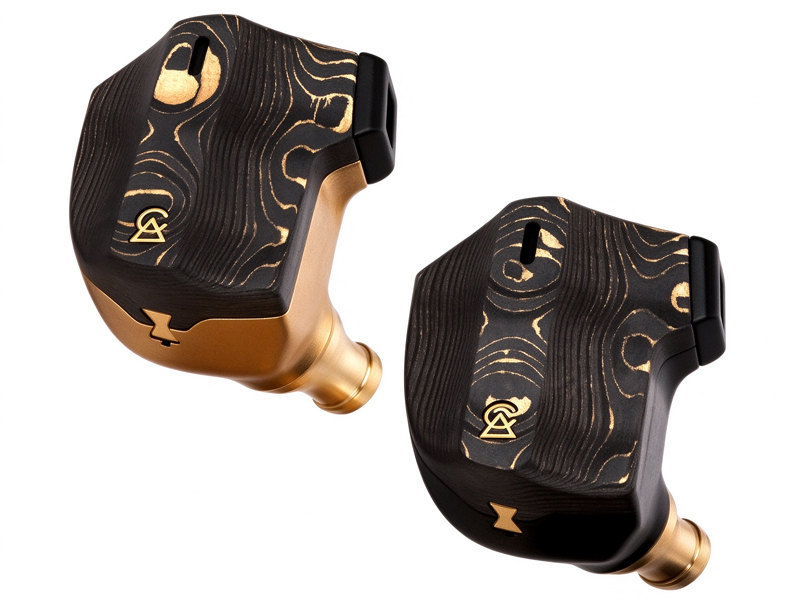
The current catalog spans entry to ultra-flagship. At the accessible end, the Satsuma brought single balanced-armature Campfire sound near $200, and 2025's Axion introduced a novel silicon dynamic driver with a USB-C cable carrying a built-in 32-bit/384kHz DAC for phone listeners. The midrange mixes hybrids like the five-driver Alien Brain and the artist-collaboration Clara, built with Nine Inch Nails bassist Alessandro Cortini. The Trifecta pushed triple dynamic drivers to $3,375, and the tenth-anniversary Andromeda 10 — ten balanced armatures in Damascus-lidded stainless, limited to 250 units in its launch edition — landed between $1,500 and $2,000. Wireless listeners get the Orbit, a true wireless model voiced to the same house signature.
Chimera and the 53-Revision Ultra-Flagship
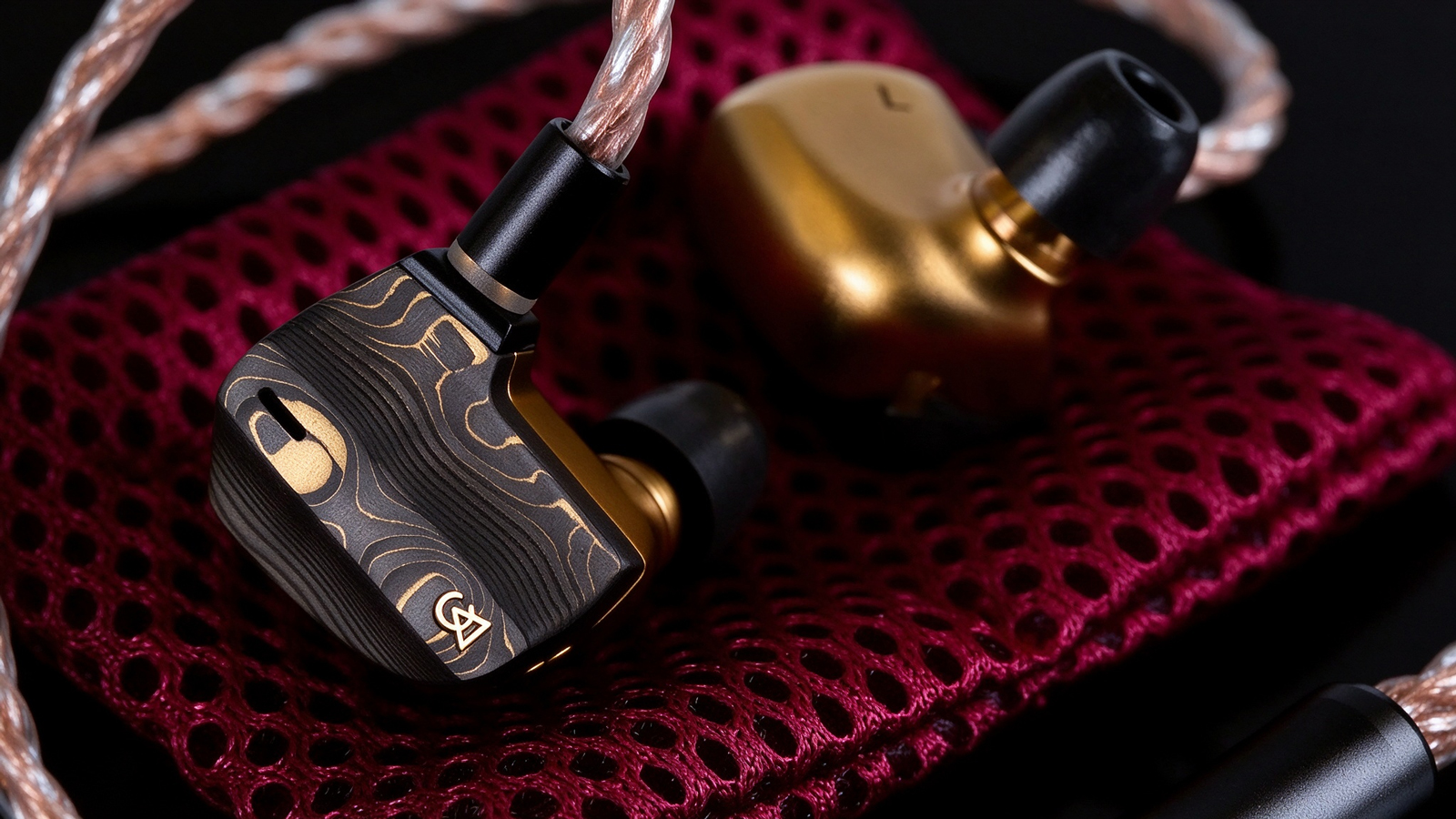
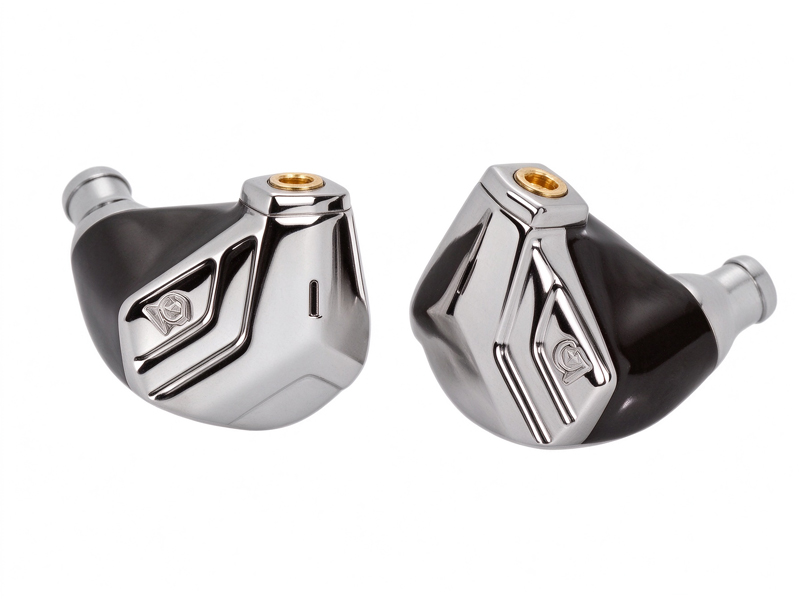
In June 2026, Campfire crossed into ultra-flagship territory with the Chimera at $7,500. It is the company's first quad-brid design: nine drivers per side blending bone conduction, a dynamic driver, balanced armatures, and electrostatic tweeters, housed in electro-plated PVD magnesium chosen specifically to reinforce the bone conduction driver's physicality, capped with a carbon fiber and brass Damascus lid. Ball says the acoustic routing went through 53 revisions across more than a year of development. The statement is less about volume than about identity — proof that a ten-person Portland workshop can build at the level of multi-nationals, priced accordingly and unapologetically.
A Store Built Like the Workshop Itself
The Shopify storefront mirrors the company: spare, tactile, and product-obsessed. Collections are organized by model families rather than price ladders, each earphone page carrying detailed driver architecture explanations, tuning notes, and cable specifications — including ALO Audio's Valence-6, the sister brand's six-conductor cable developed alongside the Chimera. Owners register products for warranty support, and the brand's direct channel carries the full limited-edition runs that specialty retailers cannot stock. For a company that once began with a single homemade cable and a PayPal button, the store is the same idea scaled up: maker-to-listener, no intermediaries, every pair traceable back to one workshop in Portland.