Status audio store review: what to know before you buy wireless earbuds online

Official homepage: https://status.co
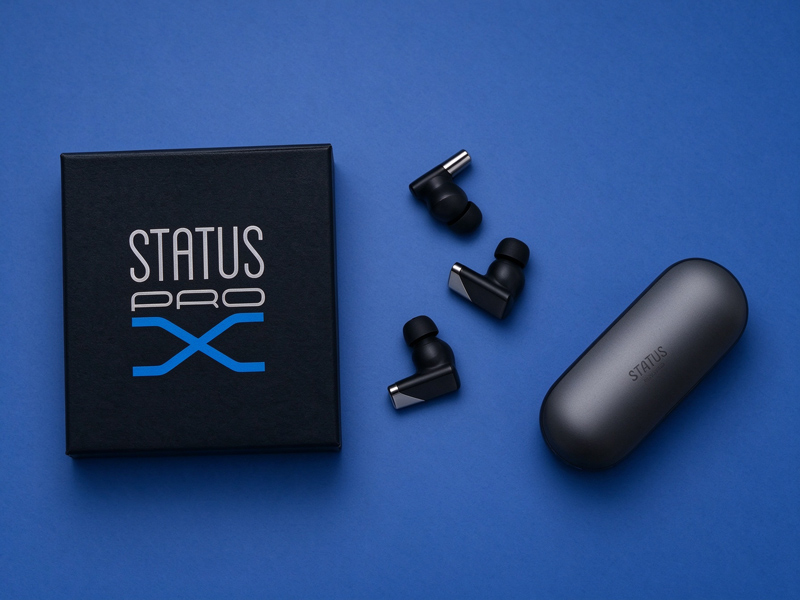
Earbud stores usually begin with a spec sheet — drivers, decibels, hours of battery. Status Audio begins with a comparison it dares to draw itself: the homepage shows its own transparent earbud, three speakers visible inside, beside a white single-driver competitor and a wired pair, each labeled with what it lacks. I browsed with AirPods fatigue and a curiosity about what a company gains by naming the giant it competes with. Here is the counter, decision by decision.
Door Policy: Everyday Listening, Elevated Standards
The tagline promises the strange combination the category rarely delivers — elevated audio for everyday listening, audiophile standards and minimalist design, priced within reach. Framing the store as the affordable end of serious sound targets the customer who suspects she is paying for marketing rather than acoustics: the claim says the drivers are real, the design is quiet, and the price is honest, and the three clauses together convert the skeptical browser into a believer before a single specification appears. The restraint is the pitch, and the pitch does not raise its voice.
Three Speakers Where Others Ship One
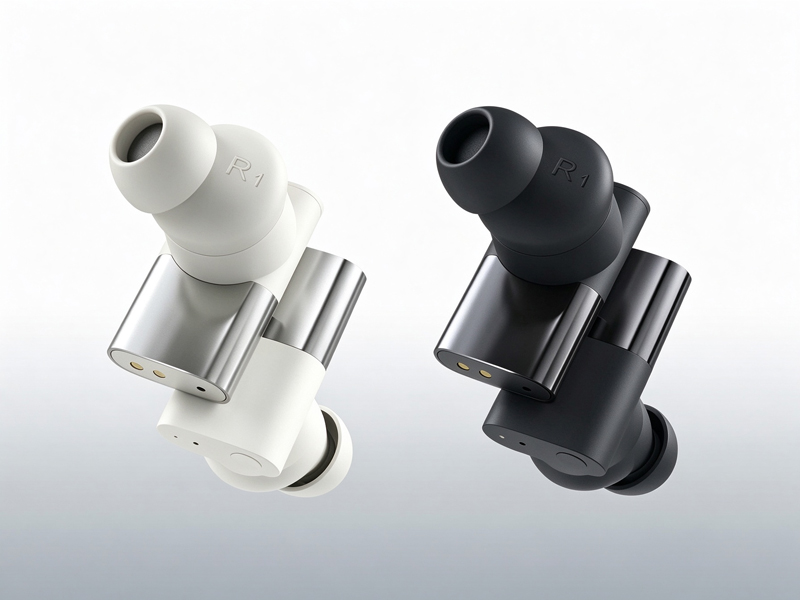
The engineering story is printed as an architecture diagram — two balanced armatures for vocals and highs, one dynamic driver for bass, three speakers in an earbud where the mainstream ships one. Publishing the driver count as the headline specification is engineering-first aimed at the customer who reads spec sheets: the number is concrete, the specialization explains the sound signature, and the diagram gives the claim a visual form that survives compression into a forum post or a review thumbnail. The three speakers are the entire argument, and the argument fits in a sentence, and the sentence fits on the box.
The Homepage Names Its Rivals
The most audacious fixture on the site is a comparison grid the brand drew itself — its triple-driver earbud beside a white stem-style competitor, captioned with the rival's single speaker and boomy sound, and a wired pair dismissed for its lack of modern features. Drawing the comparison on your own homepage is confidence aimed at the comparison shopper who was going to make it anyway: the brand has preempted her research, stated the rival's weakness in the rival's own silhouette, and turned its product page into the review she was about to read somewhere else. The audacity is the conversion strategy, and the strategy works because the audacity is specific.
Nine Ways to Fit One Ear
Beneath the sound sits a fitting system — three ear tip sizes crossed with three fit-wing sizes, nine combinations, the copy claiming more custom options than any competitor. Offering a matrix rather than a menu is comfort positioning aimed at the runner and the long-wear commuter: the fit is the feature the three drivers cannot deliver alone, the wings solve the seal that tips alone never achieve, and the store has converted a commodity inclusion into a headline specification. The nine options are the comfort argument, and comfort is the reason earbuds get returned, and returns are the enemy the nine options were built to fight.
A Founder Who Recorded, Not Just Sold
The about page introduces the founder by his other profession — a musician who spent years in recording studios searching for a sound his phone could not reproduce, and who built the earbuds as the culmination of that search. Founding the brand on studio hours rather than business hours is credibility aimed at the customer who has been burned by audio marketing: the founder is a listener first, his complaint is hers, and the product is framed as the answer to a personal grievance rather than a market opportunity. The musician is the warranty, and the warranty has a discography.
Thirty Days to Hear It Yourself
The policy is named like the product — the thirty-day sound check — and the copy explains that some judgments require ears, not eyes, so the customer can live with the earbuds for a month before deciding. Naming the trial after the sense it serves is risk reduction aimed at the hesitant audiophile: the return is free, the month is real, and the store has conceded that its own spec sheet cannot close the sale — only the customer's ears can. The trial is the admission that sells, and the admission is rare in a category built on claims nobody can verify without buying.
A Ladder From Ninety-Nine to Two-Ninety-Nine
The catalog is a staircase — an entry pair under a hundred dollars, a mid-tier flagship under two hundred fifty, a new premium tier under three hundred — each step adding drivers, microphones, and features. Maintaining three price points is market coverage aimed at the gift buyer and the upgrader: the entry tier recruits the cautious, the flagship serves the committed, and the premium tier gives the committed a reason to return, and the staircase means the brand loses the sale to no one who liked the sound. The ladder is the lifetime-value architecture, and the architecture has three floors and no ceiling.