Smithey's polished nest: charleston forges, quail clubs, grape-seed confidence, numbered skillets, heirloom wraps
Official homepage: https://smithey.com
Cast-iron stores usually sell the past — vintage styling, seasoning lore, the romance of a pan that outlives its owner. Smithey sells the past after a trip through a polishing shop: the storefront's founding claim is that the interior of every skillet is ground and polished to a satin finish until the metal gleams like the inside of a trumpet, and the copy argues that this is the difference between cookware that fights you and cookware that cooperates. I browsed with a lodge pan I love too much to admit how often it sticks, and a weakness for workshops with flags on the wall. Here is the counter, decision by decision.
Door Policy: Confidence, Not Chemicals
The store's creed arrives in a single line — cook with confidence, not chemicals — and the mechanism behind it is named immediately: pre-seasoned only with pure grapeseed oil, free of the synthetic coatings that define the category's compromises. Opening with a material philosophy rather than a price or a heritage date targets the buyer who has read about forever chemicals in the news: the claim is not vague — one named oil, one named exclusion — and the five-thousand-plus five-star reviews riding beneath it say the claim survives daily testing. The creed is the contract, and the contract is short enough to remember.
A Factory With a Flag Photograph
The homepage's second image is not a product but a workshop — a vast floor in a former naval base in Charleston, South Carolina, with an American flag and the state flag hanging from the rafters above stacked molds. Photographing the factory as a primary asset answers the question heirloom brands must answer: who actually makes this, and where, and are they proud of it. The flags are the certification — no auditor's seal carries the same weight as a flag over the machines, and the naval base's history of building things that last lends its own argument.
The Quail Club as a Named Parish
The testimonial section introduces the community by name — the Quail Club, a gathering of superfans, chefs, and cast-iron connoisseurs who have made the brand part of their kitchens and their stories — paired with five thousand five-star reviews carrying first names and specific pans. Naming the community targets the identity-driven buyer: a reviewer becomes not a data point but a club member, the quail logo stamped on every handle becomes a membership mark, and the next purchase is joining rather than replacing. The club is the loyalty program, and it costs nothing to run but a name and a bird.
Polished Interiors as the Engineering Thesis
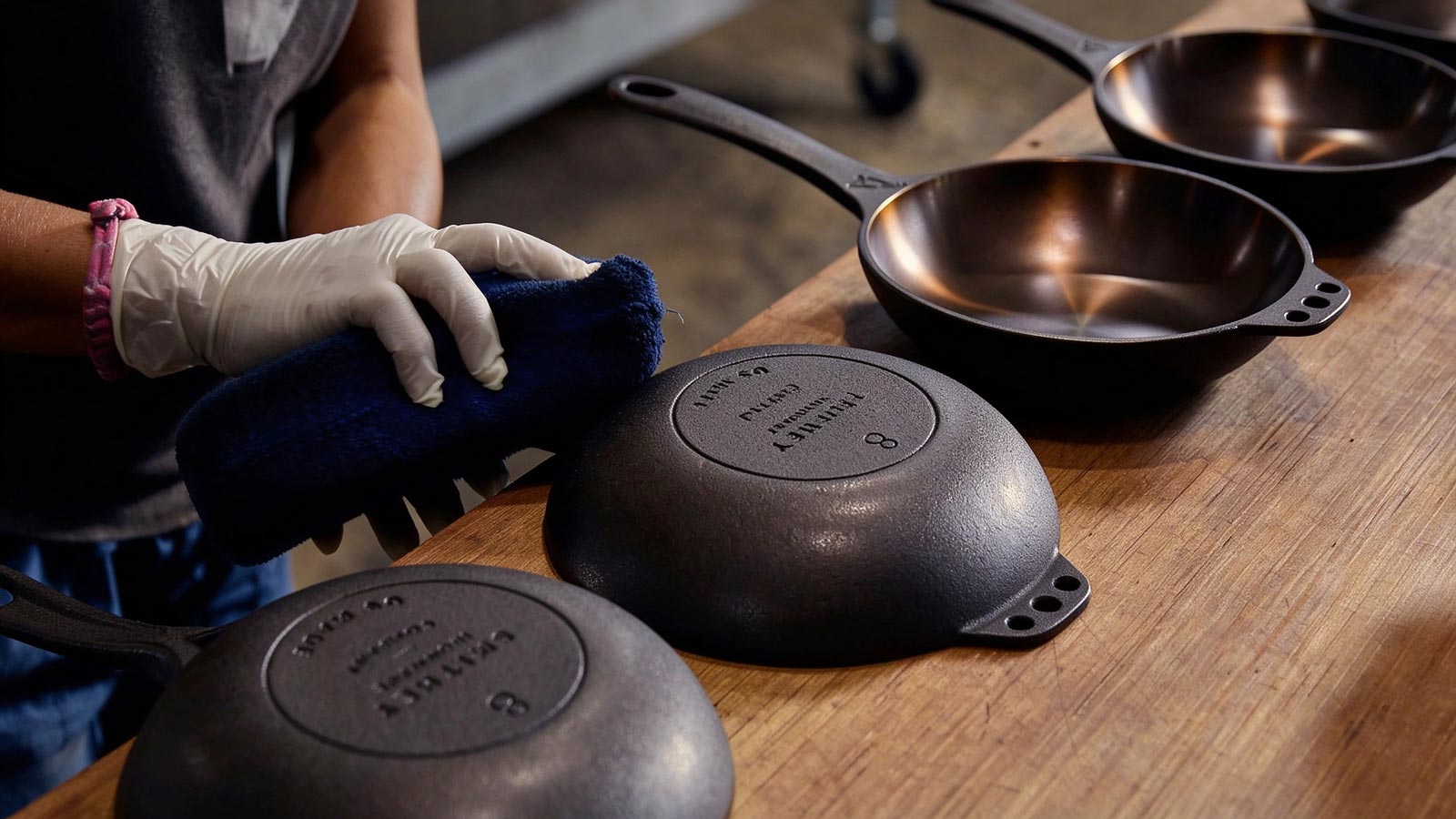
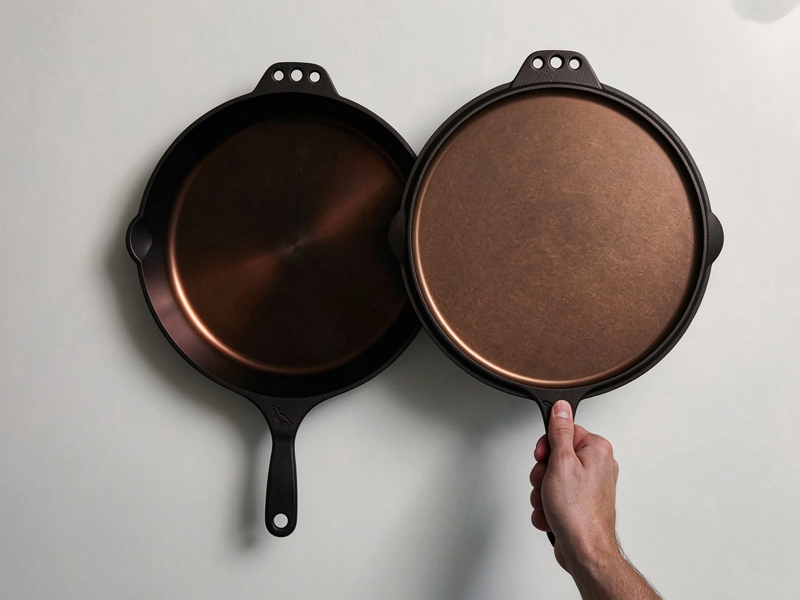
The technical difference the store never stops explaining is the cooking surface — machined and polished to a satin finish, unlike the pebbled texture of traditional cast iron, which is why the copy can promise easy cleaning and natural non-stick behavior from the first use. Treating the polish as the central engineering claim targets the buyer burned by sticky pans: the surface is not an aesthetic choice but a functional one, and the store treats the machine that does the polishing as the hero of the operation. The mirror inside the pan is the argument, and the argument is reproducible every single time.
Two Metals, Explained Side by Side
The education section lays cast iron and carbon steel side by side — where each is sourced, how each is made, what each is for, how each is cared for, why each earns its place. Publishing the comparison in the store's own voice targets the buyer who does not know which metal she wants: the table admits both are good, assigns each a personality — the cast iron holds heat for searing, the carbon steel responds quickly for eggs — and turns a paralysis point into a two-step purchase path. The comparison sells the second pan before the first one cools.
Numbers as the Naming System
The catalog speaks in numerals — the number six, the number ten, the number fourteen — rather than marketing names, with the size printed simply and the quail beside it. Numbering the skillets targets the gift buyer and the collector alike: the size is the name, the collection announces itself in sequence, and the customer who owns the ten knows exactly what the fourteen adds. The numbering system turns a catalog into a set, a set into a collection, and a collection into a will.
The Gift Shelf, Pre-Wrapped
The final fixture is seasonal and permanent at once — the cookware photographed in black boxes with cream typography, stacked under a Christmas tree with ribbon, sold as the lifetime gift. Presenting the packaging as a product feature targets the December buyer: the box is handsome enough to skip wrapping, the ribbon is already tied, and the heirloom promise — used daily for generations — is the gift card's text before a word is written. The store sells the pan; the photograph sells the giving; the giving sells the second generation of customers.