Rise brewing storefront review: everything to know before buying canned cold brew coffee
Official homepage: https://risebrewingco.com
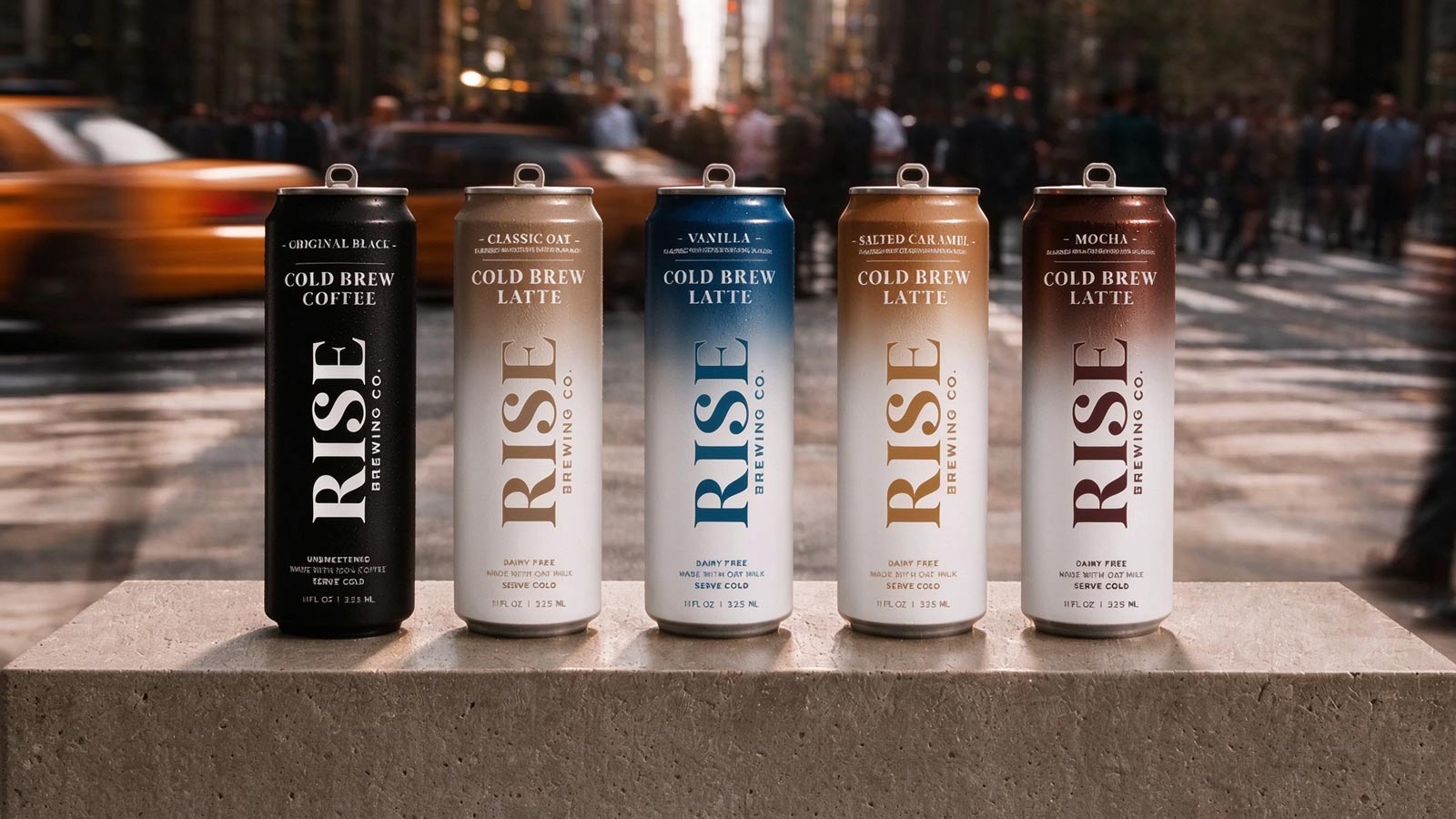
Coffee stores usually sell beans and leave the brewing to you. Rise Brewing sells the finished drink in a can — the storefront's hero is a slim aluminum cylinder, blue fading to white, announcing a vanilla cold brew latte made with oat milk and built to be drunk cold, standing up, on the way somewhere. I browsed with an iced-coffee habit that costs me six dollars a stop and a curiosity about whether the can could replace the line. Here is the counter, decision by decision.
Door Policy: The Can as the Product
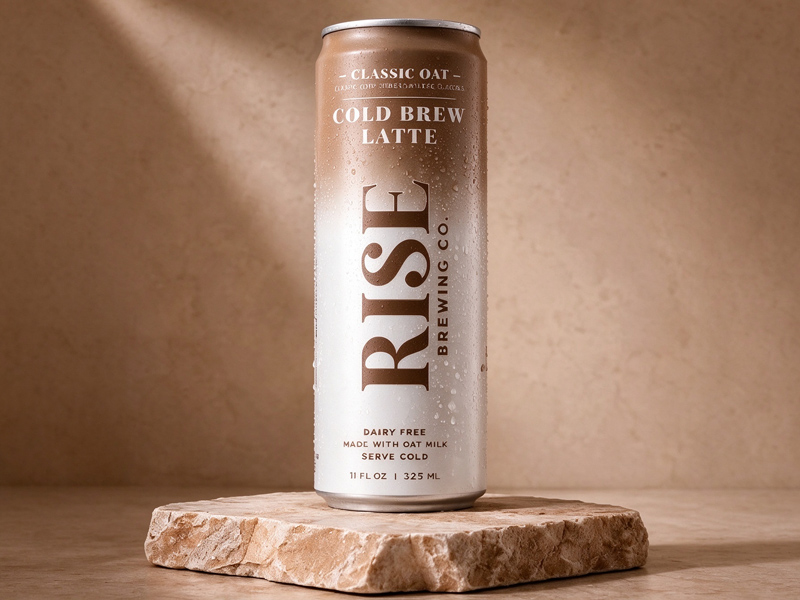
The storefront leads not with origin or roast but with the vessel — the eleven-ounce can, chilled, condensation beading, photographed on a stone slab beside a glass of the same coffee poured over ice. Leading with the finished drink rather than the beans is category positioning aimed at the customer who does not own a grinder or the patience for one: the can is the product, the coffee inside is the ingredients list, and the store has skipped the entire ritual apparatus the specialty aisle assumes she owns. The can is the ceremony; the ceremony takes one second, and the second is all the customer has.
Four Ingredients as the Front Door
The product page prints its recipe in full — filtered water, whole oats, cane sugar, coffee — four words, no mystery, the emulsifiers and oils listed humbly behind them at under two percent. Leading with the four-word ingredient list is transparency aimed at the label-reader exhausted by menus that cannot say what is in the drink: the brevity is the claim, the sugar is not hidden, the oat milk is not euphemized, and the customer who reads labels has been given the entire truth in one breath. The four words are the marketing department, and the department never lies, and never lying is the cheapest marketing there is.
One Cup, Printed on the Can
The caffeine is quantified in the customer's own vocabulary — ninety milligrams, printed beside a small icon of a coffee cup, the translation to one cup of coffee done for her. Translating milligrams into cups is comprehension aimed at the caffeine-counter who tracks her day in units of one: the icon says one cup, the ninety milligrams say the number, and the can has answered the question she would otherwise Google while standing in the aisle. The cup is the unit; the unit is the trust; and the trust is printed on the side where the customer can see it without turning the can.
Oat Milk Without the Lecture
The can announces dairy-free in the same breath as its vanilla flavor, the oat milk presented as a fact rather than a virtue. Treating plant milk as neutral is inclusion aimed at the household that contains one dairy-drinker and one who cannot: the can does not ask either to convert, it simply serves both, and the store has discovered that neutrality sells better than advocacy. The neutrality is the welcome; the welcome is wider than the lecture; and the width is the market.
The Numbers, Unhidden
The nutrition panel sits beside the ingredient list with nothing softened — one hundred fifty calories, fourteen grams of sugar, the figures printed where the customer will see them before she buys. Publishing the sugar count prominently is candor aimed at the skeptic who suspects cold brew of being a milkshake in disguise: the fourteen grams are there to be judged, the judging is invited, and the store has bet that honesty converts better than hope. The fourteen grams are the dare; the dare is rarely taken up; and the taking-up is the sale, and the sale is sweeter for having survived the dare.

The Pour as the Photograph
The imagery answers the question the can cannot — what it looks like poured: a glass, ice, the latte settling into layers, cream-colored against the blue of the can. Photographing the pour is expectation-setting aimed at the customer burned by canned drinks that look nothing like their marketing: the glass says this is what arrives, the layers say the oat milk is real, and the picture has done the tasting before the can is opened. The glass is the proof; the proof is poured; and the pouring is the promise the can keeps.
The Subscription as a Shelf Restock
Beneath the single can sits the case — twelve or twenty-four at a discount, on a schedule the customer chooses, delivered before the refrigerator empties. Selling by the case is household infrastructure aimed at the customer who has accepted the can into her routine: the case is the commitment, the schedule is the convenience, and the store has converted a beverage purchase into a logistics service. The case is the subscription; the subscription is the habit; and the habit is the revenue that arrives without being asked for.
The City on the Label
The fine print names the maker — a beverages company out of Houston, the address and phone number printed on the can itself. Printing the distributor's coordinates on the product is accountability aimed at the customer who has learned to distrust brands without addresses: the Houston zip code says the company can be found, the phone number says it can be called, and the can has carried its own provenance into the customer's bag. The zip code is the handshake; the handshake travels with the drink; and the drink is the handshake repeated every morning.