He won the world barista title, then built coffee's strictest school in oslo
Official homepage: https://timwendelboe.no
The most influential coffee brand in the world may also be the smallest. Tim Wendelboe — the person — won the World Barista Championship in 2004 and the World Cup Tasters Championship in 2005, then opened a micro-roastery and espresso bar in Oslo's Grünerløkka district in June 2007 and proceeded to define what the world now calls the Nordic roast style: ultra-light, terroir-driven, unapologetically acidic. The roastery was named World's Best Roastery in 2013, its coffee appears at Noma and in more than three hundred cafés worldwide, and the whole operation still revolves around one school of thought taught at one training center. This review examines the store where modern light-roast coffee was codified.
Two Runner-Up Finishes Came Before the Crown
The résumé that precedes the brand is the brand. Wendelboe won the Norwegian Barista Championship in 2001, 2002, and 2004, finished second at the World Barista Championship in both 2001 and 2002, and finally took the world title in 2004 — adding the World Cup Tasters crown in 2005 for good measure. He had started as a nineteen-year-old barista in Oslo's Stockfleth's chain in 1998, worked his way into quality control across six stores, and left in 2006 with the backing of his former employer, Solberg & Hansen, to open his own roastery. When the Grünerløkka espresso bar opened on June 30, 2007, it was less a business launch than a thesis defense — the champion intended to prove exactly how coffee should taste, sourced, roasted, and brewed.
Light Roasting Stopped Being a Preference and Became a Doctrine
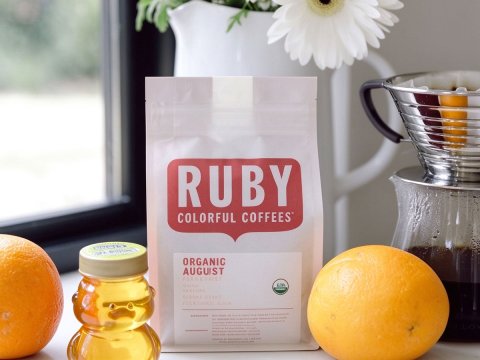
What Wendelboe codified is now simply called the Nordic style, and its tenets are strict: roast light enough to preserve the coffee's origin character, buy only from producers you know personally, and treat acidity not as a flaw to be roasted away but as the signature of a living agricultural product. Where darker roasting adds a uniform toastiness, the Nordic approach argues that it erases the difference between a Kenyan and a Colombian — and erasing difference, to this school, is the original sin. The roastery's 2013 World's Best Roastery award from a European industry jury validated the doctrine commercially, and the global spread of the style — from Brooklyn to Tokyo — traces demonstrably back to this Oslo address. The store sells that doctrine in every bag: filter roasts so light they look almost blonde, with flavor notes that name fruit, florals, and teas rather than chocolate and caramel.
Finca Tamana Is a Twenty-Year Experiment in Partnership
The sourcing story goes deeper than visits and contracts. In 2011, Wendelboe reconnected with Colombian producer Elias Roa in Huila and made an unusual offer: he would pay $3.50 per pound for all the coffee the farm produced, regardless of quality, if Roa would implement a wholesale renovation — better picking discipline, raised drying tables, processing upgrades. The initial results were not great, by Wendelboe's own admission, but the improvements compounded, and the partnership became the industry's most-cited case study in direct trade as long-term investment. Wendelboe then went further, buying seven hectares of adjacent land — Finca el Suelo — planted in 2015 with Typica and Geisha, to learn farming from the soil up. The store sells coffees from this extended family of farms with the kind of documentary transparency — books, videos, harvest reports — that turns a bag purchase into a correspondence course.
The School Sells Subscriptions, Videos, and a Worldview
The Shopify storefront is organized like a curriculum. At the top sits Tim's Choice — a subscription personally curated by Wendelboe, including micro-lots and rare varieties, with exclusive tasting videos from the roastery. Your Choice offers a profile-based subscription shipped the first Wednesday of each month, and gift subscriptions run three to twelve months. The site promises delivery to your mailbox anywhere in the world, which for an Oslo roastery is both a logistical flex and a cost reality. Alongside coffee sit the books — including the accessible brewing guide that became a professional standard — brew equipment, and the training center's course catalog. Nothing on the site chases trends; the catalog changes with the harvests, not the algorithm.
The Honest Frictions of Importing a Doctrine
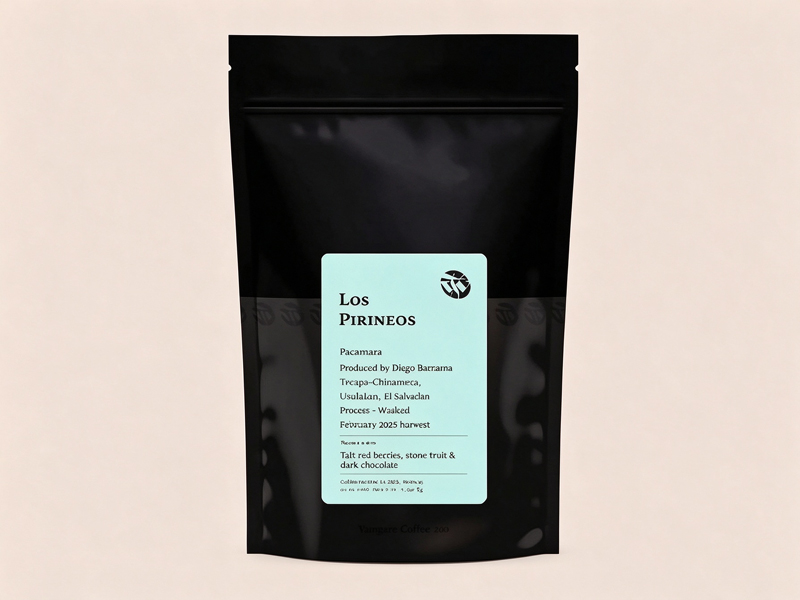
Buying from Oslo has predictable costs. Shipping to North America runs slowly and expensively compared with domestic roasters, and the promise of worldwide delivery comes with customs exposure and freshness math — a bag roasted on the first Wednesday of the month may spend a week in transit before brewing. The ultra-light style itself is the other gate: drinkers raised on medium and dark roasts will find these cups sharp, tea-like, and almost aggressively acidic, and the doctrine offers no compromise blend for them. Prices sit at the very top of the category, reflecting Norwegian wages and micro-lot sourcing. And the whole operation is deliberately personal — one man's name, palate, and philosophy — which is the source of its coherence and its fragility in equal measure.
One Address in Grünerløkka Taught the World to Roast Lighter
Tim Wendelboe's store is the rare case where buying coffee is buying into a completed argument. The championship credentials, the 2013 roastery award, the Finca Tamana experiment, the books and videos — every element reinforces the same thesis, and two decades of global imitation suggest the thesis won. Buyers who already love bright, origin-forward coffee will find the source; buyers who do not will at least understand, after one bag, exactly what the light-roast movement is arguing for.