For a better daily grind: the austin roaster that donates with every bag
Official homepage: https://greatergoodsroasting.com
Every roaster says its coffee is responsibly sourced; few build the donation into the bag itself. Greater Goods Roasting, founded in 2015 in the Texas Hill Country by Khanh Trang and Trey Cobb, has spent a decade making "giving back" a line item rather than a slogan — a portion of proceeds from every sale goes to nonprofit partners. The company roasts fresh in Austin under the tagline "For a Better Daily Grind," pairs meticulous light-roast profiles with Texas hospitality, and has stacked up national Good Food Awards recognition along the way. This review examines a store where the mission statement is printed on the receipt.
Two Friends Followed Their Palates Into the Hill Country
The founding story begins where the website's own "About" page puts it: in 2015, Khanh Trang and Trey Cobb decided to follow their dreams — and their palates — into the Texas Hill Country to form a roasting company. The pairing mattered. Cobb came from Austin's music scene, where he had spent years on the road as a guitarist; Trang brought the operational discipline the touring life teaches. They named the company for what they intended the coffee to produce — goods that were greater than the sum of caffeine and commerce — and built the brand around an idea that was unfashionable in 2015: that a roastery could be explicitly about generosity.
A Portion of Every Sale Funds Named Nonprofit Partners
The donation model is structural, not seasonal. Every bag purchased sends a portion of proceeds to a roster of nonprofit partners, and the company has long prioritized Texas organizations working on food security, animal welfare, and — reflecting Cobb's years in the music business — mental-health services for Austin's creative community. The point is not the size of any single check; it is that the mechanism never turns off. A subscriber who drinks two bags a month is a monthly donor without ever writing a separate check, and the store's product pages surface the partners rather than burying them in a footer. In a category where "ethical" usually means a certification logo, this is a different contract with the customer.
Custom Profiles Chase Sweetness, Not Spectacle
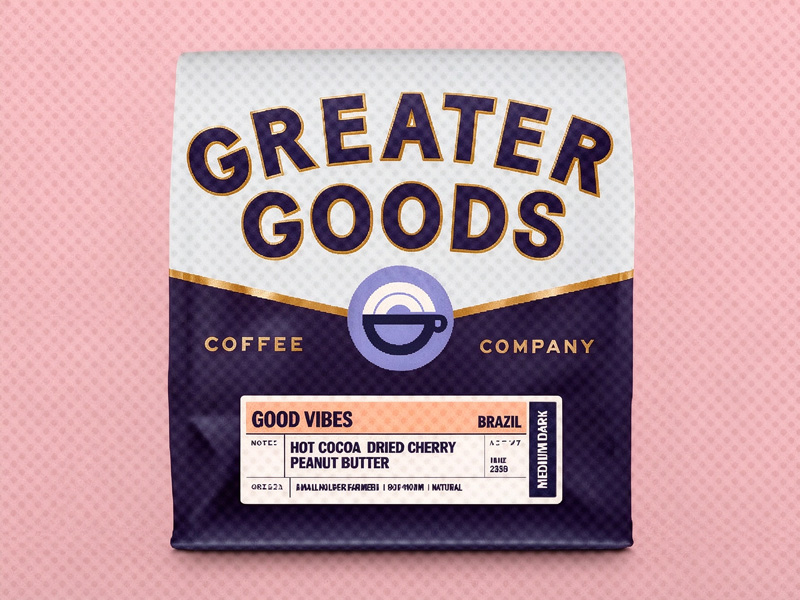
The roasting philosophy is stated plainly on the site: custom profiles designed to elevate the natural character of each coffee, "from sparkling acidity to brown sugar sweetness." That framing is instructive — Greater Goods roasts toward sweetness and clarity, the modern light-to-medium style, and away from the darker, heavier roasts that once defined Texas coffee culture. Sourcing runs through trusted producers and importers chosen for sustainability, transparency, and equity, with long-term relationships valued over one-off lots. The proof has shown up in awards: the company has collected multiple Good Food Awards, the national competition that evaluates flavor alongside social and environmental practice, which makes the recognition a fair proxy for both cup quality and conduct.
The Catalog Rotates With the Harvest and the Seasons
The storefront is built for repeat visits rather than one-time hero purchases. Single origins rotate with the harvest calendar — a honey-processed Ethiopia like the Danche lot sits beside washed Central Americans and the occasional experimental process — while blends anchor the daily-drinker end of the range. Subscriptions carry the same flexibility buyers expect from serious roasters, with cadence and quantity adjustable, and the giving-back hook applies to every shipment automatically. Around the coffee sit the usual supporting cast — brewing gear, branded merchandise, gift sets — all of it carrying the company's warm, unfussy voice. The store reads like the cafés feel: hospitable first, technical second.
The Honest Trade-Offs Behind the Generosity
A mission-forward model has costs, and the store's limitations trace directly to its size. The nonprofit donations are a percentage of proceeds, not a fixed commitment, so the giving scales with sales rather than anchoring to a dollar floor — a nuance mission-first buyers should understand. National shipping from a single Austin roastery means coast-to-coast delivery is slower and pricier than distribution-backed competitors. The light-to-medium roast style, while award-winning, will taste bright and tea-like to drinkers who want the heavy, chocolate-dark profile associated with Texas coffee. And the catalog, deliberately curated rather than exhaustive, lacks the deep Gesha lots and auction rarities that headline collectors' shelves. Buyers shopping for impact will not mind; buyers shopping for spectacle might.
A Decade of Proof That Goodness Can Scale
Greater Goods Roasting is the rare store where the tagline survives contact with the P&L. Ten years in, the donations continue on every bag, the Good Food Awards keep arriving, the roasting stays meticulous, and the brand identity — Texas hospitality with a receipt-level conscience — has not diluted under growth. For buyers who want their morning coffee to fund something beyond the morning, this is one of the most coherent stores in the category: the mission is not marketing, it is the business model, and the coffee is good enough to carry it.