90-Plus cupping scores, no printed menus, and the espresso sacramento swears by
Official homepage: https://templecoffee.com
Some roasters are famous; Temple Coffee is the kind roasters themselves respect. Active in Sacramento since 2005, the quality-obsessed company buys directly from producers, builds a custom roast profile for every lot that comes through its doors, and has stacked up multiple 90-plus scores from Coffee Review — the independent cupping publication whose ratings function as the industry's report card. Its Dharma Espresso blend is a regional institution, its two cafés operate without printed menus by design, and its roastery has survived two decades while flashier names came and went. This review examines the store behind Sacramento's quiet benchmark.
Two Decades of Buying Direct From Producers
Temple's sourcing doctrine is stated without hedging: the company buys coffee directly from producers and believes every individual coffee deserves its own approach. In practice that means no house formula applied across lots — each new arrival gets a tailored roast profile designed to showcase what makes that coffee distinct, whether that is the fruit-forward brightness of an Ethiopian heirloom lot or the pecan-pie chocolate of a Brazil–Peru pairing. The team frames its philosophy as a refusal to treat great coffee as an accident, and the sourcing stays deliberately close to the farm level. Two decades into the practice, the consistency shows up in third-party validation rather than in the company's own adjectives.
Dharma Espresso Anchors the Catalog Like a Capital
The flagship blend is Dharma Espresso, a dark-roasted espresso that balances an Ethiopian component's dried-cherry fruitiness against cocoa and baking-spice notes from Brazil and Peru. Cupping descriptions emphasize full body, a sweet finish, and enough complexity to carry a straight shot or disappear gracefully into milk — which is precisely the versatility that makes a blend an institution rather than a seasonal experiment. Dharma sits at the top of the online catalog the way it sits atop Sacramento café culture: not loudly, but as the default answer when locals are asked where to start. Around it, rotating single origins carry harvest detail and roast profiles tuned lot by lot.
The Scores Are Third-Party and the Proof Is Public
Temple's quality claims come with receipts from outside the building. The company has earned multiple 90-plus ratings from Coffee Review — a publication that buys coffees anonymously and cups them blind, making its scores among the few in the industry that cannot be purchased or negotiated. A CNN profile of the nation's best small coffee roasters included Temple among its subjects, adding mainstream recognition to the cupping scores. For online buyers wary of roaster self-praise, this is the useful kind of evidence: independent, repeatable, and accumulated over years rather than assembled for a launch campaign.
Menus Are Optional, Conversation Is the Default
The café experience explains the brand's personality better than any bag copy. Temple's Sacramento locations famously operate without printed menus — a deliberate choice meant to push interaction between barista and customer rather than transactional ordering — and the midtown shop doubles as the working roastery. One longtime customer review, written by a regular rather than a marketer, calls the baristas knowledgeable and friendly while gently complaining about the tip prompt and the menu-less concept; that combination of devotion and mild friction is exactly what an honest neighborhood institution looks like. The storefront translates the same ethos online: product pages read like barista conversations, with roast intent and brew guidance taking the place of superlatives.
The Catalog Rotates, but the Standards Do Not
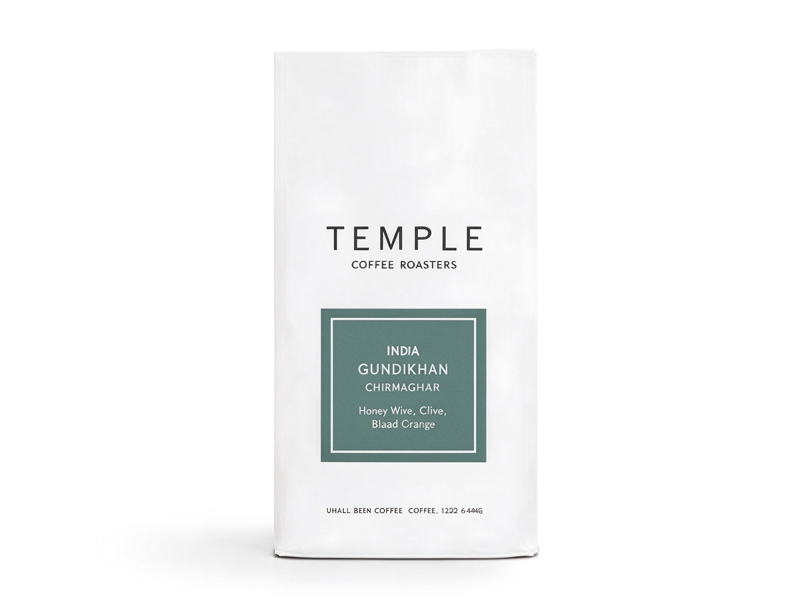
The Shopify store is organized around a simple contract: the catalog rotates with the harvest, the standards do not move. Dharma anchors the espresso end, single origins rotate through washed Kenyans, Ethiopians, and Latin Americans with lot-level detail, and subscriptions cover both blends and rotating picks with cadence flexibility. Around the coffee sit brewing equipment and the occasional seasonal experiment — the company marked April Fools' Day 2026 with an Espresso Dillight, a pickle-soda-and-espresso special that shows a roaster confident enough in its seriousness to be silly once a year. Small touches like that keep a two-decade-old brand from calcifying.
The Honest Frictions Behind the Cupping Scores
Perfectionism has a user experience cost. Because Temple roasts to order and keeps volumes deliberate, popular lots sell out, and the rotation-first catalog means a favorite origin may not return on any schedule. Shipping from a single Sacramento roastery keeps transit times honest but not fast for East Coast buyers. The menu-less café philosophy, charming to regulars, can read as opacity to first-timers who simply want prices in writing. And while Dharma is a proven crowd-pleaser, espresso drinkers chasing brighter, more experimental single-origin shots will find the catalog's center of gravity traditional. None of these are failures; all of them are the shape of a company that chose depth over scale.
Sacramento's Benchmark Survives by Refusing to Shout
Temple Coffee has spent twenty years doing the unfashionable thing: letting third-party cupping scores, direct producer relationships, and a flagship blend speak instead of marketing. The result is a store that functions as a regional institution with a national mail-order business attached — and a catalog where every bag carries evidence of the obsession that roasted it. Buyers tired of coffee brands that perform their quality will find the alternative here.