Raycon store review: what to know before you buy wireless earbuds online

Official homepage: https://rayconglobal.com
Earbud stores usually compete on features — the more the better, the app the deeper. Raycon competes on a different axis: the homepage's opening shot is a jab at the entire category — most earbuds quit by lunch — and the copy beneath promises forty hours before the next charge. I browsed with a drawer of earbuds whose apps I had deleted and a curiosity about what a brand gains by refusing to build one. Here is the counter, decision by decision.
Door Policy: An Insult Aimed at the Category
The storefront's first sentence is not about the product but about the competition — most earbuds quit by lunch — a line that dares the visitor to remember her own dead-battery afternoon. Opening with the competitor's failure targets the frustrated mainstream buyer: the insult says the brand understands her daily reality better than the spec-sheet brands do, the forty-hour promise answers the insult with arithmetic, and the customer who has lived the pain does not need a second reason. The insult is the pitch, and the pitch has a punchline she has lived, and the punchline is forty hours long.
A Pillow, Not a Commute
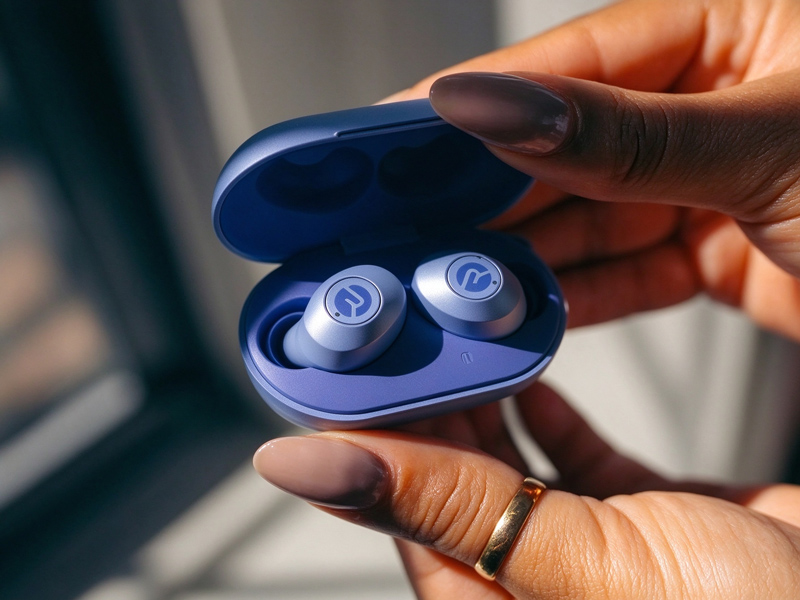
The newest product line is built for a place earbuds never go — sleep: the copy announces a pair engineered for eight hours on a pillow, with a visual comparison that shows the brand's bud sitting flush beside a standard one protruding and pressing. Designing for the pillow invents a scenario the industry ignored: the flat profile answers the pillow-pressure problem, the sleep sounds replace the phone she is trying to escape, and the brand has created a use case rather than iterating on an existing one. The pillow is the frontier, and the frontier was empty until the brand moved in.
The Three Refusals
The sleep line carries a manifesto in negatives — no apps, no pairing delays, no draining your phone battery — three refusals printed as features. Refusing the app is simplicity positioning aimed at the customer exhausted by the setup ritual: the touch controls work without a download, the sounds live inside the hardware rather than on her phone, and the brand has converted the industry's feature-addiction into its own differentiating absence. The absences are the features, and the features are the reasons the competition feels like work, and work is what she is trying to sleep through.
Sounds Built In, Not Streamed
Beneath the refusals sits the mechanism — five built-in soundscapes, pink and brown noise among them, generated inside the earbuds rather than streamed from a device. Building the sounds into the hardware is independence aimed at the sleeper who wants her phone in another room: the pink noise does not buffer, the brown noise does not eat her battery, and the brand has cut the last tether between the customer and the screen she was trying to escape. The sounds are the freedom, and the freedom is the product, and the product works in airplane mode.
The Washing Machine Testimonial
Among the customer quotes sits one that reads like an accident report — a parent whose son's earbuds, case included, survived three trips through the washing machine and still work. Publishing the laundry anecdote is durability proof aimed at the skeptic who suspects affordable earbuds of fragility: the story is unscripted, specific, and more convincing than any IP rating, and the brand has let its customers' disasters do the stress-testing that laboratories charge for. The washing machine is the certification, and the certification is written by a child who forgot to check his pockets.
A Dorm Room Hunch
The brand story begins in 2017 with a straightforward hunch — premium audio should not cost a month of dining-hall meals — and a founder from the music industry who understood the student budget because he had lived it. Founding on the student market is a long-game positioning aimed at the customer who upgrades: the college student who buys at forty dollars becomes the professional who buys the flagship, the brand grew with its first customers, and the dorm room origin gives the value positioning a story rather than a spreadsheet. The dorm room is the genesis, and the genesis explains the price, and the price explains the dorm rooms still buying.
A Shape for Every Ear
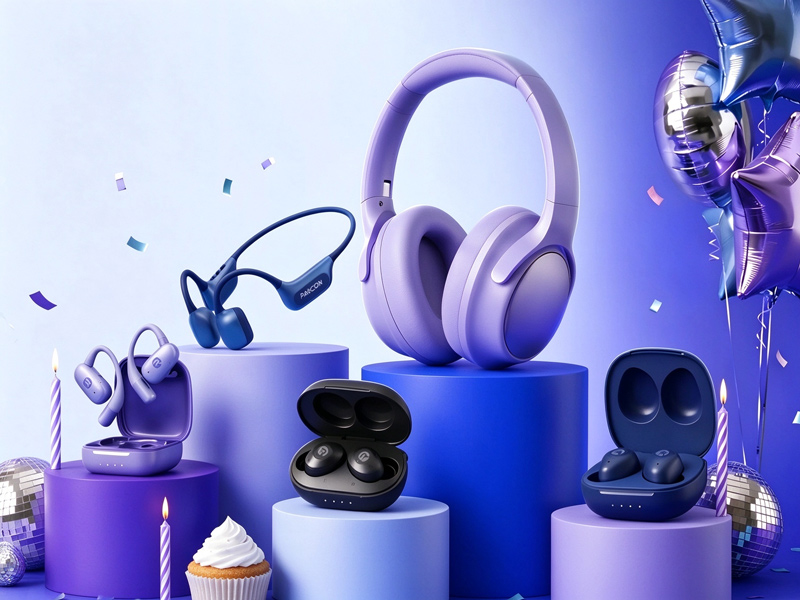
The catalog spans the era's ear geometries — the classic bud, the clip, the open-ear hook, the behind-the-head band, the over-ear cup, and now the sleep pair — each shape answering a different objection to the in-ear norm. Covering every form factor saturates the household rather than the individual: the runner takes the clip, the commuter takes the noise-cancelling bud, the child takes the washing-machine survivor, and the family that enters through one shape discovers the others. The shapes are the answers, and the answers multiply the customers, and the customers multiply in the same house.