Pattern beauty store review: what to know before you buy curly hair products

Official homepage: https://patternbeauty.com
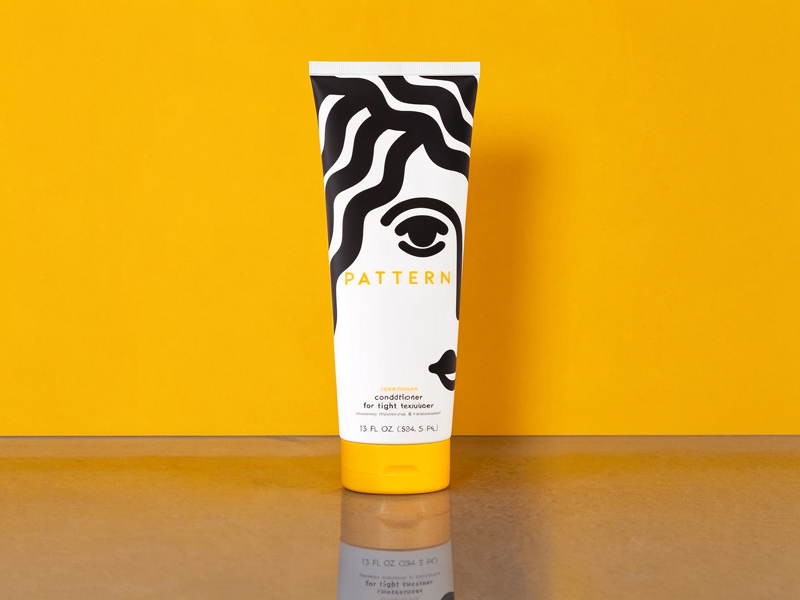
Curly-hair stores usually open with a curl chart — the typing system, the porosity quiz, the diagram of spirals from wavy to coily. Pattern Beauty opens with a face: the packaging carries a bold line drawing of a woman's profile, eyes closed, lips full, hair rendered in sweeping black strokes, and the face is the first thing the customer meets before the founder's name appears. The name belongs to Tracee Ellis Ross, the actress who spent years on a sitcom wearing her natural hair on network television while the industry told her it was not professional, and who built this store as the answer to that argument. I browsed with waves that obey no product consistently and a weakness for brands founded by grievance. Here is the counter, decision by decision.
Door Policy: A Face Before a Formula
The storefront's most repeated asset is the illustrated face — printed across bottles, jars, and the dryer, in yellow and black, unmistakable on a crowded shelf. Building the packaging around a single drawing is shelf presence aimed at the customer who shops by recognition: the face is the brand, the yellow is the flag, and a customer who has seen one Pattern bottle in a friend's shower will spot every other one in the store. The face is the logo, the logo is the story, and the story is the founder's — and the founder's story is one the customer has watched on television for years.
A Celebrity Who Paid Her Dues in Public
The about page introduces the founder with her hair history — years of industry pressure to straighten it, years of wearing it natural on camera anyway, and a decade of wanting products that understood the textures the aisle ignored. Leading with the grievance rather than the fame builds credibility with the customer skeptical of celebrity lines: the actress is not lending her name to a formula, she is the customer the formula was built for, and the distinction converts suspicion into identification. The celebrity is the proof, not the pitch — she wore the proof on camera for a decade before anyone sold it to her.
Claims With Numbers Attached
The product cards carry their arithmetic openly — the curl gel promising four times the definition and six times the shine, the moisture milk promising seventy-two hours of hydration, each number printed beside its review count in the thousands. Publishing the figures is claims discipline aimed at the comparison shopper who has read every superlative: the numbers are specific enough to test, the review counts large enough to trust, and the store has converted its most common complaints — dryness, definition, longevity — into quantifiable promises. The arithmetic is the advertising, and the arithmetic can be checked.
The Best of the Best, Curated by Repurchase
Between the new releases and the collections sits a section with a plainspoken name — the best of the best — populated not by the newest or the most promoted but by the products customers reorder most. Curating by repurchase rather than launch calendar reduces the first-time buyer's risk: the section says the community has already voted, the new customer's job is reduced to choosing among the winners, and the store converts its own sales history into a recommendation engine. The best-seller list is written by the customers, it updates itself, and nobody can accuse it of being marketing.
A Dryer Built for the Texture
The tool shelf carries a dryer in the brand's beige, engineered for curls — a wide diffuser attachment, a gentle airflow, the copy explaining that the pattern the products protect should also survive the styling. Extending from formulas into hardware completes the ritual: the wash day ends with the dryer, the dryer that understands the hair completes the system, and the customer who trusted the gel with her definition now trusts the heat with her pattern. The tool is the closing argument — the argument that says the brand thought about her whole Tuesday, not just the shower part.
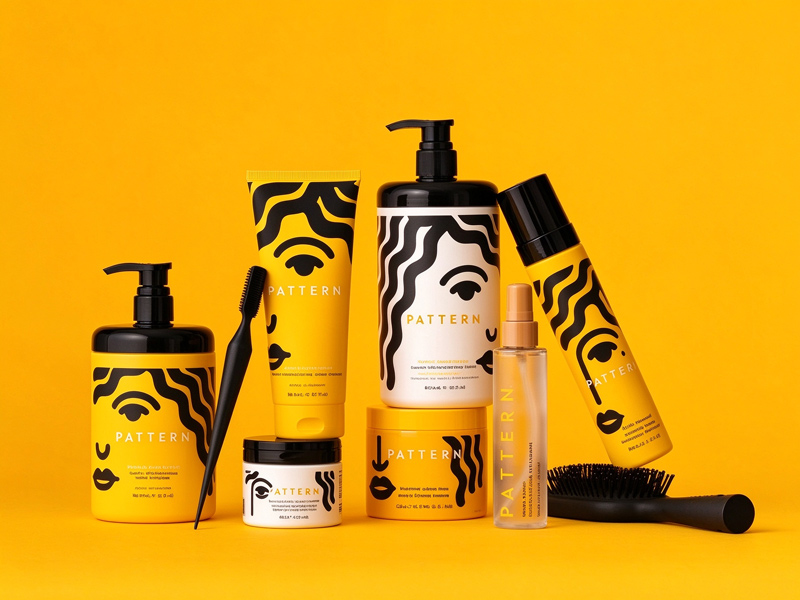
Yellow Where the Aisle Expects White
The packaging palette is a saturated yellow against black, standing alone in a category that defaults to clinical white or millennial blush. Choosing yellow is visibility aimed at the shelf and the shelfie: the color photographs instantly, the bottles become recognizable from across the store, and the customer who buys one Pattern product buys into a visual identity she can spot in anyone else's bathroom. The yellow is the billboard, and the billboard is the product, and the product is the proof that the billboard was honest.
The Channel as a Co-Signer
The store's credibility is compounded by its retail placement — the products sit in the major beauty chains, the copy notes the founder's years building the line for shelves where her own textures had never been served, and the direct store benefits from every end-cap the retail partner builds. Treating retail as a co-signer rather than a competitor serves the omni-shopper: she discovers the gel at the chain, restocks at the direct store, and the two channels feed each other without apology. The aisle is the advertisement; the direct store is the subscription; the subscription is the relationship.