Pantasy store review: what to know before you buy adult building block sets
Official homepage: https://pantasy.com
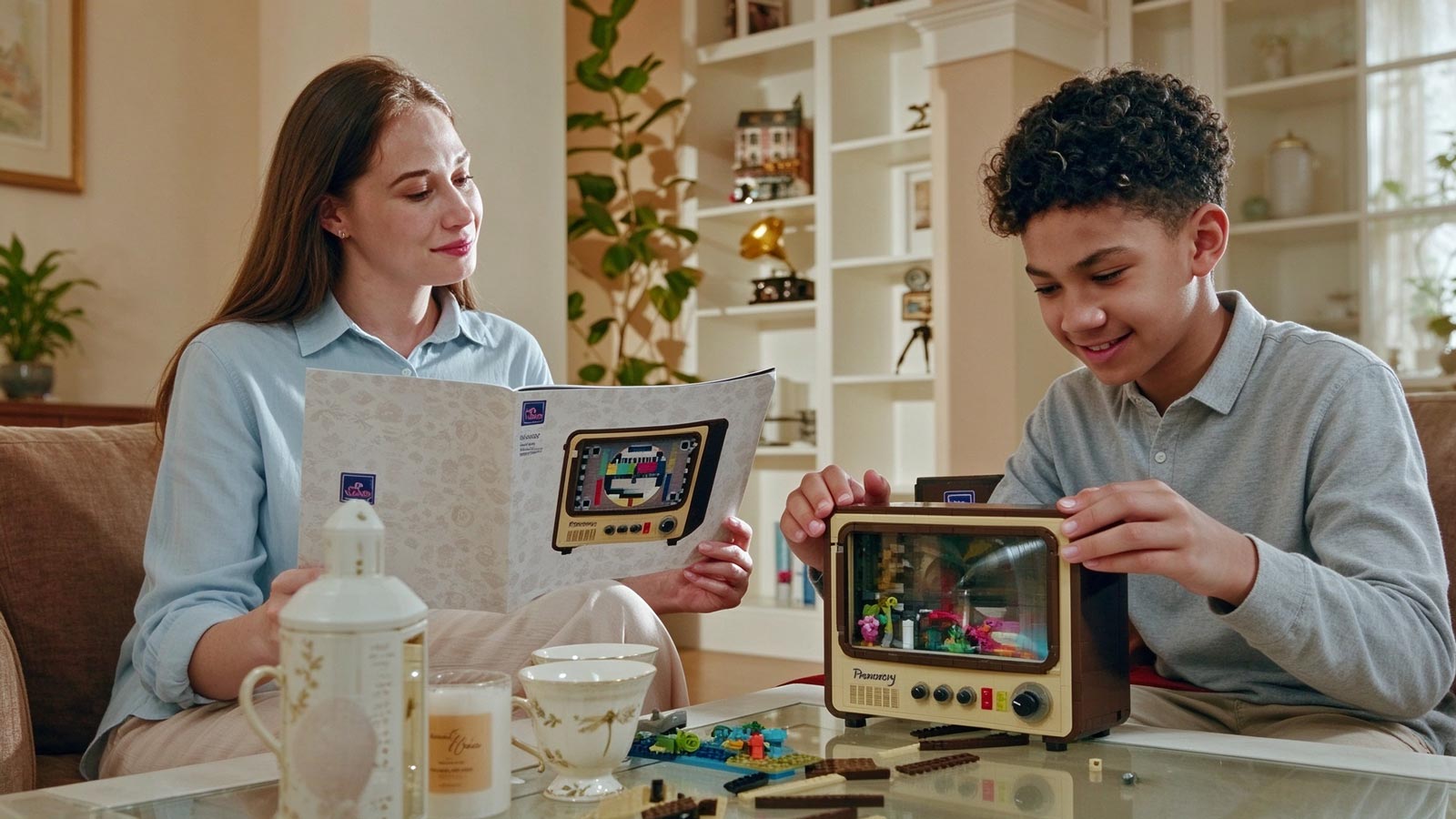
Block stores usually sell to children and hope adults will pay. Pantasy reverses the polarity: the storefront opens with a promise about grown-ups, the healing power of building blocks for adults, and the about page explains that the founders — people from all walks of life united by a shared passion — simply wanted sets that spoke to interests the toy aisle ignored. I browsed with a stress level that qualifies as a use case and a curiosity about what blocks look like when they are marketed as self-care. Here is the counter, decision by decision.
Door Policy: The Cure, Before the Toy
The storefront leads with a therapeutic claim — blocks as an emotional release, stress relief through the calming joy of building — and the four pillars under it complete the picture: mindful unwinding, joyful memories, ideal home decor, perfect gift. Positioning the catalog as wellness rather than play widens the market to the adult who has forgotten toys exist for her: the set is sold as an evening ritual, a screen-free hour, a finished object for the shelf that happens to have been built by her own hands, and the customer who buys for calm is a better repeat customer than the one who buys for a child. The calm is the product; the blocks are the prescription; the prescription is refillable.
A Wall of Numbers as the Scale Proof
The about page carries four figures — forty-plus licensed intellectual properties, over three hundred and ten sets, more than forty countries, and three thousand six hundred sales channels. Publishing the four numbers together argues legitimacy faster than any testimonial: the IP count says the licenses are real, the set count says the catalog is deep, the country count says the shipping works, and the channel count says the brand is not a storefront pretending to be a factory. The numbers are the business card, and the card fits on one line.
Two Railroads, One Station
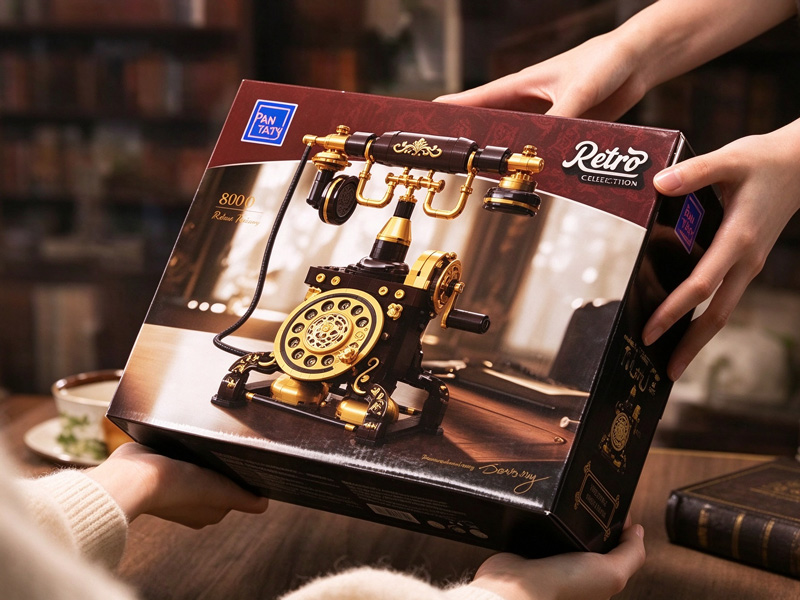
The catalog splits into two systems — an IP series carrying a dozen licensed worlds from a gentle Finnish troll to a golden-armored anime saint, and a creative series of fourteen original themes from steampunk to botanical — each feeding the same shelf. Running licensed and original tracks in parallel stacks two audiences on one infrastructure: the IP sets sell recognition, the creative sets sell aesthetics, and a customer who arrives for one often leaves with the other because the building experience is the constant underneath. The licenses pull; the originals keep; the station serves both.
A Menu That Names Its Service
The help section is not a FAQ but a menu of specific services — missing part service, digital building instructions, lighting and electronic module installation tutorials — each named like a product. Itemizing the support infrastructure reduces the first-time buyer's risk: the missing-parts promise answers the fear every builder has, the digital instructions answer the lost-manual fear, the lighting tutorial answers the modification fear, and the store has published its own after-sales ledger before anyone had to ask. The menu is the warranty, and the warranty is printed where the products are.
Customization as a Department
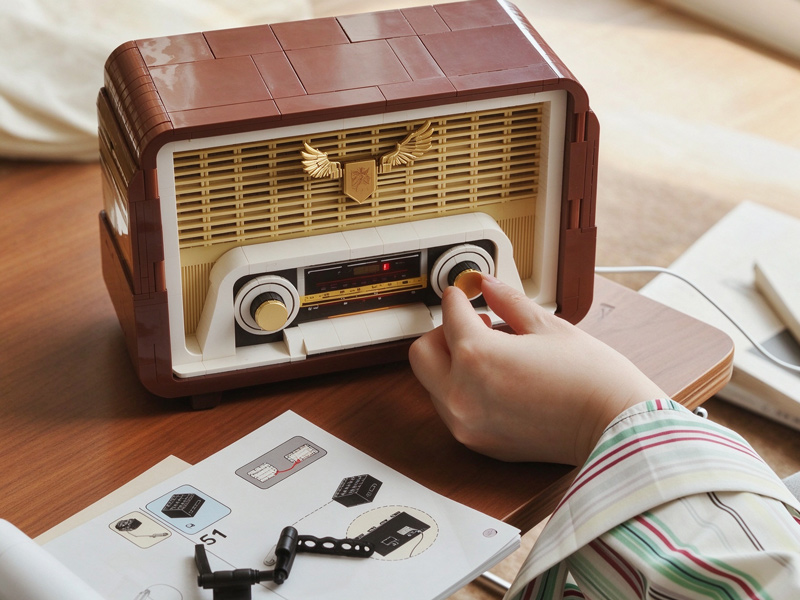
Beyond the catalog sits a customization service — the store will build to order, and a wholesale door for bulk buyers. Offering brick customization opens bespoke and B2B revenue on the same factory: the corporate gift, the event giveaway, the one-off commission, each served by the same production line that runs the retail sets, and the store that can customize is the store that can say yes when every competitor must say no. The yes is the differentiator, and the differentiator is a department, not a footnote.
The Repair Bay as a Product
Among the new releases sits a workshop — a turbofan engine on a gantry, a robot technician, tool carts, the copy calling it a highly detailed and accurate aircraft engine maintenance workshop. Selling the maintenance bay rather than the aircraft expands the scene for the builder who already owns the machines: the workshop gives the collection a context, the scene is display-worthy without being a vehicle, and the store has discovered that the garage sells almost as well as the car. The bay is the second purchase hiding inside the first, and the hiding place is the shelf.
The Food Street as Cultural Export
The smaller sets carry street food stalls — a lobster, a goldfish, a noodle stand, a grape seller — each with signage in its original script, priced as an entry point. Leading a corner of the catalog with regional food culture is identity aimed at the diaspora and the curious: the stalls are instantly recognizable to those who know the originals, charmingly exotic to those who do not, and the forty-dollar price turns a cultural tribute into an impulse buy. The stall is the postcard you assemble, and the postcard ships in a box.