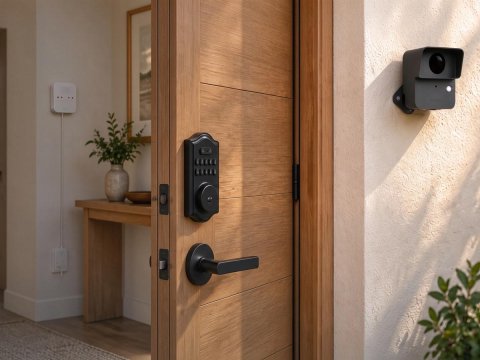
Meross's quiet sockets: garage-door upstarts, subscription-free pledges, homekit on a budget, standby killers
Official homepage: https://shop.meross.com
Smart-home stores usually announce themselves — a camera, a speaker, a glowing hub. Meross announces nothing. The official store is a catalog of small white objects, most under fifty dollars, that disappear into outlets, walls, and garages, and the slogan on the brand's masthead says the whole strategy: simple devices, simplify your life. I browsed with a garage door older than my marriage and a suspicion that smart home meant monthly fees. Here is the counter, decision by decision.
Door Policy: Sell the Absence of Attention
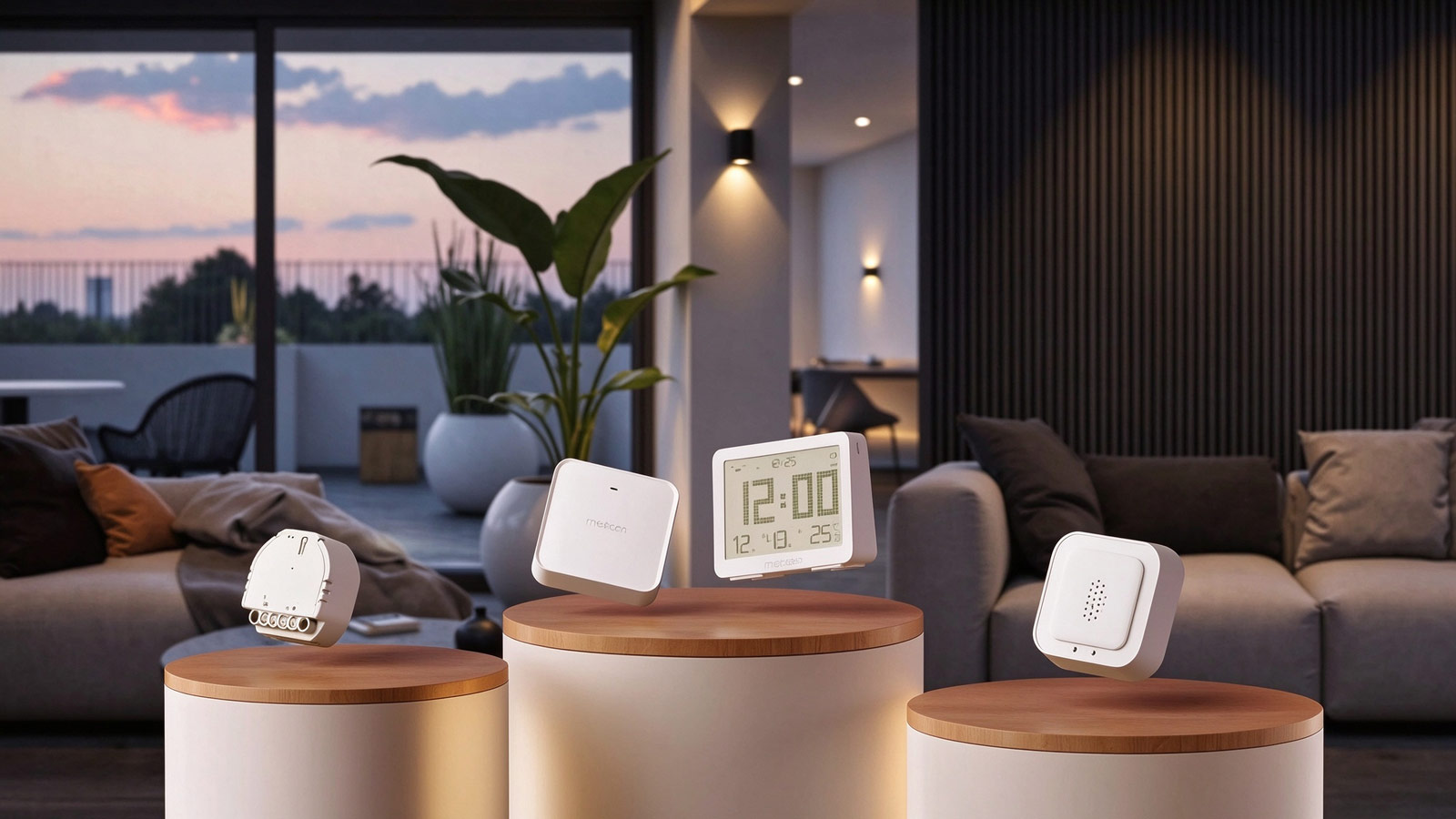
The store leads with objects designed not to be seen — plugs, switches, sensors in plain white — and a promise to simplify rather than impress. Choosing invisibility flips the category's logic: where rivals sell status screens, Meross sells the absence of attention, and the catalog photography agrees, showing devices blended into walls rather than glowing on pedestals. The customer who wants visitors to notice her smart home is not the customer; the one who wants to never think about it again is, and the whole store is arranged for her.
The Garage as Wedge Product
The signature product is not a socket but a garage controller — a small box, under fifty dollars, that grafts onto an existing opener and reports door status to a phone, with compatibility claimed across more than sixteen hundred models and two hundred brands. Leading a smart-home brand with garage hardware works as a wedge: every house already has the dumb device, the upgrade is one wire, and the first purchase teaches the brand's whole philosophy — keep the old hardware, add the brain. The garage door is the gateway drug that makes the second device feel inevitable.
The Fee That Refuses to Exist
Across the product pages runs the same line, printed where competitors print pricing tiers: no monthly fee, no subscription. Making the absence of a fee a headline counters the camera giants whose cloud plans fund their hardware losses — Meross charges once, promises nothing recurring, and lets the customer compute the two-year cost of ownership herself. In a category built on recurring revenue, refusing it reads as either naivety or confidence, and the review scores suggest the store knows which it is.
Ecosystem Tax Refunded at Checkout
The product cards carry certification marks most shoppers associate with premium prices — Apple's HomeKit among them — beside tags in the twenty-to-fifty-dollar range, with pairing reduced to scanning a QR code. Selling certified compatibility at commodity prices exploits the ecosystem premium: the Apple loyalist who expects a tax finds none, discovers the rest of the catalog, and becomes an evangelist, because recommending a fifty-dollar plug is easier than recommending a three-hundred-dollar hub. The certification is the advertisement; the price is the conversion.

An Electricity Bill Detective
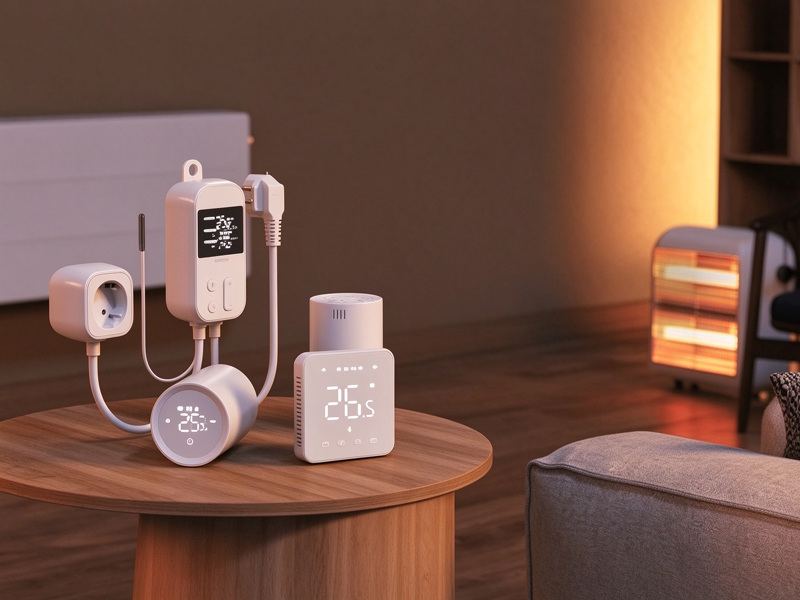
Among the plugs sits one with a job description rather than a name — energy monitoring, standby killing — reporting what every plugged-in device actually costs and cutting the ones idling invisibly. Merchandising a bill detective attacks the justification stage of smart-home shopping: the customer who hesitates at twenty dollars for a plug converts when the plug promises to find her twenty dollars of waste, and the first month of data becomes the store's most persuasive advertisement, generated by the customer's own house.
Matter Treated as Plumbing
The catalog folds Matter — the cross-brand standard promising devices will just work together — into descriptions as routine, listed beside HomeKit, Alexa, Google, and SmartThings as one more checkbox. Treating the industry's great interoperability hope as plumbing serves the quiet-device thesis: the customer should not have to learn what Matter is, only that whatever she already owns will probably work, and the five-logo row on the product page answers a question she has not yet thought to ask. Standards, when they truly work, disappear.
A Diagnostic Before the Drill
Before a customer commits to the garage controller, the store offers a checker — enter the make and model of your existing opener, and it tells you what you need, including, for edge cases, a free accessory shipped after you report the color of a button on your old unit. Putting a diagnostic at the point of hesitation converts the category's scariest unknown — will it work with my ancient door — into a fifteen-second interaction, and the free-accessory policy turns even rare incompatibility into a demonstration of support. Fear, met with a form, becomes a sale.