Lighting a collector's obsession: the melbourne startup that started a LEGO lighting industry
Official homepage: https://lightmybricks.com
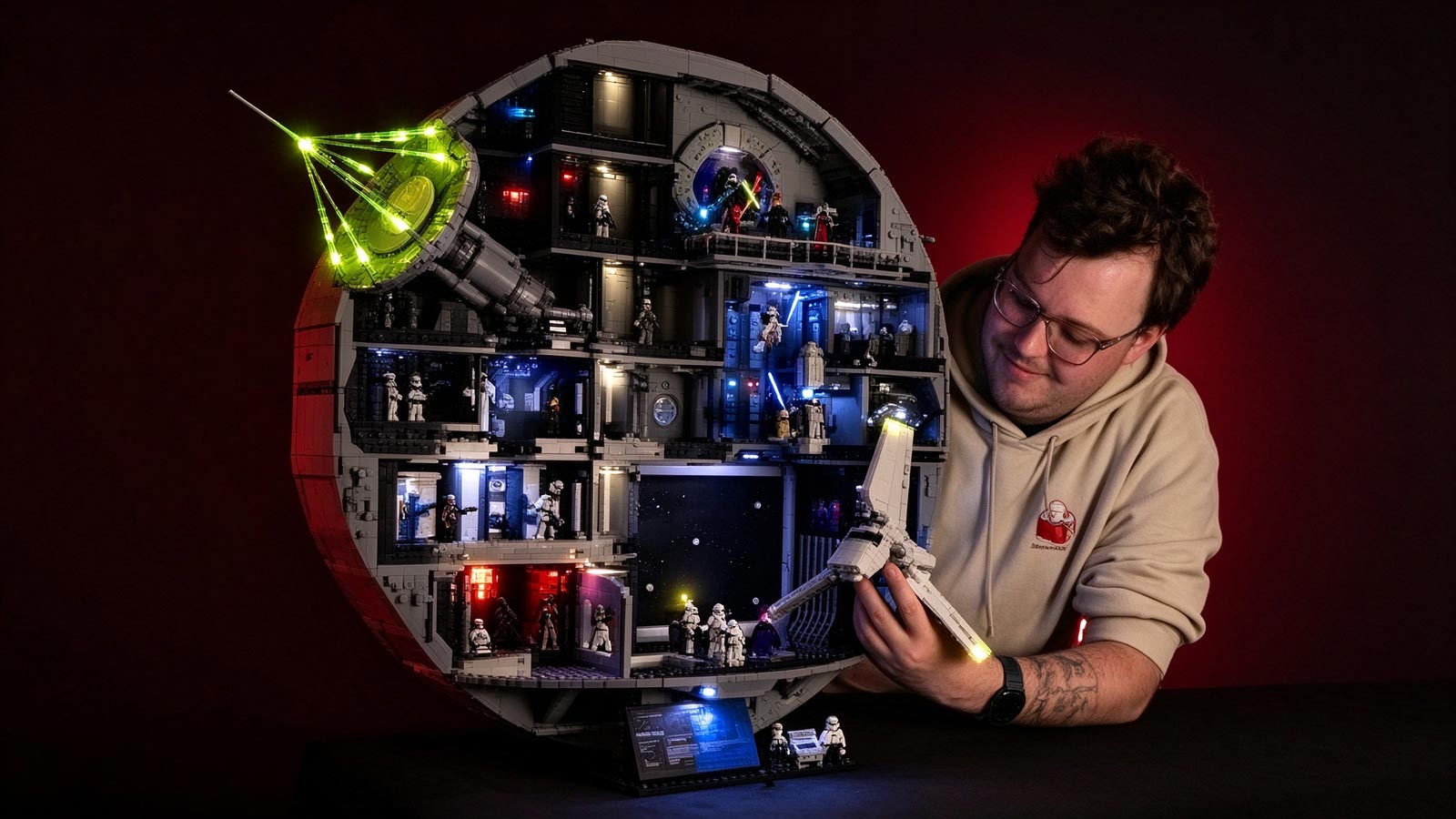
Light My Bricks sells tiny LEDs that make a $5.5 billion building system glow after dark.
In 2015, a young Melbourne father named Kenny Lee rediscovered his childhood bricks after his kids pulled him back into the hobby — and noticed that adult fans were lighting their creations with generic electronics, fused wires, and guesswork. His response became, by most accounts, the first company in the world dedicated entirely to lighting kits for LEGO sets. A decade later, Light My Bricks claims the largest kit range in the category, operates warehouses on five continents, and ships its modular lighting system to collectors in dozens of countries. This review examines the founder's path, the engineering philosophy behind its modular components, and the honest installation caveats reviewers keep raising.
A Father of Two Returns to His Bricks
Lee's origin story follows the adult-fan playbook almost perfectly. Classmates wanted to be doctors and policemen; he wanted to be a magician or circus performer — anything outside the box. Adulthood brought the expected box: corporate work and a family. Then his two children rediscovered the brick bin, and Lee fell back in love with building.
What he found in the adult fan community was a gap rather than a product: collectors wanted to light their sets, but the available solutions were clunky — generic LEDs taped to ceilings of builds, wires crudely fused into bricks, no guidance for which lights belonged where. As a young father with limited time, he wanted enhancement without engineering. Competitors offered components; nobody offered a complete, guided solution. That absence became the business.
The First Lighting Company in the Market
The company's own positioning — repeated across case studies and founder interviews — is that it was the first lighting company in the brick world dedicated to this purpose. Whether or not a rival dispute exists, the timing claim aligns with the record: by 2016, industry writeups were already profiling the young Australian e-commerce company, and the category it created now includes numerous imitators.
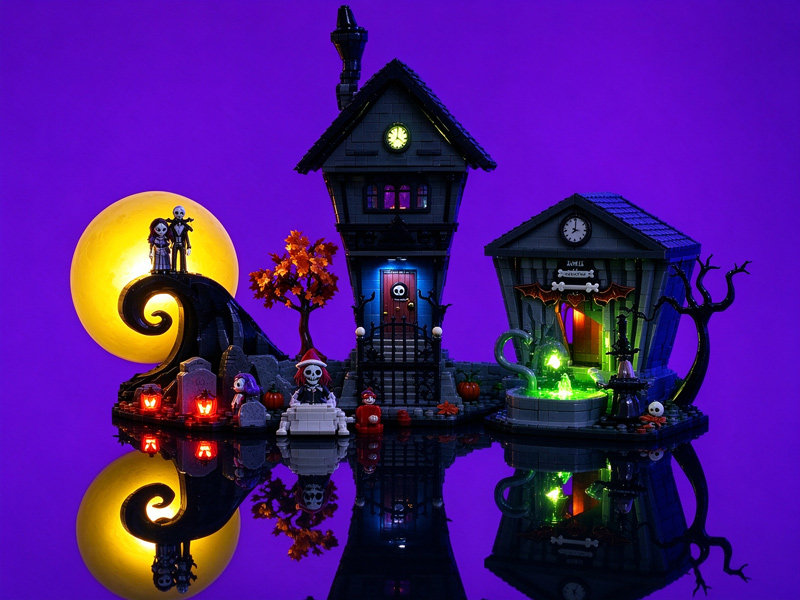
First-mover position shows up in the catalog's depth. Where newer brands cover a few dozen popular sets, Light My Bricks maintains kits for the full breadth of the modern brick canon — Star Wars UCS behemoths, modular buildings, Disney castles, Technic supercars, Harry Potter scenes — and adds new designs as the toy maker releases new sets. For a collector whose shelves span themes, one supplier covering everything has obvious pull.
Modular Wires, Never Fused Into the Bricks
The engineering philosophy is the brand's most defensible claim. Cheap lighting kits glue or fuse LEDs permanently into modified bricks, which damages resale value and prevents rearrangement. Light My Bricks components are deliberately modular — thin wires and LEDs that pass between and beneath bricks without modifying them, connecting through plug-and-play boards that can be reconfigured as builds evolve.
The practical effect matters to collectors: a lit set can be disassembled, the lights recovered, and redeployed into the next build. The components also integrate with the stud system — the Power Brick, for instance, is a concealed battery unit sized to click into a build like an ordinary brick. Kits even bundle genuine transparent pieces from the original toy maker to create light channels, which no fully aftermarket kit can replicate.
Instructions That Work Mid-Build, Not Just After
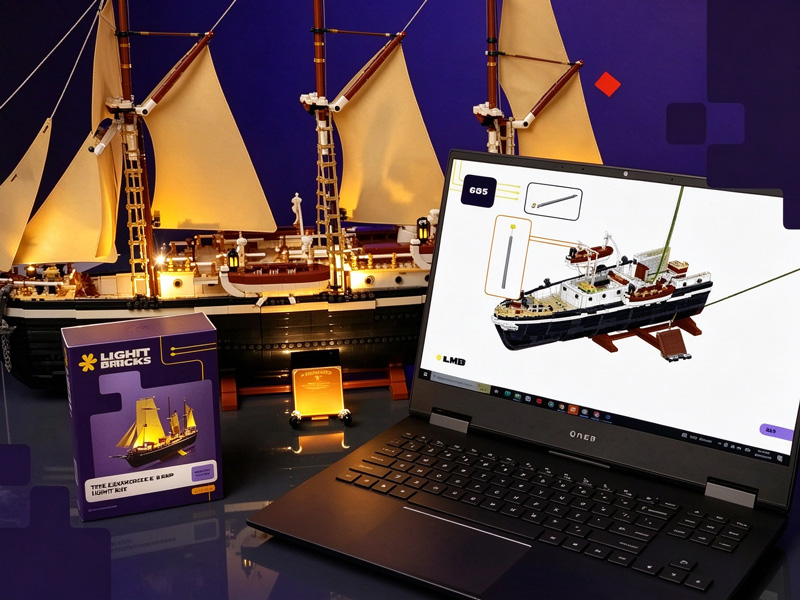
The instruction system deserves its own section because it is the store's quietest differentiator. Lighting a finished model means partially disassembling it to thread wires — tedious and risky for complex builds. The company claims to be the only one publishing lighting instructions that work during the build as well as after, letting builders route cables as they stack bricks.
The guides mimic the original toy maker's instruction style — numbered steps, callouts showing exactly where each wire passes — and are hosted online, so they never yellow in a drawer. For the adult builder who treats instructions as sacred, this design language lowers the intimidation barrier dramatically, and reviewers repeatedly single it out as the reason they chose the brand over cheaper rivals.
A Five-Year Quest for an Invisible Cable
The founder interviews reveal an unusual commitment: for roughly five years, the team has been redeveloping its product line from the ground up. The current wires are thin but still visible; bricks were never designed to hide cabling underneath. The stated goal is a stronger, thinner cable that disappears entirely, plus simplified plugs and a building-and-wiring experience that happens simultaneously rather than sequentially.
This is either admirable R&D or an admission that today's product is imperfect — in truth, both. The candor matters for buyers: the store is openly iterating, which means current kits are good but knowingly transitional. Collectors who light a shelf today should expect the next generation of components to render today's cables slightly obsolete, though the modular design means pieces will likely remain compatible.
Power Bricks and Studs That Click Together
The accessory ecosystem extends the modular philosophy. The Power Brick conceals its electronics in a 32-by-24-millimeter unit with a stud system, runs on common coin batteries, and chains with other Power Bricks for larger displays. Beyond set-specific kits, the store sells DIY components — individual LEDs, expansion boards, effect modules — for builders inventing their own lighting schemes.
The breadth functions as a business moat: a collector who learns the plug system on one kit can expand infinitely within it, while a rival's incompatible connectors reset the learning curve. For the adult-fan demographic with disposable income and completionist instincts, that ecosystem lock-in is commercially powerful and, for the customer, mostly convenient.
Five Warehouses and a Suggest-a-Set Pipeline
Logistics followed the audience. Warehouses in Australia, the United States, the United Kingdom, the Netherlands, and Canada let the company ship regionally without cross-border duties, and regional storefronts price in local currencies. The Australian home base — Melbourne — remains where kits are designed, assembled, and quality-checked.
The product pipeline runs partly on community input: a suggest-a-set page lets fans nominate upcoming sets for lighting kits, with notifications when a design ships. It is a tidy loop — the audience literally votes on the catalog — and it keeps the range aligned with what builders actually display, from retired modulars to the latest collector-series releases.
Delicate Wires and Honest Installation Caveats
The review would be incomplete without the recurring complaints. Independent reviews of the kits flag the 26-to-28-gauge connecting wires as fragile — they kink and break if handled carelessly during routing, a real risk inside a dense build. Battery-powered systems dim as cells drain, which matters for large installations drawing multiple packs. Some light elements remain subtly visible from certain angles, breaking the illusion. And the wiring process itself, while guided, demands patience and tweezers.
None of these are deal-breakers for the adult audience, but they set expectations: this is a hobbyist product, not a plug-and-play lamp. The two-year warranty under Australian consumer law and the company's well-reviewed support channel cover the failures that do occur, and the founder's stated obsession with customer experience shows up in support interactions reviewers describe as unusually responsive.
Who Should Illuminate a Shelf of Builds
The Light My Bricks customer is unmistakably the adult fan of the brick hobby: the collector whose modular city needs streetlights, whose Star Wars fleet needs engine glow, whose Disney castle deserves a night mode. It is not for children — the company states plainly that components are unsuitable under three and best handled under adult supervision — and it is not for the builder who considers a set finished when the last brick clicks.
The verdict after a decade of category leadership: Light My Bricks invented a product the hobby did not know it needed, engineered it to respect the collectible nature of the underlying sets, and iterated in public on its remaining flaws. For collectors ready to make their shelves glow, it remains the default answer — thinner cables arriving eventually notwithstanding.