Kimera koffee storefront review: what to know before you buy nootropic coffee beans

Official homepage: https://kimerakoffee.com
Coffee stores usually sell stimulation. Kimera Koffee sells cognition — the homepage's invitation is not to wake up but to become the legend, and the bag's ingredient list reads like a supplement panel: coffee plus four compounds with names that sound like software libraries. I browsed with a to-do list that cognition could theoretically improve and a skepticism about nootropics that survives every morning I try one. Here is the counter, decision by decision.
Door Policy: The Legend as the Customer
The storefront greets you with an aspiration rather than a flavor — become the legend — aimed at the athlete, the performer, the creator, the person whose morning coffee is a performance ritual rather than a comfort. Opening with the legend is positioning aimed at the customer who drinks coffee as preparation for something: the word says the cup is equipment, the audience is named in the second breath, and the store has reframed the morning beverage as pre-game. The legend is the customer; the customer is the advertisement; and the advertisement walks into every gym and studio with the bag in hand, and the bag does the talking the customer is too humble to do.
Five Ingredients, Printed on the Front
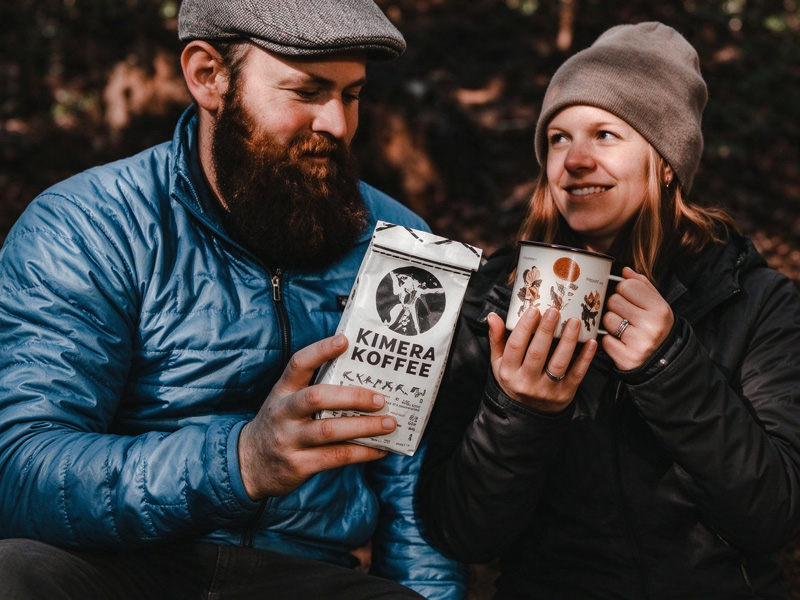
The bag carries its formula in full — coffee, alpha-GPC, L-theanine, DMAE, taurine — the list printed on the front of the package, the copy explaining that there is nothing to hide behind the words proprietary blend. Printing the formula on the front is transparency aimed at the supplement-literate buyer who has learned to distrust proprietary blends: the compounds are named, the doses are printed, and the store has converted the supplement industry's opacity into its own differentiating openness. The list is the label; the label is the moat; and the moat is made of five words any forum can fact-check, and the fact-checking is the marketing the forums do for free.
No Crash, No Jitters, Said Plainly
Beneath the formula sit the promises — no crash, no jitters — the two complaints that define the coffee experience for the sensitive. Promising the absence rather than the presence is benefit positioning aimed at the customer who has measured her day in caffeine arcs: the crash is the enemy, the jitters are the tax, and the store has promised the impossible-sounding middle — alert without the fall. The absences are the features; the features are the reasons; and the reasons are testable by anyone with a Tuesday, and the Tuesday test is the only test the skeptics trust.
A Signature on the Guarantee
The refund promise arrives with a name attached — the founder himself, promising that if you do not like it, ship it back and he will personally return your money. Signing the guarantee is founder liability aimed at the skeptic who suspects corporate refunds of being mazes: the signature says a person stands behind the product, the personal pronoun says the person is reachable, and the store has converted customer service into founder service. The signature is the warranty; the warranty is a person; and a person cannot be hidden behind a policy page, and the un-hideability is the whole point.
A Formula That Reads Like a Stack
The four compounds beside the coffee are not random — the choline donor for focus, the amino acid for calm, the amine for attention, the taurine for the nervous system — the copy implying a designed stack rather than a dash of everything. Designing the stack is formulation credibility aimed at the biohacker who reads supplement panels: the compounds are chosen for their synergy, the doses are calibrated to the coffee, and the store has applied supplement-design rigor to a beverage the supplement aisle forgot. The stack is the formula; the formula is the product; and the product is a cup of coffee that argues with your other supplements about who gets the credit, and the argument is the review.
Small Batches, Hand Roasted
Beneath the chemistry sits the craft — hand-roasted in small batches, the copy insisting the beans are treated as carefully as the compounds. Pairing the nootropic claim with the artisanal claim is credibility balancing aimed at the purist who fears functional coffee of being flavorless medicine: the roast is cared for, the flavor is real, and the store has refused to let the function eat the pleasure. The craft is the anchor; the anchor keeps the ship from drifting into the supplement aisle; and the drift is what kills coffee brands that forget they are coffee first, and the remembering is the flavor in the cup.
An Audience That Performs
The imagery and the copy circle back to the same cast — the athlete in the gym, the performer backstage, the creator at the desk — the legend defined not as fame but as the daily pursuit of the better self. Defining the legend as practice rather than stardom is community positioning aimed at the customer whose legend is private: the gym session no one sees, the draft no one reads, the morning ritual that prepares the unseen work, and the store has made the private pursuit feel like membership in a public identity. The legend is the practice; the practice is the ritual; and the ritual is a cup of coffee with five ingredients printed on the front, and the front is where the truth lives.