Kapla's plank economy: one ratio, castle dreams, chests as furniture, art books, seasons
Official homepage: https://www.kapla-usa.com
Building-block stores usually sell connection — studs, magnets, clips, anything that holds. KAPLA sells the opposite: a single pine plank, identical in every set, that holds nothing and needs nothing, balanced only by gravity and patience. I browsed with a childhood memory of knocking over a carefully stacked tower and a suspicion that one shape could not possibly fill a store. Here is the counter, decision by decision.
Door Policy: The Ratio Before the Toy
The founding story is almost implausible — a Dutch antiques dealer, Tom van der Bruggen, dreamed of building a castle by hand, and the plank he derived, its dimensions governed by a one-to-three-to-five progression of odd numbers, became a construction system some fifty years old. Leading with the ratio rather than the toy changes who stops scrolling: another brick set gets passed by, architecture gets a second look. The door filters for parents who want a practice, not a purchase.
Constraint Sold as the Feature
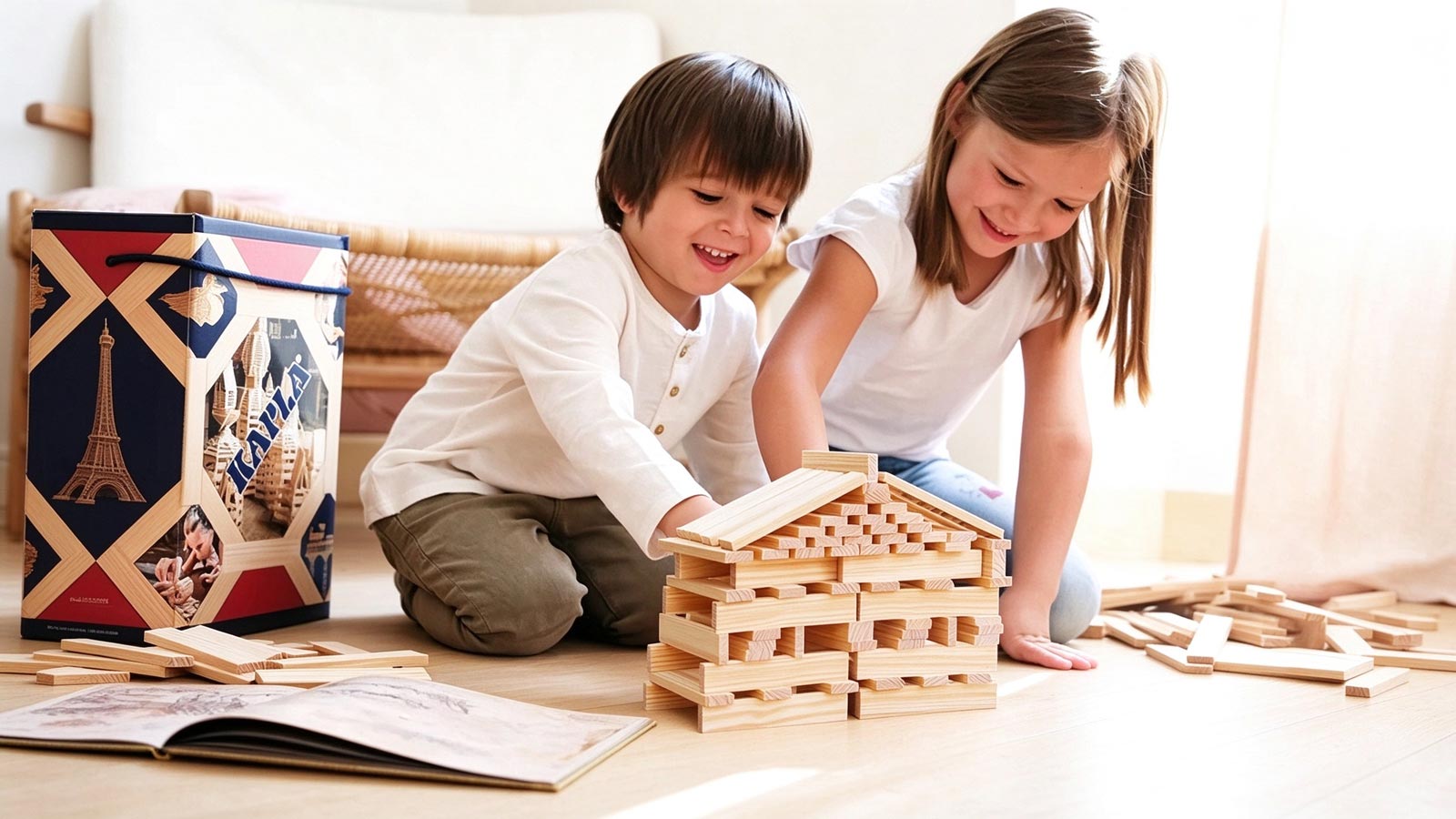
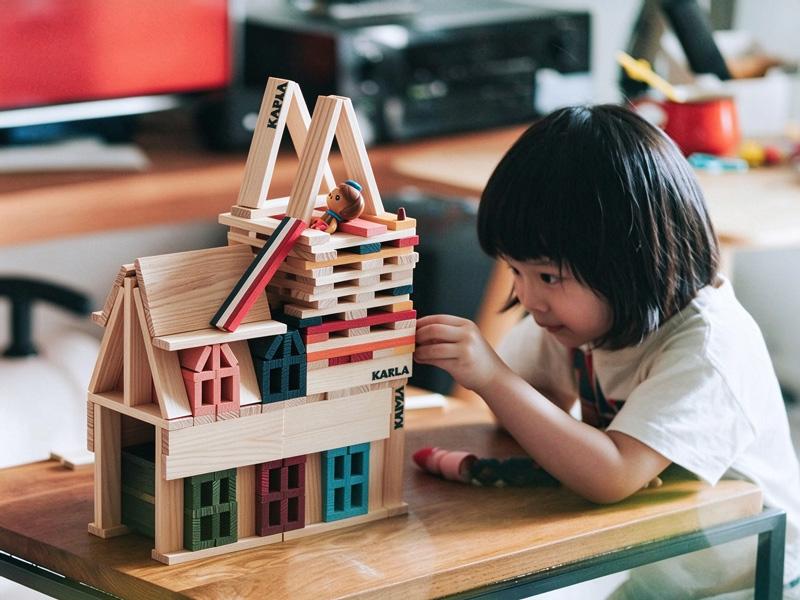
There are no studs, no glue, no required instructions — each plank simply rests on the next, and the structure stands or falls by balance alone. The store does not hide this austerity; it merchandises it, noting that demolition is often as much fun as building and that the same planks rebuild an hour later. Constraint doubles as a curriculum here — gravity, symmetry, load-bearing — with no battery and no app, which is exactly the argument a Waldorf-adjacent household wants to hear.
Packaging Designed to Live in the Room
The thousand-plank set ships in a wheeled pine chest with a rope handle; the two-hundred in a rigid box with a carry cord; the color sets in compartmented wooden cases with sliding perspex lids. Refusing disposable packaging extends the product past the unboxing — every chest becomes furniture, every box a display argument for the next set, and the living room itself becomes the showroom where a guest asks what that handsome case is.
An Art Book as the Syllabus
KAPLA publishes its own art books — four themes across four skill levels, the flagship volume thick with cathedral-scale constructions photographed like sculpture. A coffee-table book beside the planks repositions the customer mid-browse: this is not a toy for an afternoon but a practice a household keeps, and the book is the syllabus of what patience could build. It also raises the gift ceiling — set plus book is an heirloom argument, not a stocking stuffer.
Color Run as a Collection Tier
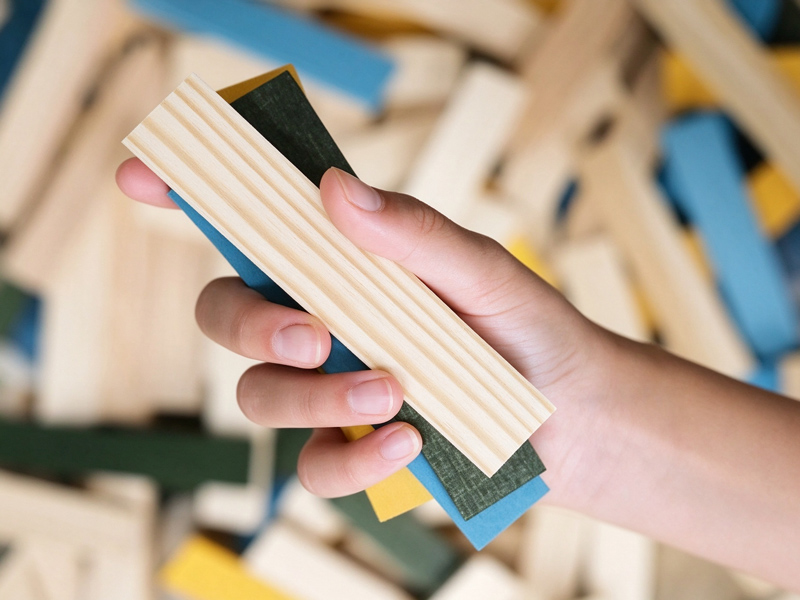
Natural pine anchors the catalog, but the colored lines are engineered for return visits — a hundred-plank octocolor case in eight food-grade hues, forty-plank squares in six shades, the copy noting there are six to collect. Layering a collectible color tier on a monochrome base expands the system without touching the core product; the factory changes a recipe, the shelf gains a reason to exist, and the child who finishes one shade has a public answer to what they want next.
Seasonal Boxes With No Moving Parts
Spring, summer, and autumn each get a two-hundred-plank box mixing natural wood with seasonal tones, priced identically and swapped on the calendar. Seasonalizing a product with no electronics and no licensing costs the factory nothing — no retooling, no licensing fees — while giving the store a quarterly email reason and the family a standing answer for grandparents asking what to send in September.
The Store Locator as a Trust Fixture
The site keeps a store locator dense with independent toy shops and, tellingly, Waldorf school stores — shelves that curate rather than discount. Publishing the retail map is the quietest kind of confidence: a brand that points at its retailers believes the living-room test outsells any banner, and the Waldorf adjacency states the intended childhood without the store having to say a word.