Hearing the world at shokz: open-ear doctrine, sports-to-meeting aisles, squad perks, ninety-day exits

Official homepage: https://shokz.com
Headphone stores usually begin with isolation — seal the ear, cancel the world, disappear into the music. Shokz begins with the opposite promise, printed in its own education section: stay connected, open, and aware. The whole store is built around the idea that a headphone should let you hear the truck, the coach, and your playlist at once. I browsed as a runner who flinches at traffic and a skeptic of category creation. Here is the counter, decision by decision.
Door Policy: Safety as the Reason to Exist
The storefront leads its teaching with a section titled Why Open-Ear Listening Matters — not frequency response, not battery life, but the argument that sealed earbuds are a liability on a road, a trail, or a pool deck. Building the door on safety turns the product's acoustic compromise — open-ear designs cannot out-bass sealed ones — into its entire reason to exist, and it hands every running club, cycling group, and swim coach a one-sentence pitch they repeat for free. The store never defends the bass; it changes the subject to survival.
Scenes Instead of Specs
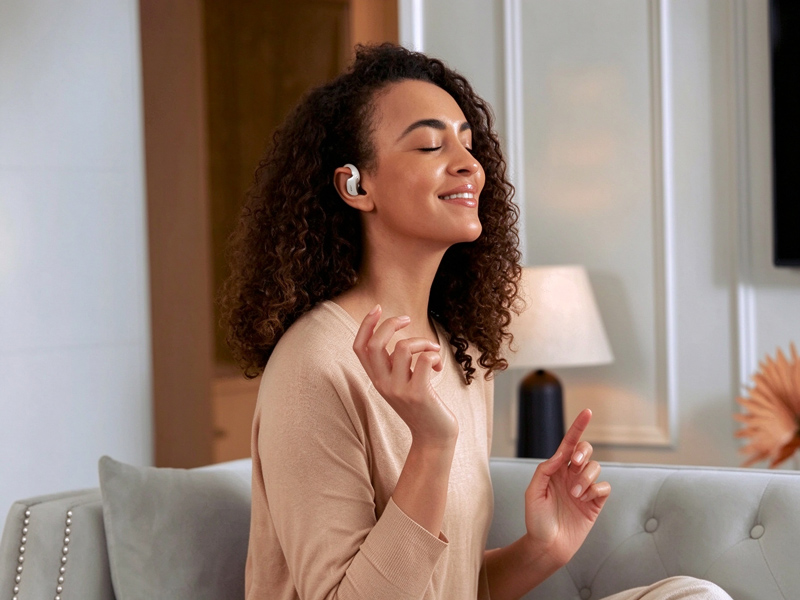
The catalog sorts into three scenes — sports headphones, workout-and-lifestyle earbuds, and communication headsets — and inside, the open philosophy wears three bodies: bone conduction bands for the road, ear-clip air conduction for the gym, a boom-mic headset with a USB dongle for the meeting room. Sorting by Tuesday afternoon rather than by driver architecture lets customers self-sort without a spec vocabulary, and it tells the hybrid worker the doctrine survives the commute from trailhead to conference call — one promise, three uniforms.
An Honest Bottom Rung
The range runs from an entry open-ear pair just under eighty dollars to a flagship band near one-eighty, with a swim-specific player and a discounted conference headset hanging off the ladder. Keeping a real entry rung below the flagship aims squarely at the skeptic: the first purchase is small enough to test the doctrine, and the store trusts the doctrine to do the upselling that specifications never could. The cheap pair is not a loss leader; it is a missionary.
Confusion, Invited In
Between the aisles sits a labeled admission: not sure what to choose, let us break it down. Printing the customer's confusion on the store's own wall absorbs the decision paralysis three form factors could create, before that paralysis ever reaches the return policy. A guide fixture this prominent tells the buyer that choosing wrong is expected, survivable, and somebody else's problem to prevent.

Loyalty Paid in Exit Room
Free membership trades an email for member-only offers, member gifts, a birthday treat, and the most telling clause — ninety-day extended returns, double the standard window. Paying for loyalty with exit room is a bet that ninety days of running with traffic noise will close the sale that forty-five could not, priced in the only currency skeptics accept. The membership wagers that the product wins slowly.
Proof Filed by Sport
The testimonial wall sorts by discipline — marathon, trail, triathlon — with named handles and specific claims: a run-club leader who permits nothing else, a convert praising the featherweight clip, an all-day wearer who commutes, works, and trains in one pair. Filing proof by sport puts each visitor in earshot of a voice from her own road, turning the safety doctrine from marketing into peer pressure the visitor already belongs to.
Durations That Double the Industry
Free fast shipping on in-stock orders, a two-year warranty, free returns for forty-five days, and a price-match window of the same length — the standard promises printed where every store prints them, but at twice the industry's habit. The paired forty-five-day windows form the quietest aggressive move on the site: the store expects to win the argument slowly, over weeks of workouts, and can afford to wait. Patience, printed in policy, is the strongest claim the store makes.