Grimm's store review: what to know before you buy wooden building blocks online
Official homepage: https://www.grimms.eu/en
Block stores usually sell instructions — the set that builds the castle, the kit that becomes the dinosaur. Grimm's sells the opposite: plain arches of graduated color, unfinished curves of linden and alder, and the explicit promise that the box contains no assignment. I browsed with a fatigue for toys that beep and a memory of a childhood spent building things nobody had designed, and found a store that treats that absence as its entire curriculum. Here is the counter, decision by decision.
Door Policy: Free Play as a Creed
The storefront's philosophy arrives before its products — the value of free play, printed as a principle rather than a slogan, and expanded into a quiet argument that the best toy is the one that asks nothing and offers everything. Leading with a pedagogical creed rather than a play pattern targets the parent exhausted by toys that perform: the brand does not compete on features because its feature is the absence of them, and the parent who buys the rainbow has bought permission for her child to be bored productively. The creed is the product page, and the product page has no bullet points.
Nearly Fifty Years of Family
The about page dates the company to 1978 — a family-run workshop in southern Germany, still family-run nearly five decades later, still building toys from regional timber. Printing the founding year beside the family framing targets the heirloom buyer: the brand has outlasted every fad that came for it, the family continuity suggests the philosophy is an inheritance rather than a marketing invention, and the customer who buys this year joins a story that began before her parents were born. The longevity is the certification, and the certification cannot be purchased or faked.
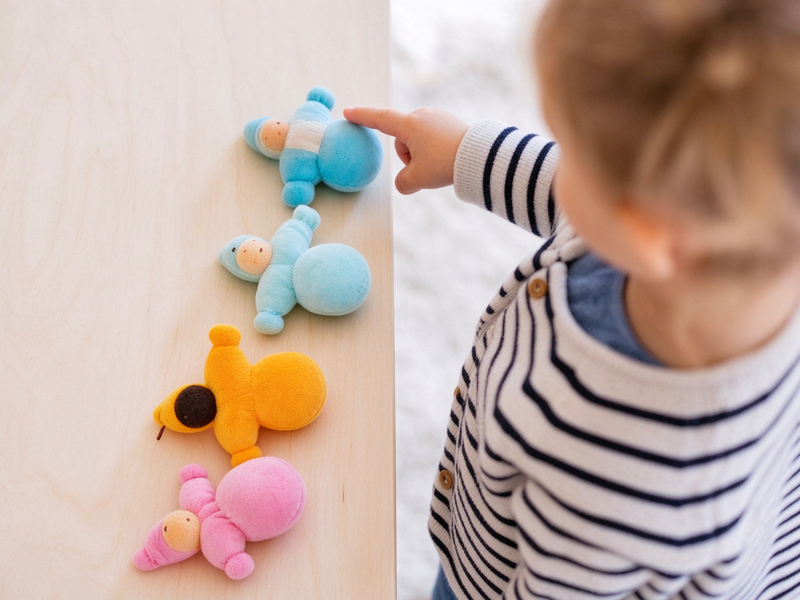
The Rainbow as a Cathedral
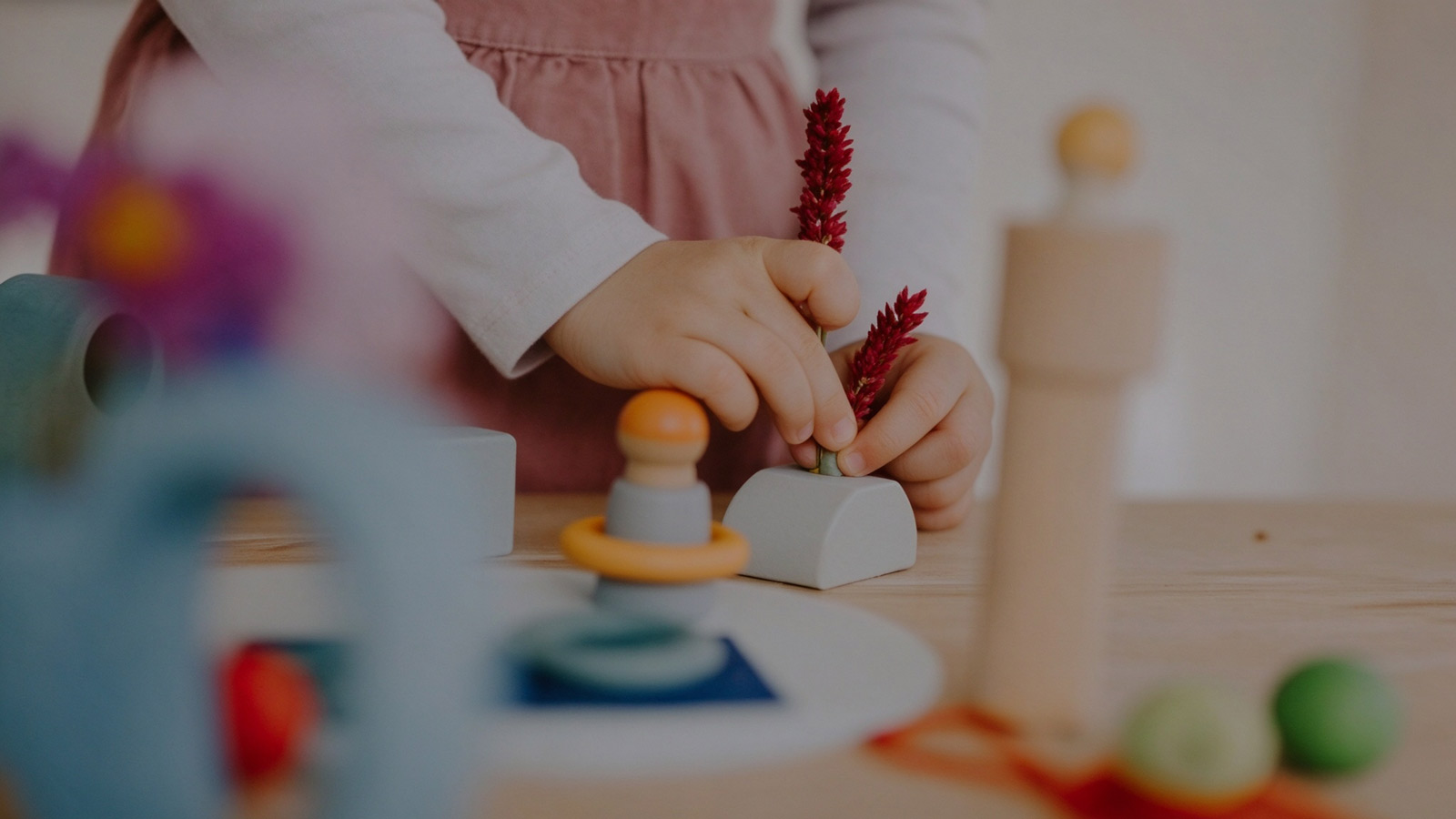
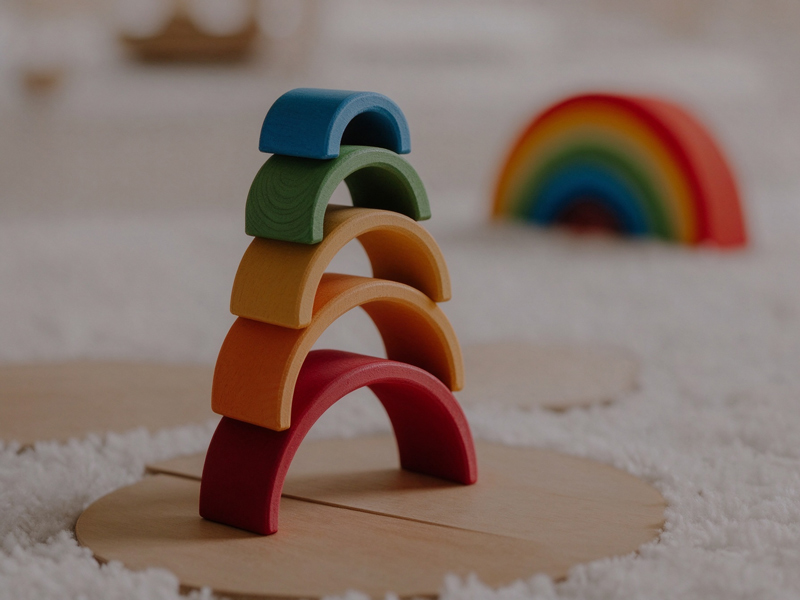
The catalog's iconic object is a set of nested arches in graduated colors — the rainbow stacker that launched a thousand imitations and remains the original. Anchoring the store on a single unpatentable shape is confidence aimed at the purist: the arches contain no mechanism, no magnet, no firmware, and their value lies entirely in the quality of the wood and the honesty of the finish, which means the brand bets its reputation on craftsmanship rather than on anything it can lock in a patent. The rainbow is the argument, and the argument is made of beech, and the beech has been making the argument since 1978.
Wood From Named Forests
The materials list names the species — alder, lime, beech, maple — and the sourcing behind them: sustainably managed European forests. Naming the trees is material transparency aimed at the parent who has read about toy safety and deforestation in the same week: the wood is local, the forests are managed, and the species list reads like a recipe rather than a compliance footnote. The recipe is the trust, and the trust is the whole store.
One of a Kind, on Purpose
The copy carries a promise most manufacturers would treat as a defect — every piece is unique, the grain varies, the colors shift, and those variations are the proof of natural origin. Reframing inconsistency as authenticity targets the parent raised on plastic uniformity: the knot in the linden is not a flaw but a signature, the child who receives it owns something no other child has, and the brand has converted manufacturing variance into individuality. The imperfection is the certificate of authenticity, and the certificate cannot be photocopied because the grain never repeats.
No Instructions, No Apology
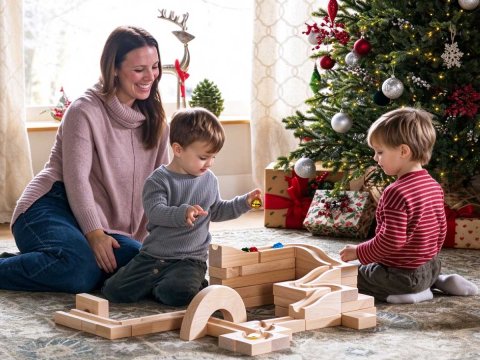
The boxes ship without step-by-step guides, without app companions, without the numbered bags that turn building into assembly. Omitting the instructions entirely is pedagogical, aimed at the child rather than the parent: the first arch bridge she builds will be hers, not the manual's, and the store has bet the entire company on the proposition that children prefer their own designs to the designer's. The absence is the assignment, and the assignment is open-ended, and open-ended is the one thing a beeping toy can never be.