Bitsbox store review: what to know before you buy kids coding subscriptions

Official homepage: https://bitsbox.com
Educational-toy stores usually promise learning disguised as fun. Bitsbox removes the disguise: the storefront promises real coding — actual text, actual syntax, actual apps — aimed at children six to twelve, and the box that arrives monthly teaches one computer science concept per shipment through a set of projects the copy describes as crazyfun. I browsed with a child who has outgrown block-based programming and a parent who never learned to code, and a curiosity about whether both could be served by the same subscription. Here is the counter, decision by decision.
Door Policy: Real Code, Said Plainly
The storefront's first promise is not fun but authenticity — real coding and game development for anyone — the word real doing the work that marketing usually leaves to exclamation points. Leading with authenticity is differentiation aimed at the parent who has watched her child graduate from block-based tools and stall at the text editor: the real says the syntax is genuine, the anyone says no experience is required, and the store has positioned itself as the bridge between toy programming and the real thing. The real is the door; the door opens onto the text editor the child was told was too hard; and the too-hard was the lie the subscription was built to correct.
One Concept Per Box
The curriculum arrives as a collection — a single computer science concept per box, coordinates or variables or loops, taught through a set of app projects ranging from simple to advanced. Sequencing by concept is pedagogy aimed at the child who learns by collecting: the concept is the badge, the projects are the practice, and the box has turned computer science into a trading-card series where every card teaches. The concepts are the curriculum; the curriculum is the collection; and the collection is why the next box is anticipated rather than assigned, because the anticipation is the curriculum's engine and the engine runs on the child's own wanting.
Three Steps, No Installation
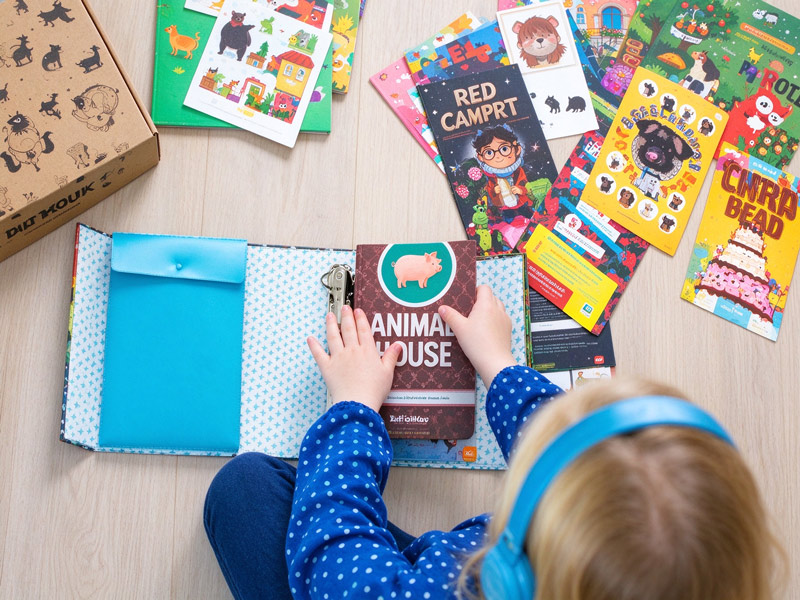
The mechanism is compressed into a trilogy — the child picks an app from the booklet, types the code into the website, and uses the app on any device with a browser. Compressing the workflow to three steps is friction elimination aimed at the parent who dreads software installation: no downloads, no app stores, no accounts on three devices — the browser is the platform, the typing is the skill, and the store has removed every excuse between the box and the first running program. The steps are the pitch; the pitch fits on the box; and the box delivers what the pitch promises without a trip to the settings menu, and the settings menu is where most educational software goes to die.
A Manifesto for the Clueless Parent
Beneath the children's copy sits a direct address to the adults — you do not need to know anything about code to help your kid learn — the permission slip printed in public. Addressing the parent's anxiety is audience expansion aimed at the household where coding knowledge died with the previous generation: the manifesto says the child is the expert, the parent is the audience, and the store has doubled its market by declaring the second customer unnecessary. The permission is the pitch; the pitch unblocks the purchase; and the purchase happens because the parent was told, in writing, that she is allowed, and the allowing is worth more than the discount.
The Browser as the Platform
The apps run on any computer, tablet, or phone with a web browser — the platform decision that makes the subscription hardware-agnostic. Choosing the browser is accessibility aimed at the family whose devices are a patchwork of ages and operating systems: the browser is universal, the universality means the code runs on grandma's tablet and the school Chromebook alike, and the store has made its product as portable as the knowledge it teaches. The browser is the platform; the platform is everywhere; and the everywhere is why the code outlives the box, because the box is cardboard but the browser is forever.
The Sticker Curriculum
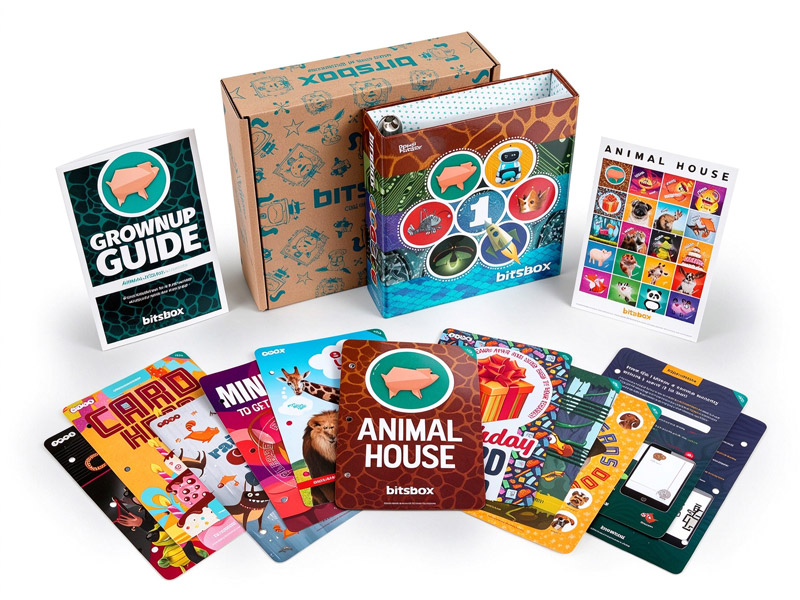
Each concept arrives wearing a face — circular stickers, one per idea, coordinates and variables and loops rendered as small colorful icons that the child collects as the curriculum advances. Visualizing concepts as collectible stickers is gamification aimed at the completionist: the sticker is the proof, the collection is the progress, and the store has turned the abstract syllabus into a physical album. The stickers are the grades; the grades are the collection; and the collection is why the child asks for the next box before the parent remembers to renew, and the asking is the renewal and the renewal is the business model disguised as a sticker book.
A Million Kids as the Credibility
The statistics arrive early — over a million children have built apps on the platform, subscribers in more than seventy countries — the numbers printed beside the age range. Publishing the scale is trust aimed at the first-time subscriber: the million says the method survives repetition, the seventy countries says the translation is unnecessary, and the store has let arithmetic argue what testimonials usually argue worse. The million is the proof; the seventy is the reach; and the reach is why the local skeptic trusts the distant product, because the million children cannot all be wrong and the skeptic's child is tired of being the only one not coding.
The Testimonial That Argues the Transition
Among the reviews sits a teacher's testimony with unusual specificity — the difficulty of moving children from block-based environments to text-based code, the two barriers of syntax and delayed payoff, and the claim that this box mitigates the first and eliminates the second. Printing the technical testimony is credibility aimed at the educator-parent: the teacher names the competitor's failure, explains the mechanism, and the store has let a professional articulate the differentiation the marketing could only gesture at. The testimony is the review; the review names the gap; and the gap is exactly where the product lives, and the living in the gap is the entire business.