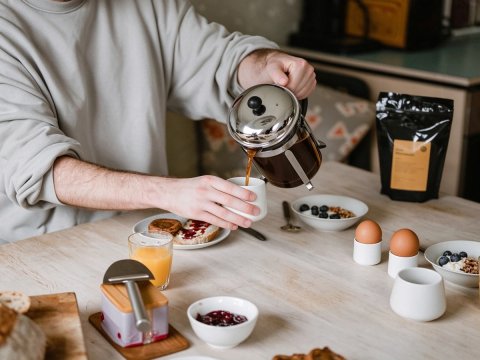
Freezing the roaster at cometeer: stamped capsules, melt-proof shipping, stellar lots, seven years
Official homepage: https://cometeer.com
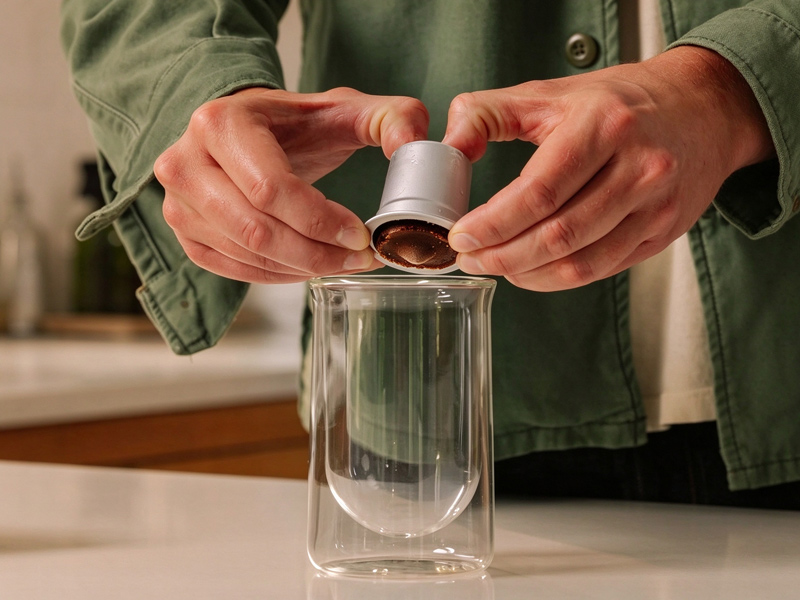
Coffee stores usually sell you beans and the equipment to ruin them with. Cometeer sells the ruin out of the equation — coffee already brewed at ten times strength, flash-frozen in liquid nitrogen at minus three hundred twenty-one degrees, and shipped to your freezer in recyclable aluminum capsules that need nothing but water and a mug. I browsed with a graveyard of brewing gadgets and a curiosity about what happens when a technology company decides coffee is its medium. Here is the counter, decision by decision.
Door Policy: Research Before Roasting
The storefront leads with its laboratory pedigree — nearly seven years of development by engineers and coffee scientists before the first capsule sold, a story that runs from a college student freezing coffee in ice cube trays to a former computer scientist partnering with an MIT-trained engineer. Opening with research rather than roasting lets Cometeer sidestep the best-roaster argument entirely: it claims only to be the best preserver of everyone else's roasting, and that humility is what lets thirteen famous names share its shelf without ego.
Two Ingredients as the Entire Pitch
Every capsule contains coffee and water, nothing else — the ingredient list is the whole argument, printed in the FAQ where competitors bury theirs. Reducing the formula to two words targets the instant-coffee scarred: whatever skepticism survives the freezing story collapses at the two-item panel, and compatibility with ordinary K-Cup machines converts even pod-households without asking them to abandon hardware they own. Simplicity, printed loudly, converts better than any tasting note.
Decay Arithmetic, Published in Both Directions
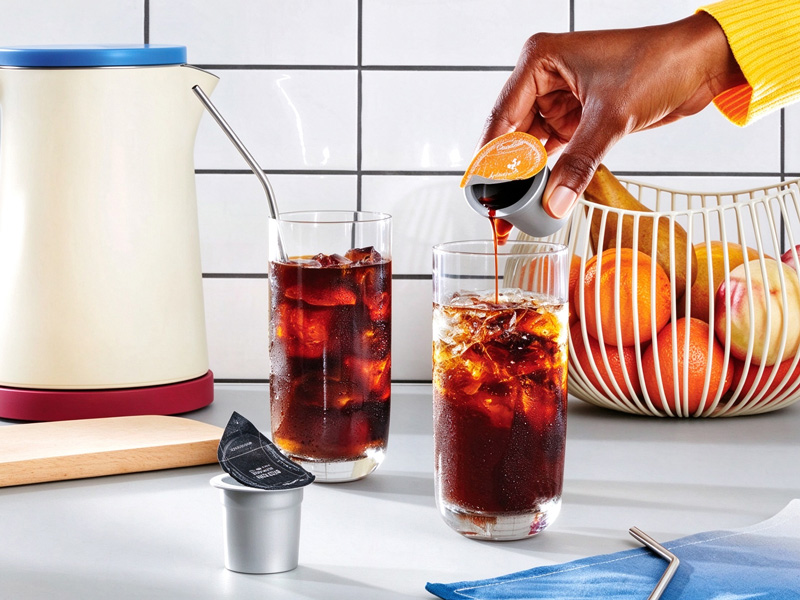
The store prints the freshness math in full: three years frozen, three days refrigerated, twenty-four hours at room temperature, a melted capsule safely refrozen for milk drinks. Publishing decay windows doubles as logistics policy — a delayed, melted shipment gets reshipped free — turning the category's scariest failure mode, ruined coffee on a doorstep, into a proof of confidence the customer never has to test. Honesty about spoilage outsells flavor claims.
Provenance Stamped at the Single-Cup Level
The capsule library reads like a third-wave hall of fame — Counter Culture, Intelligentsia, George Howell, Square Mile, Equator — with the specific roaster and coffee printed on each pod rather than buried on a box. Per-cup provenance turns the box into a tasting flight: the customer drinks across thirteen roasters, learns which name to reorder, and the roasters lend credibility Cometeer never had to earn alone. The stamp is a co-branding contract sealed at the unit level.
Dual Shelves for Loyalists and Explorers
The catalog splits between fixed boxes — mixed, light, dark, decaf, half-caff — and a build-your-own counter mixing five to ten packs from a rotating menu of more than forty coffees. Running both architectures in one subscription serves the loyalist who wants her exact roast and the explorer who wants the algorithm's mix, and the rotating menu gives the mailing list a reason to open every restock email. Segmentation by architecture, not by customer type, keeps both camps paying.
Trophy Coffee, Portioned at Five Dollars
At the top sits the Stellar Series — capsules brewed from auction-winning coffees that retail for hundreds a pound, portioned so a cup costs about five dollars. Frozen trophy lots act as a halo: most customers will never buy the series, but its existence re-prices everything beneath it, the way a wine list's top bottle makes the second bottle feel reasonable, and it arms the brand with a standing answer to whether frozen coffee can be serious. The series is marketing you can drink.
Selling the End of Equipment
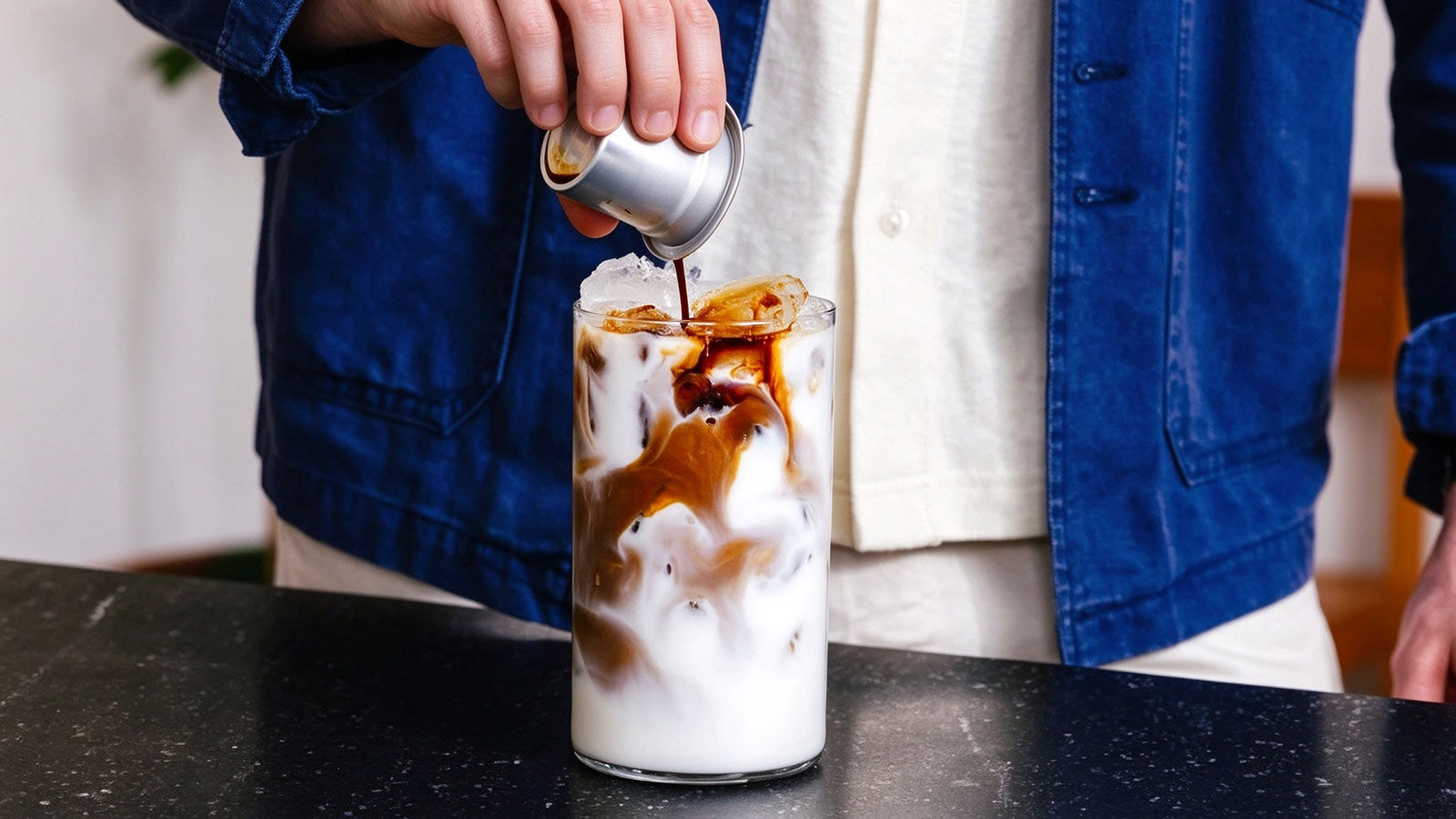
The deepest decision is subtraction: no grinder, no scale, no brewer, no pod machine — water in a mug, capsule dissolved, done, the same capsule stretched into an iced coffee, a latte, an affogato, or an espresso martini by whatever the refrigerator holds. Declaring war on equipment aims at everyone who has ever abandoned a brewing hobby, which, judging by the secondhand listings for pour-over stands, is most of the addressable world. The freezer is the only machine this store sells.