Flockmen: the little wooden people winning over waldorf classrooms worldwide
Official homepage: https://flockmen.com
Flockmen sells wooden figures with no faces, no instructions, and no rules — and that is precisely the point.
From a family workshop in Latvia comes one of the quietest success stories in open-ended play: small, faceless figures turned from white oak, designed to be stacked, balanced, and imagined into anything a child decides. The brand has won design recognition at home, earned shelf space in Waldorf and Montessori supply shops across Europe, and built a devoted international following without a single licensed character. This review examines the design philosophy behind the figures, the materials and safety credentials parents scrutinize, and whether a bag of little wooden people justifies its premium price.
No Faces, No Instructions, No Wrong Answers
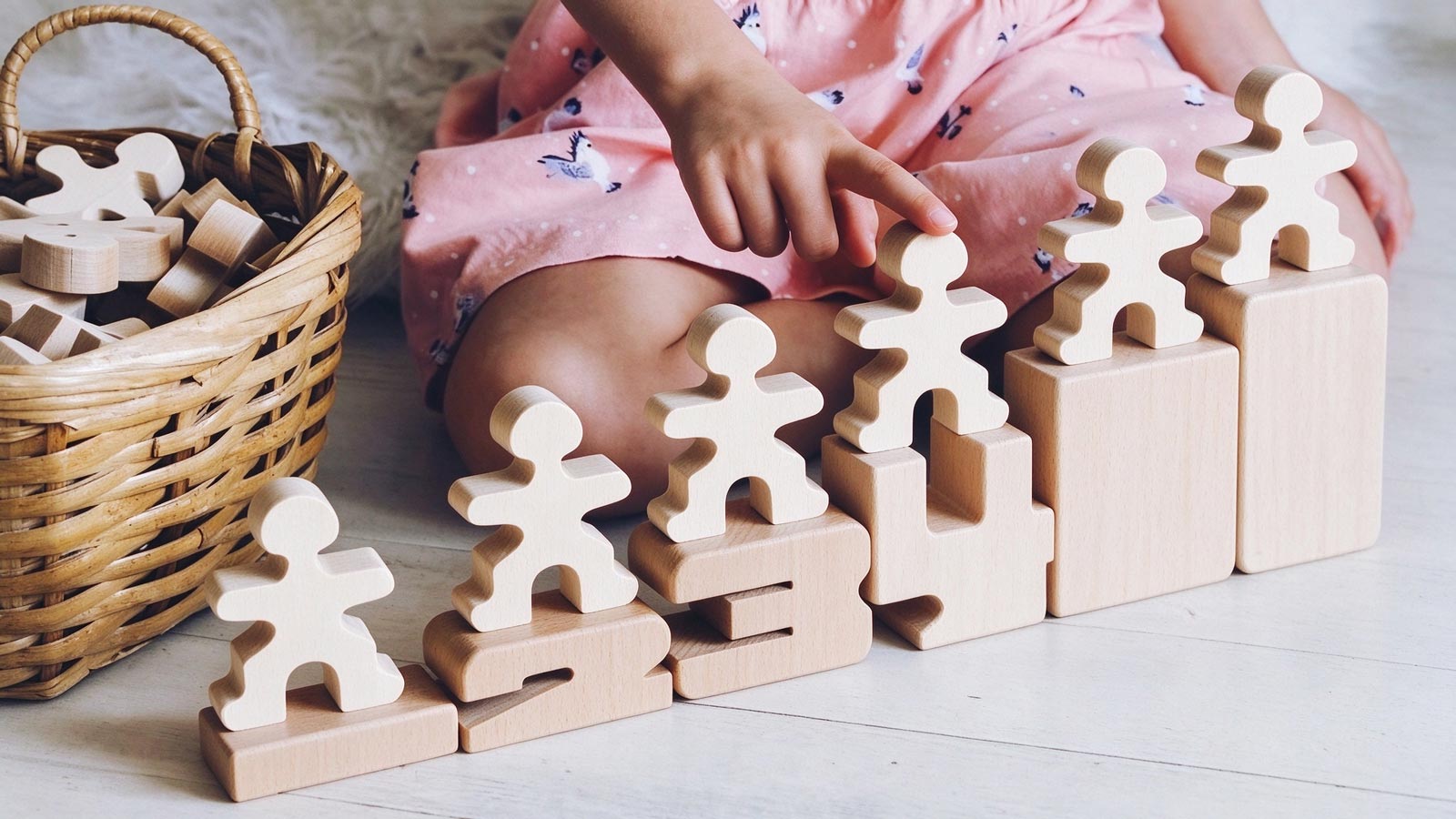
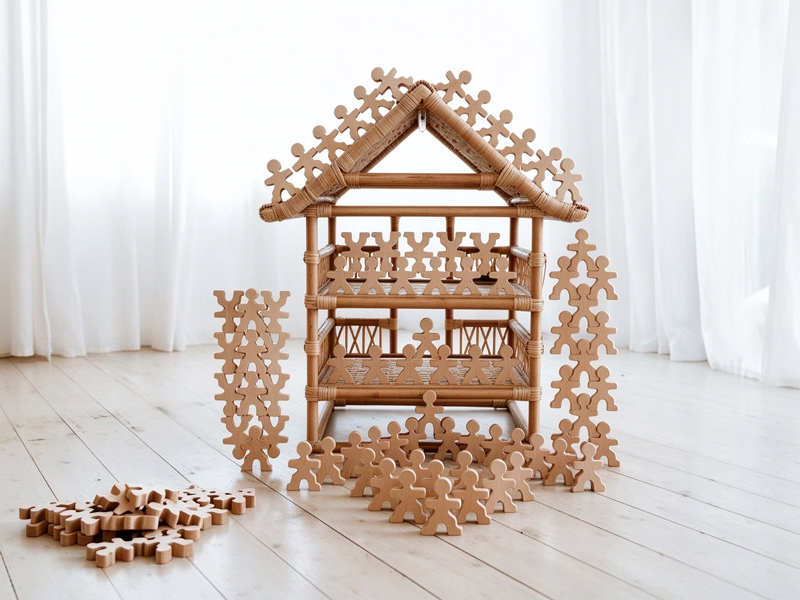
The first thing new buyers notice is what the figures lack: faces. Every Flockmen figure is a smooth, rounded wooden form with a head and outstretched arms but no painted expression — a deliberate design decision drawn from open-ended play theory. A faceless figure can be happy, furious, a superhero, or a grandmother; a smiling printed face can only ever be one thing.
The brand pairs that minimalism with a matching philosophy: no instruction booklet, no build target, no correct outcome. Children balance them into towers, arrange them in families, and narrate stories across them. The figures function as construction material, dramatic play prop, and math manipulative simultaneously — which is exactly why alternative-education retailers stock them.
White Oak Sourced and Finished in Latvia
Flockmen figures are cut from solid white oak, a dense hardwood chosen for durability and a fine, light grain that takes a natural finish beautifully. The company describes a production process centered in Latvia, where the figures are shaped and finished by the family operation, with sustainability claims — ethical methods and responsible sourcing — built into its official story.
The finish matters more than buyers expect. Each figure is sanded smooth and sealed with a natural finish safe for small hands, giving the wood a soft sheen that ages gracefully with handling. Owner reports consistently note the pieces feel substantial — heavier and more solid than the beech figures common in the category — and survive years of toddler-scale abuse that splinters cheaper alternatives.
A Family Workshop That Outgrew Its Borders
Flockmen LLC describes itself plainly: family-run, created and produced in Latvia. The company kept production close even as demand internationalized, choosing workshop-scale control over outsourced volume — a familiar trade-off in the premium wooden toy world, where Grimm's and similar European brands built global reputations on the same refusal to industrialize.
The strategy's proof arrived in 2021, when the Latvian Chamber of Commerce recognized the Flockmen trademark in its Trademark of the Year competition, awarding the company for export performance. For a toy brand of this size, official export recognition is a meaningful signal: the little figures were carrying a Latvian trademark into classrooms well beyond the Baltics.
Balancing Games From a Bag of Figures
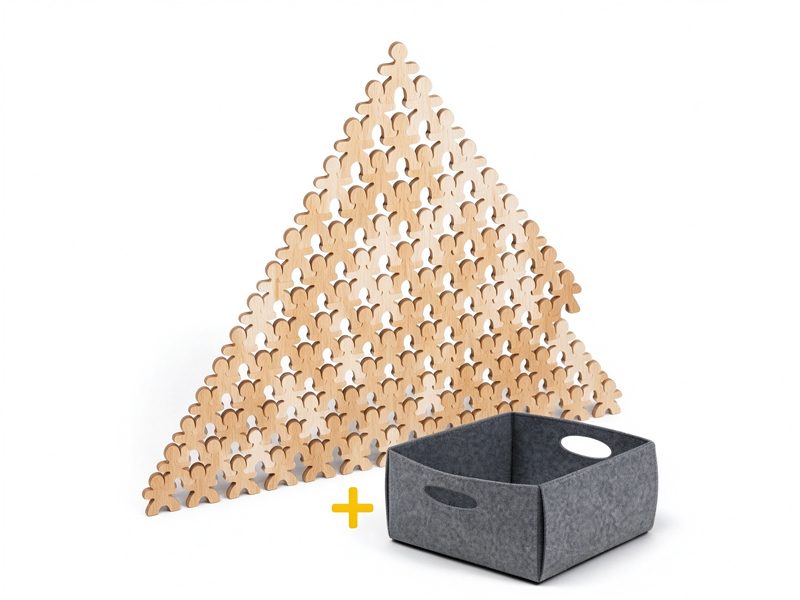
The product line is admirably simple. Core sets come in graduated sizes — the classic family packs that most buyers start with — and the play patterns they support repeat across households: towers that challenge a four-year-old's patience, pyramids of interlocking arms, and games where figures stand in for counters, teams, or points.
Accessories extend the system without complicating it. Felt play mats give the figures a landscape, and printed activity cards suggest balancing challenges and games for children who like a nudge toward structure. The sets pack into cloth bags, which matters for a toy designed to travel between the playroom floor, the restaurant table, and the grandparent's house.
Waldorf Shelves and Montessori Classrooms Take Notice
The brand's most important distribution channel is not advertising but pedagogy. Flockmen figures appear in the catalogs of Waldorf and Montessori educational suppliers across Europe — the shops that outfit alternative classrooms with natural materials chosen for their open-ended properties. Placement in that channel is earned rather than bought: educators stock toys that survive a school year and serve multiple developmental purposes.
For parents, this channel functions as curation. A toy trusted by teachers who vet materials professionally arrives with its credibility pre-installed, which explains how a Latvian workshop reaches households in Switzerland, Australia, and North America without mass-market retail.
Natural Oils, Felt Mats, and Care Rituals
Wood care is part of owning quality wooden toys, and Flockmen treats it as a feature rather than a chore. The figures' finish rewards occasional renewal — a wipe with natural oil restores the luster that heavy play dulls — and the brand's care guidance frames maintenance as part of the object's life with a family, not a defect.
The felt mats and storage bags follow the same natural-materials logic: wool felt, cotton bags, no plastic clamshell in sight. For households pursuing a low-plastic toy shelf, the whole presentation reinforces the purchase rationale before a single figure comes out of the bag.
Safety Certificates Parents Can Actually Check
Premium wooden toys attract scrutiny precisely because toddlers mouth them, and the category has seen its share of non-compliant imports. Flockmen addresses this with European toy safety certification — CE marking on its products — and materials chosen to keep finishes food-safe and splinter-resistant: solid oak rather than glued laminates, natural coatings rather than film-forming lacquers.
Buyers should still supervise the under-threes, as the brand's own age guidance indicates, and the pieces' satisfying heft means a thrown Flockmen carries real momentum. But the certification trail is verifiable, which separates the brand from marketplace generics whose "natural wood" claims evaporate on inspection.
Educational Retailers From Zurich to Sydney
Distribution tells the scale story. Beyond its own Shopify store — which serves international buyers directly with worldwide shipping — the figures move through specialist educational and natural-toy retailers across Europe and beyond, including established Montessori supply houses. The direct store carries the full range, seasonal offers, and the bundles that gift buyers want, while retailers handle the touch-it-first customers.
The Shopify storefront itself is straightforward: clear product photography, set-size guidance, and shipping terms aimed at international families. It behaves like what it is — a workshop's window onto the world — rather than a conversion-optimized marketplace.
The Gift That Outlives Every Plastic Trend
The Flockmen buyer is typically a parent or grandparent shopping deliberately: someone who wants an heirloom-quality gift, a Waldorf-aligned household building a natural-materials play shelf, or a teacher outfitting a classroom. It is less suited to buyers wanting characters, licensed themes, or app-connected play — this is explicitly the opposite of that.
The verdict from years of category evidence: Flockmen executed a simple idea at exceptional quality — faceless figures in white oak, made by a family, certified for the toddlers who will love them hardest. In a toy aisle that reinvents itself every licensing cycle, the little people with no faces keep earning their shelf.