Explorer cold brew shop review: honest review before you order cold brew
Official homepage: https://explorercoldbrew.com
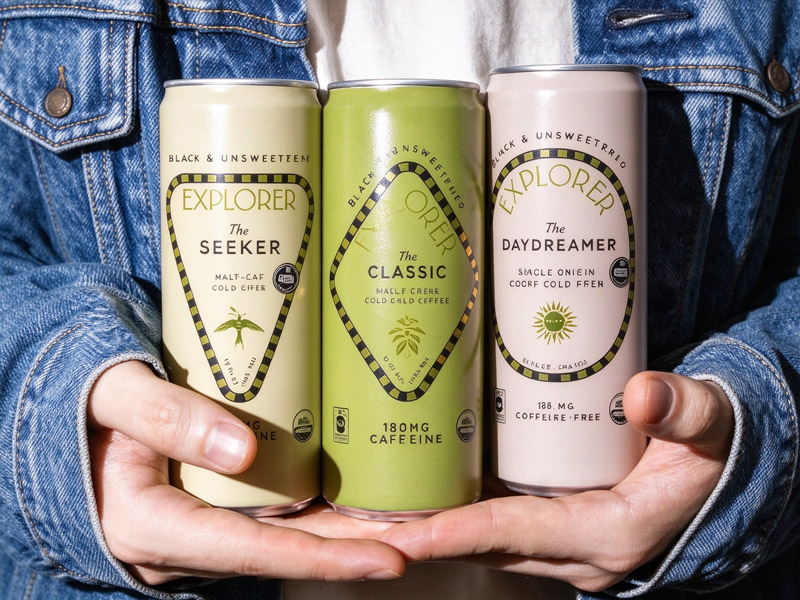
Cold-brew stores usually sell one strength and let you dilute it yourself. Explorer Cold Brew sells the strength itself: the homepage organizes its cans by caffeine content, the full-caffeine Classic beside the half-caffeine Seeker beside the nearly-decaffeinated Daydreamer, three cans in a row like a dial you can turn. I browsed with an afternoon caffeine cutoff that I negotiate daily and a curiosity about what a coffee brand gains by selling you less of its own drug. Here is the counter, decision by decision.
Door Policy: Caffeine Consciousness as the Category
The storefront announces a new discipline before a single flavor — caffeine-conscious cold brew — the words printed over a trio of cans whose labels carry their milligrams like nutrition facts on the front. Leading with the caffeine dial rather than the origin or the roast is market positioning aimed at the drinker who has learned to count her milligrams the way others count calories: the dial says the brand understands her daily budget, the three cans say the budget has options, and the store has converted the industry's more-is-better assumption into a spectrum the customer controls. The dial is the product; the control is the loyalty; and the loyalty is earned every afternoon when the dial is turned down instead of the customer giving up coffee entirely.
Three Cans, Three Characters
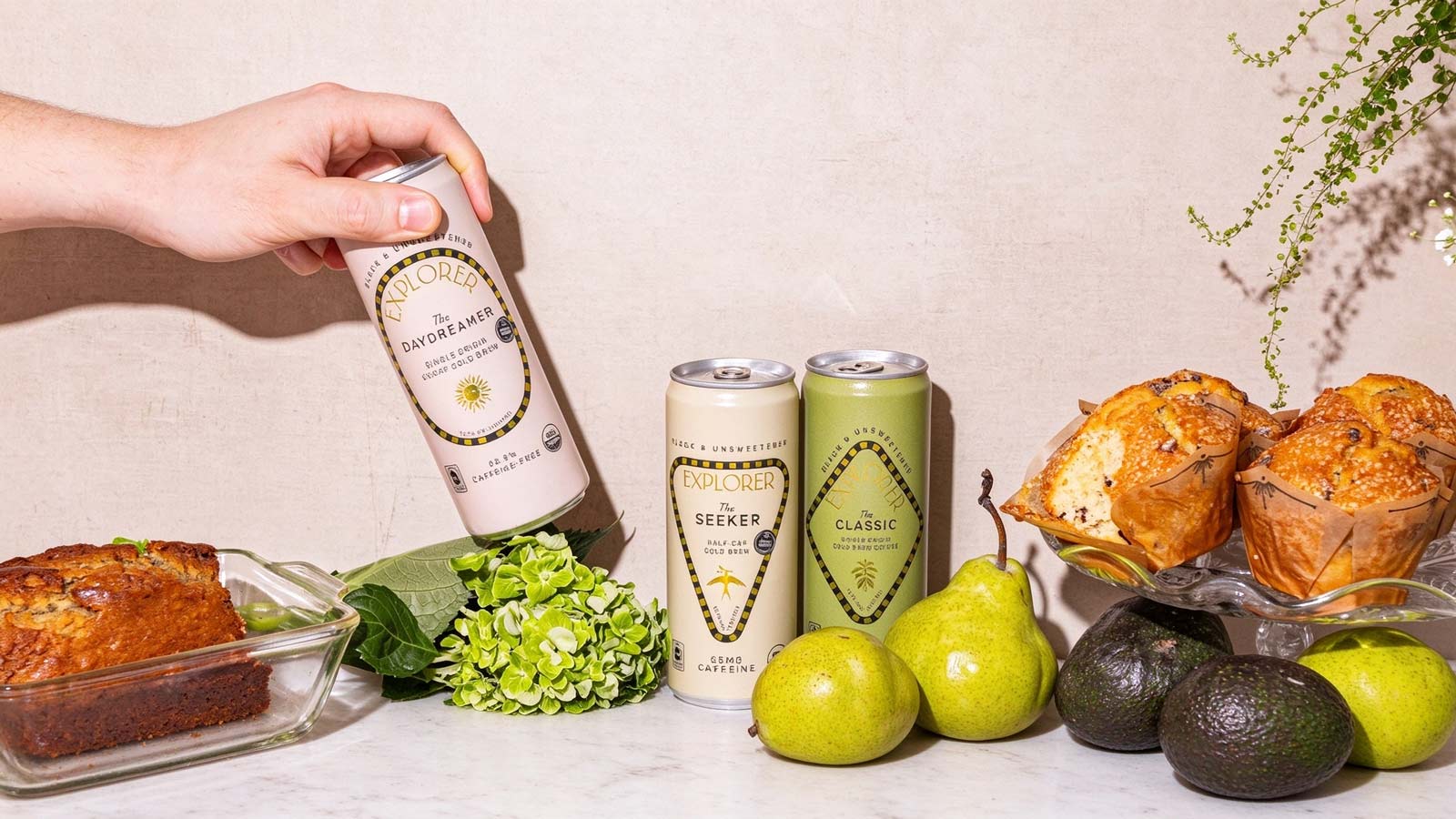
The cans are named for modes of being — the Classic for the full day, the Seeker for the half-measure, the Daydreamer for the almost-none — each name a small philosophy of alertness. Naming caffeine levels after states of mind is comprehension aimed at the customer who thinks in feelings rather than milligrams: the names translate the numbers into intentions, the pastel palette distinguishes the cans at a glance, and the store has turned a lab measurement into a personality quiz. The names are the dosage; the dosage is the personality; and the personality is easier to order than the milligrams, and easier to reorder at four in the afternoon when the numbers feel like homework.
The Concentrate as the Second Format
Beneath the cans sits a brown glass bottle — cold brew concentrate, thirty-two ounces, twenty servings, the Daydreamer's caffeine-free version offered for those who want the ritual without the molecule. Bottling the concentrate alongside the ready-to-drink cans is use-case expansion aimed at the home barista: the can is for the road, the bottle is for the kitchen, the twenty servings make the math favorable, and the store has covered the commute and the countertop with the same liquid. The bottle is the pantry; the can is the purse; both are the brand; and the brand is now in two places in the same house, which is one more place than the coffee asked for.
A Matcha in the Coffee Store
The newest can is green in every sense — a matcha oat latte, ceremonial grade, eighty milligrams, plant-based and dairy-free, photographed on a marble counter beside its own poured glass. Adding matcha to a cold-brew store is ritual expansion aimed at the afternoon customer who has hit her coffee ceiling: the matcha carries its own caffeine number on the can, the oat milk follows the plant-based pattern the coffee already set, and the store has given the coffee-loyal a reason to stay inside the brand after two o'clock. The matcha is the second aisle; the second aisle keeps the customer from leaving the store; and the staying is worth more than the matcha.
Certifications as the Quiet Wall
The labels carry the seals — organic, fair trade, the Swiss water process for the decaf — each stamped on the can in the space where marketing would normally shout. Stamping the certifications rather than the slogans is trust architecture aimed at the label-reader: the seals are third-party, the space they occupy is the space other brands use for adjectives, and the store has let the auditors do the talking. The seals are the copy; the copy is verified; and the verified copy never needs a disclaimer, which is more than can be said for every adjective in the category.
One Percent, Printed in Public
The footer carries a membership — a percentage of every sale to environmental causes, the logo of the one-percent movement displayed where the policies usually hide. Publishing the pledge is values positioning aimed at the customer who has grown cynical of cause marketing: the percentage is small, the logo is specific, and the store has made the donation a line item rather than a campaign. The line item is the credibility; the credibility compounds with every can; and the compounding is quiet, which is the only way credibility ever compounds.
The Press as the Proof of Taste
The homepage carries a masthead wall — a barista magazine, a business paper, a newspaper of record — each name printed without quotes, as if the logos alone were the argument. Displaying the coverage without excerpting it is confidence aimed at the skimmer: the names carry their own authority, the absence of pull-quotes says the brand does not need to cherry-pick, and the wall functions as a certification of taste rather than a collection of compliments. The mastheads are the review; the review is unedited; and the unedited review is the only kind that survives skepticism, because skepticism was edited out of the others.
Thirty Seconds, Start to Sip
The copy under the hero quantifies the preparation — the perfect cup, customized, in thirty seconds — the number aimed at the morning customer who measures her routine in seconds rather than ceremonies. Promising the half-minute is convenience positioning aimed at the customer the specialty aisle lost: the concentrate needs no equipment, the can needs no preparation at all, and the store has made speed the luxury that freshness used to be. The thirty seconds are the product; the product is the morning, returned; and the morning, returned, is worth more than the ceremony it replaced.