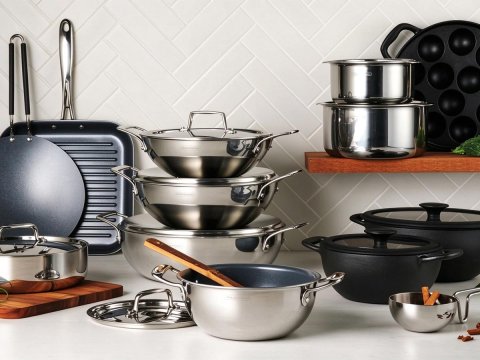
Coloring at great jones: dutchess ovens, thirty-day trials, two-thousand reviews, three-material shelves inside

Official homepage: https://greatjonesgoods.com
Cookware stores usually sell materials — stainless, cast iron, ceramic — and let you choose your physics. Great Jones sells color first and material second, and the store's confidence shows in the first row of pixels: a banner promising free shipping over a hundred dollars, more than two thousand five-star reviews, a thirty-day trial, and free returns, printed before a single product appears. I browsed with a kitchen that photographs well but cooks indifferently, and a suspicion that any brand this cheerful about returns knows something its competitors do not. Here is the counter, decision by decision.
Door Policy: The Trial as the Headline
Most stores bury their return policy in the footer; this one prints a thirty-day trial in the top banner, between the shipping threshold and the review count. Leading with the exit door targets the hesitant buyer of premium cookware — the person who has read that cast iron seasons and ceramic scratches and wants to test the claims herself, at home, on her own stove — and the store bets thirty days of cooking converts more skeptics than any demonstration video. The trial is not a safety net; it is the pitch, and it begins before the product does.
A Review Count Worn Like a Badge
The two-thousand-plus five-star figure rides in the header beside the shipping promise, updated like a scoreboard. Publishing the count above the fold rather than on a testimonials page targets the comparison shopper opening six tabs at once: the number does not ask her to read reviews, only to register that other buyers have already done the reading, and the banner turns the entire catalog into evidence. The count is the store's oldest employee, and it has never taken a day off.
Three Materials, One Wardrobe
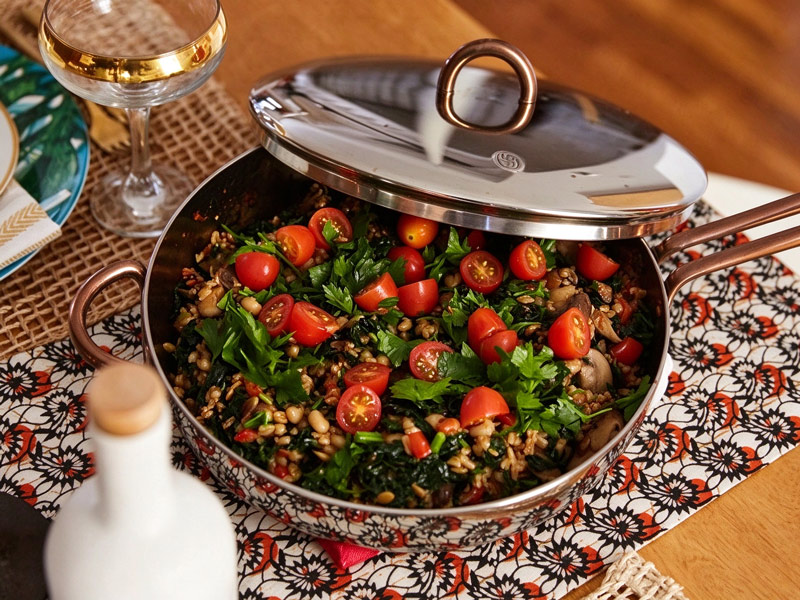
The catalog splits by material — cast iron, ceramic, stainless steel — but the color runs straight through all three, so the Dutch oven in cast iron, the skillet in ceramic, and the stockpot in steel arrive in the same palette. Carrying color across materials targets the customer who buys cookware as decor: the oven on the stove matches the pan on the wall, the material is chosen by the recipe but the hue by the room, and the store sells both decisions from one shelf. The wardrobe logic turns three product lines into a single collection, and the collection justifies the second purchase.
The Dutchess as a Cast Member
The signature Dutch oven wears a name — a title, really — that the marketing treats as a proper noun rather than a product code. Naming the flagship like a character targets the gift market and the brand loyalist: the oven is not a vessel but a personage, it appears in recipes and posts by name, and the owner who says she is cooking in the Dutchess is doing marketing the store could not buy. The name converts a commodity into a cast member, and cast members get sequels.

The Trial That Sells the Second Pan
The thirty-day window does more than derisk the first purchase — it stages the second. A customer who cooks in the trial Dutch oven for a month discovers exactly what her kitchen lacks, and the free-return policy that closed the first sale becomes the trust that opens the second. Designing the policy as an acquisition tool rather than a cost center is a lifetime-value bet: the store loses a few returns and gains a drawer full of repeat purchases, and the trial becomes the cheapest salesperson on the payroll, working on commission in the customer's own cabinets.
Returns Without Interrogation
The free-returns promise sits in the same banner, unhedged — no restocking fee, no original-packaging clause, no questions in the fine print. Keeping the return language this clean targets the customer burned by marketplace sellers who treat returns as negotiations: the banner reads like a store that has priced returns into the margin and considers the goodwill the bargain, and the simplicity is itself a luxury signal. Easy exits, paradoxically, keep people inside — the door that swings both ways is the one nobody uses to leave.