Clixo: reinventing the building block with flexible paper and magnets
Official homepage: https://clixo.com
The most unusual building toy on the shelf is made of paper, magnets, and a thousand prototypes.
Clixo, created by award-winning toy inventor Assaf Eshet and his New York studio Toyish Labs, replaces the rigid brick entirely: its pieces are flexible sheets of a proprietary recyclable material that snap together magnetically, fold from two dimensions into three, and survive being twisted, worn, and tossed. After more than a decade of prototyping, the system has won a Core77 Design Award, reached the shelves of Target stores nationwide, and built a devoted classroom following. This review examines the design philosophy, the materials science, the accessibility mission, and what families should know before trading bricks for bendable sheets.
An Award-Winning Toy Inventor's Thousand Prototypes
Eshet is not a first-time inventor arriving at toys by accident. He built a career designing play products and teaching design — including a design lecturer post at the University of Pennsylvania — before founding Toyish Labs to pursue his own ideas. His stated motivation is a philosophy of play: toys should offer just enough structure to spark creativity without controlling it, and they should work for children of every age, gender, and ability.
That philosophy demanded materials that did not exist yet. The company reports more than a thousand iterations before the current design stabilized — a prototyping marathon driven by one hard requirement: pieces had to be light enough for a four-year-old, strong enough for daily abuse, and flexible enough to fold, roll, and snap between flat and three-dimensional forms. The result earned the 2024 Core77 Design Award in the Toys & Play category for its Mars Rovers pack.
Origami Principles Meet the Humble Magnet
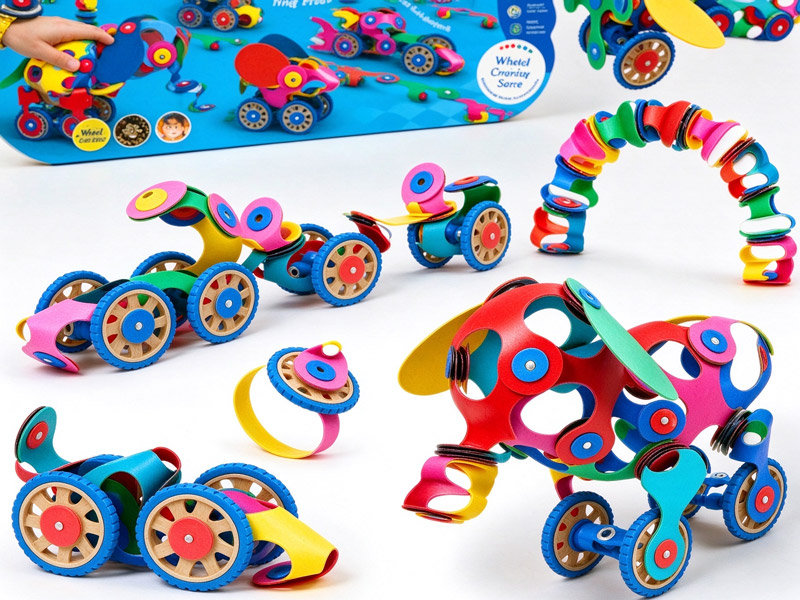
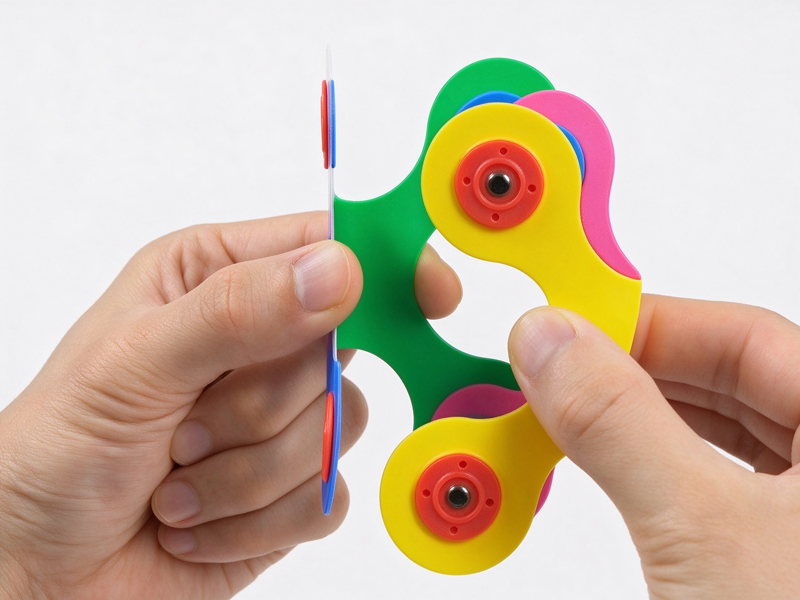
The play physics are genuinely different from every brick and tile system. A Clixo piece is a flat, petal-like shape with embedded magnets at specific points; connecting pieces lets them pivot freely until the builder presses them flat into a lock. Two-dimensional constructions can be worn as crowns or bracelets, stuck to a refrigerator, or lifted and twisted into animals, vehicles, and abstract sculptures.
The absence of studs, snaps, and alignment rules changes who can play. There is no wrong connection and no required orientation — magnets find each other — which removes the fine-motor precision barrier that frustrates the youngest builders with conventional systems. The pieces also travel well: flat sheets take almost no bag space, making the system a favorite for restaurants, airplanes, and restaurant-table sanity.
Recyclable Synthetic Paper Built for Rigorous Play
The material breakthrough is a proprietary recyclable synthetic paper — a durable, flexible substrate that resists tearing and water while staying feather-light. The company describes it as strong enough for rigorous daily play, and long-term owner reports back the claim: pieces survive being stepped on, crumpled into pockets, and washed off under a tap.
For parents auditing materials, the honest summary is favorable: no rigid plastic shells, no small detachable parts beyond the sealed magnetic elements, and a paper-adjacent substrate that feels warm and tactile rather than clinical. The trade-off is aesthetic aging — heavily used pieces show creases and scuffs over time, though owners report this wear is cosmetic and does not affect function.
Designed So Every Child Can Join In
Accessibility is the brand's most distinctive commitment, and the one that separates it from every competitor in the aisle. Eshet speaks about universal design as a founding requirement rather than a feature: the pieces can be manipulated one-handed, work for children with limited grip strength, require no instructions, and level the playing field between children with and without physical or cognitive disabilities. A Forbes profile highlighted the toy as proof that accessible design belongs everywhere, not just in assistive technology.
For households and classrooms with mixed abilities, this is not marketing varnish — it changes who gets to build. Siblings of different ages and abilities can genuinely play the same system at their own level, which is a rare claim in a category segmented by age grade.
Classroom Packs and the STEAM Channel
The education market became a second pillar. The company sells dedicated classroom packs and positions the system as a STEAM tool — the same pieces serve pre-K shape-and-color lessons, elementary engineering challenges, and collaborative group builds. Educators quoted in the company's materials praise the versatility: one kit spans grade levels that would otherwise require multiple products, and the quiet, screen-free manipulation suits focused classroom work.
The Shopify storefront serves parents and teachers directly with the full pack range, while school-supply distributors handle institutional orders. The education channel also functions as the brand's credibility engine — classroom adoption signals to parents that the toy has been vetted by professionals.
Ice Cream Museums and Artist Collaborations
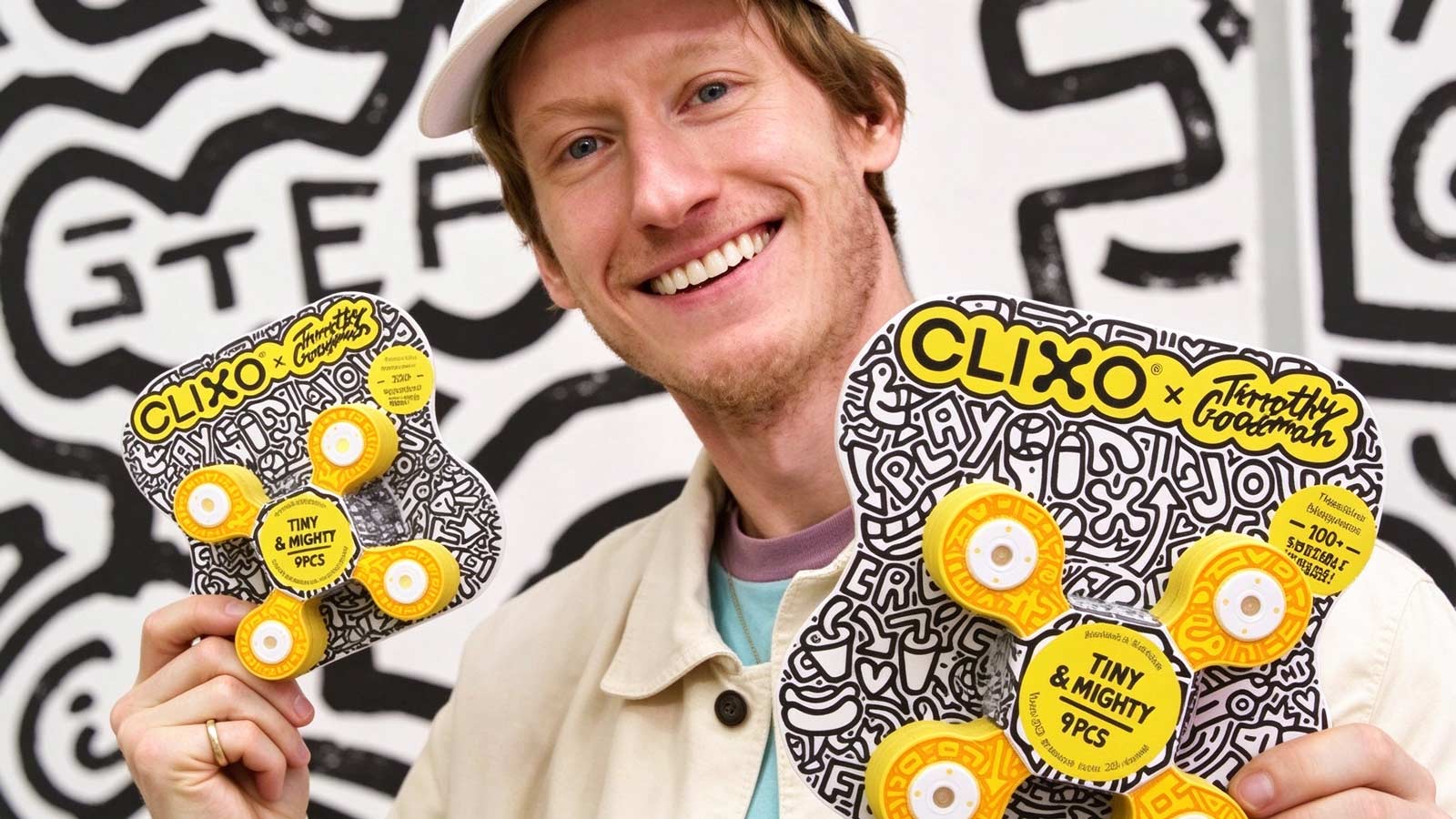
Brand building has leaned into experiences and collaborations rather than advertising. Clixo built interactive magnetic walls at the Museum of Ice Cream locations in Chicago, Austin, and New York, installed a play experience inside CAMP's Columbus Circle store, and in 2025 released a collaboration pack with New York artist Timothy Goodman, whose drawings are printed on custom pieces.
These partnerships share a logic: put the material in hands in joyful public settings and let the product convert curiosity into purchases. The museum walls, where visitors add to communal magnetic murals, double as demonstrations of the exact property the packaging cannot convey — the click, pivot, and fold that make the system unlike bricks.
From Brooklyn Studio to Target's Nationwide Shelves
Retail expansion arrived in stages that mirror the company's patience. After building a base through its own store and specialty toy shops, Clixo tested five products in 140 Target locations; the test performed well enough that Target rolled nine packs into stores nationwide in the summer of 2025, priced from about $16 to $50. The retail shelf matters in this category because hands-on discovery is the product's entire pitch — a brick competitor can sell on a box photo, but Clixo needs to be felt.
The direct store remains the full-catalog channel: every pack theme, from jungle birds to space missions to glow-in-the-dark rovers, plus bundles and the education line. Buyers outside the United States face import costs, as the company's footprint remains concentrated in North American retail.
Small Pieces and Real Safety Considerations
The safety profile deserves a clear-eyed paragraph. Pieces carry embedded magnets and are recommended from age four or six depending on the pack — younger than that, the standard magnet-ingestion cautions for magnetic toys apply, and supervision is the parent's call. The flexible material has no sharp edges and survives chewing better than rigid plastics, but it is not a teether.
Durability reports are strong, with the main long-term complaint being cosmetic creasing and, for a minority of owners, pieces losing magnetic snap over very heavy use. The company backs the product with responsive support, which specialty-toy buyers have come to treat as part of the purchase.
Who Should Give Flexible Building a Try
The Clixo household is usually one that already owns a brick or magnetic-tile system and wants a genuinely different construction experience — something quieter, lighter, more portable, and more forgiving of small hands. Travel-heavy families, STEAM-oriented parents, and households with children of mixed ages or abilities are the natural audience. Builders who want structural permanence — towers that stand for weeks, elaborate displays — will find the system's impermanence a feature or a frustration depending on temperament.
The verdict from five years of market evidence: Clixo earned its design awards and its Target shelf the hard way, through material innovation most toy companies would have abandoned at prototype three hundred. For families ready to think beyond the brick, the bendable sheets deliver exactly what a thousand iterations promised.