Briogeo store review: what to know before you buy clean hair care products
Official homepage: https://www.briogeo.com
Clean-haircare stores usually open with the exclusions — the free-from list that tells you what the formula will not do to your hair. Briogeo opens with an inclusion: the homepage greets every force of nature, and the copy explains that the brand's name means the earth itself, activated. I browsed with a medicine cabinet of half-finished natural shampoos that promised purity and delivered nothing, and a curiosity about whether a clean brand could also be a performance brand. Here is the counter, decision by decision.
Door Policy: The Earth as the Ingredient
The storefront's first claim is etymological — the name Briogeo means of the earth — and the formulation philosophy follows: natural elements like charcoal and rosehip, activated by what the brand calls clean science into GeoActive formulas. Leading with a word-origin rather than a hero product targets the ingredient-literate buyer: the name is the thesis, the earth is the laboratory, and the trademark on the formulation approach tells her the philosophy is engineered rather than merely believed. The name is the formula's passport, and the passport is stamped with a trademark.
Six Exclusions, Trademarked
The clean claim arrives wearing a symbol — six-free, printed with the mark that turns a standard into intellectual property: no sulfates, no silicones, no phthalates, no parabens, no DEA, no artificial dyes. Trademarking the exclusion count is claims discipline aimed at the comparison shopper who has read a hundred free-from lists: the six is specific enough to verify, the trademark says the standard is proprietary and defended, and the copy moves on without lecturing. The exclusions are the product page's quietest and loudest sentence — the sentence that says the most by refusing to say more.
Product Names That Give Instructions
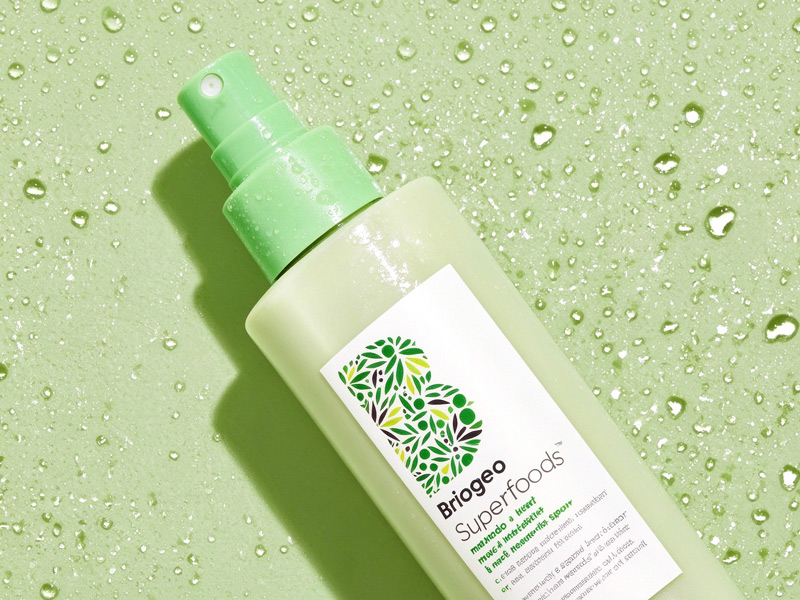
The catalog speaks in imperative sentences — Don't Despair, Repair!, Farewell Frizz, Curl Charisma, Scalp Revival — each name a promise with a trademark stapled to its end. Naming products as commands is memorability aimed at the overwhelmed browser: the name tells her what to do and what to expect in one breath, the trademark converts a slogan into an asset, and the customer who asks for the Don't Despair mask by name has already become the brand's unpaid ambassador. The names are the marketing department, and they never miss a day, and they never ask for a raise.
A Banker's Second Act
The founder's biography crosses disciplines — a childhood of making DIY beauty products with her mother, a career in investment banking, and a return to the kitchen-table chemistry that became the brand. Publishing the banker-to-shampoo path is credibility aimed at the skeptic who suspects natural brands of being naive: the founder chose this industry after understanding how businesses scale, the formulas are engineered rather than earnest, and the professional origin suggests the clean claims were vetted by someone who reads term sheets. The banker is the formulation's witness, and the witness has a spreadsheet.
A Complex Named Like a Star
Beneath the lines sits the proprietary technology — a complex of natural oils, vitamins, and antioxidants that the brand has named and trademarked. Naming the ingredient blend is IP positioning aimed at the label reader who has learned to distrust hero ingredients: the complex is a system rather than a single miracle, the trademark converts nutrition into intellectual property, and every product page inherits the science whether it mentions it or not. The complex is the root system; the product lines are the branches; the branches all drink from the same root.
Eight Lines for Every Complaint
The catalog divides by concern rather than by hair type — repair, frizz, curls, scalp, superfoods, color care, gentle care, density — eight lines that cover the category's complete complaint list. Organizing by pain point rather than texture is navigation aimed at the customer who shops her problem: the frizzy customer finds Farewell Frizz without learning her curl type, the flaking customer finds Scalp Revival without a dermatology referral, and the store converts the entire aisle's anxieties into eight clean shelves. The concerns are the map, and the map has no dead ends, and no dead ends means no lost sales.
Refills as a Standing Policy
The sustainability program appears as a shelf rather than a slogan — refill pouches for the hero products, priced below the bottles, sold beside the pumps they replenish. Offering refills permanently rather than seasonally is retention aimed at the customer finishing her third bottle: the pouch costs less and wastes less, the pump becomes the permanent fixture, and the brand that planned for the repurchase has converted sustainability into a subscription in everything but name. The refill is the second sale, dressed as virtue, and virtue that repeats is the best kind of revenue.