Brilliant, audited: the wall panel trying to dethrone amazon's $180 smart display
Official homepage: https://www.brilliant.tech
Smart home stores usually ask you to add something to your home — a speaker on the counter, a hub in a drawer, an app on your phone. Brilliant's founding bet was subtraction. In 2015, Aaron Emigh was remodeling his San Mateo home and discovered what every smart home owner eventually learns: the more devices he installed, the worse the experience became, because every one of them lived in a different app on his phone. He teamed up with mobile-industry veterans Steven Stanek and Jeremy Hiatt, and the company they built — venture-backed by August Capital and others — set out to replace the one interface every human already knows: the light switch. The original $299 Brilliant Control debuted in 2017, and nearly a decade later the store runs a full panel lineup on a Shopify Plus storefront, with a B2B wholesale arm for multifamily builders and a new AI subscription called Brilliant Max. I audited the hardware, the integration ledger, and the fine print. Here is the store across its dimensions.
A Remodeling Project Becomes a Company
The origin story matters because it explains the product's stubborn physicality. Every Brilliant panel replaces a standard light switch or flush-mounts to a wall, giving the household a touch screen with finger sliders where dumb switches used to be — because, as Emigh put it in the launch materials, control should be "as simple as flipping a light switch." It was a contrarian thesis in 2017, when the industry was racing to put everything on phones and voice speakers, and it remains the store's clearest differentiator today.
The Product Wall: Plug-In, Wired, and the Dimming Cast
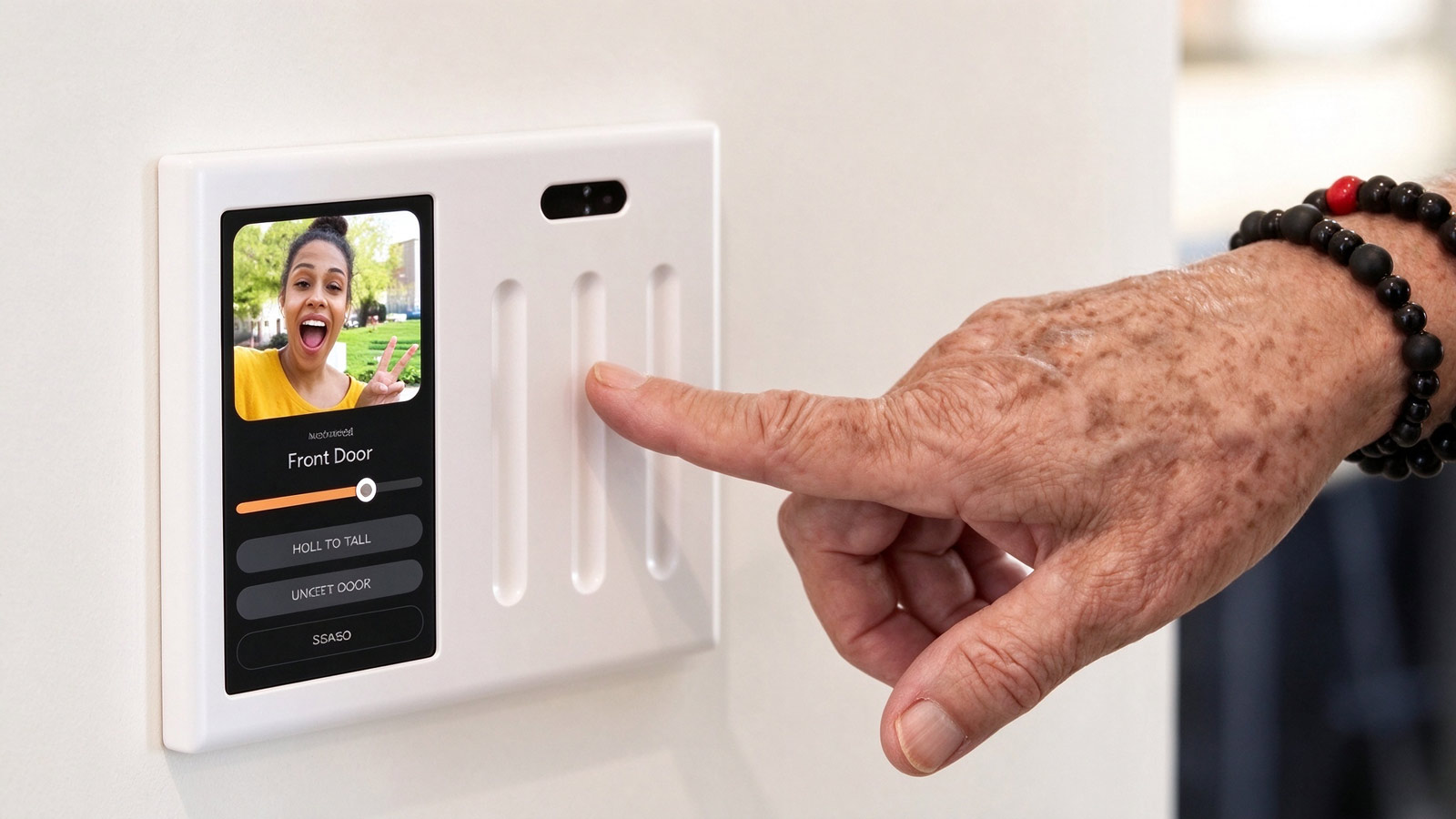
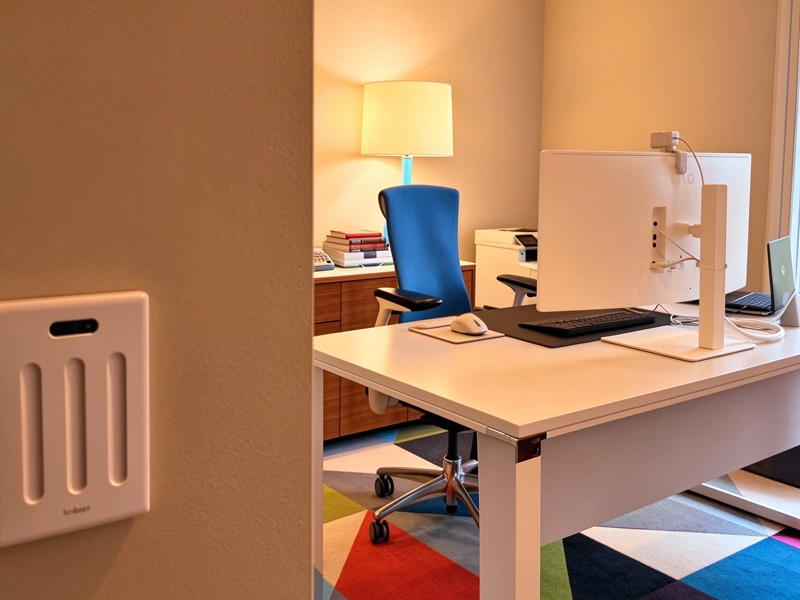
The catalog runs in two families. The Wired Control comes in one-through-four-switch versions for standard electrical boxes, replacing the switches it covers: a five-inch LCD touchscreen, touch sliders, built-in camera with a physical privacy shutter, motion, temperature, and ambient light sensors, and built-in Alexa with Google Assistant and HomeKit/Siri voice support. The newer Plug-In Control drops into any wall with no neutral wire, no electrical work, and a thirteen-foot cord — the renter-friendly version that reviewers have embraced. Around the panels sit supporting hardware: a Smart Dimmer Switch, a Smart Plug, and a mobile app that mirrors every panel control. One detail worth knowing: panels speak to each other over a local mesh, so lights still work even when WiFi goes down.
The Integration Ledger
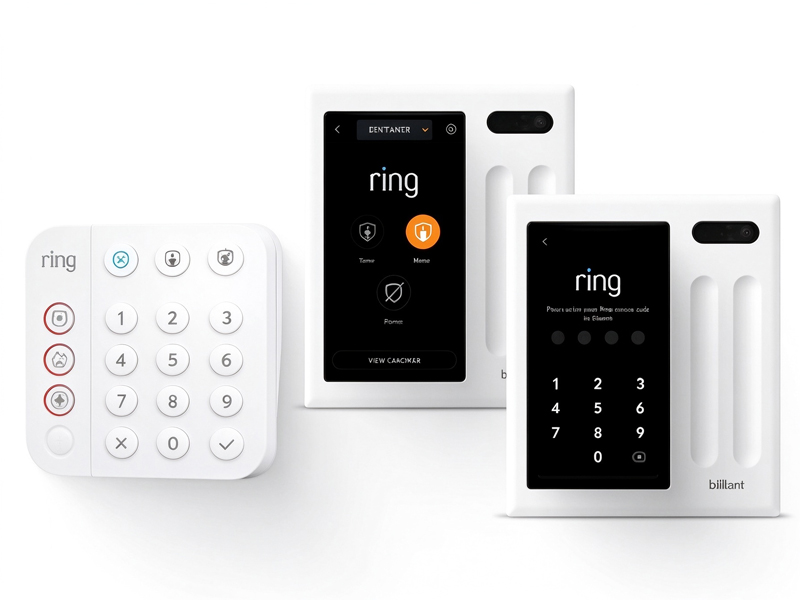
Brilliant's pitch depends on speaking everyone else's language, and the partner list is genuinely broad: Sonos and BluOS for music, Ring for doorbells, Philips Hue, LIFX, and TP-Link Kasa for bulbs, August, Schlage, and Kwikset for locks, Ecobee and Honeywell Resideo for climate, Genie for garage doors, SmartThings as a bridge for Z-Wave and Zigbee fleets, plus Google Assistant and Apple HomeKit voice paths. CNET's hands-on verdict on the plug-in panel: the sliders are "fantastic," the hardware feels great, installation is simple — but motion activation is finicky and some brand integrations are missing, with the reviewer noting Google Nest's recent shutdown left a gap.
The Hardware Verdict
Review consensus across CNET, GearBrain, and B&H hands-ons lands consistently: Brilliant makes the best wall hardware in the category, full stop — the touch sliders for dimming Sonos volume or lights are the kind of interaction that makes guests go quiet. The counterpoints are equally consistent. The panels are expensive: the original launched at $299, multi-switch wired versions climb from there, and the plug-in model sits in premium territory against Amazon's $180 Echo Hub, which covers much of the same ground minus the sliders and camera. Some integrations lag or vanish with partner pivots. And the motion wake settings take tuning before they stop turning the screen on at passing shadows.
Brilliant Max and the Software Bet
The newest dimension is Brilliant Max, the company's subscription play, marketed with the line "your home runs itself" — an AI layer that aims to stop owners from managing their homes device by device. It signals where the store wants margin to live: hardware panels at premium prices, plus recurring software revenue. It also sharpens the comparison set, because Amazon and Google are racing the same subscription-plus-AI direction with far cheaper hardware already in millions of homes.
The Storefront: Wholesale, Waitlists, and Walled Precision
The consumer storefront on Shopify Plus is clean and consultative — panels, dimmers, plugs, and a steady drumbeat of sold-out-and-waitlist cycles that suggests the plug-in model has outrun supply at least twice. A separate wholesale storefront on the same platform serves multifamily builders, a channel Brilliant has courted since 2020, when it launched a dedicated multifamily platform for apartment operators. Product pages carry exhaustive compatibility lists, and the company publishes wiring guides and multiway setup videos — necessary homework for a switch-replacement product, and a signal it takes installer confidence seriously.
The Buyer's Ledger
The honest checklist before buying. Your home must be 120-volt U.S.-code wiring for wired panels — no UK or EU voltage support, and neutral wires are required for wired models (homes built after the mid-1980s usually have them everywhere). Setup runs on 2.4GHz WiFi. The wired panels cap at 150 watts of LED/CFL load per circuit, and magnetic low-voltage lighting is unsupported. The warranty is one year. Multi-panel homes — three to five units is the company's own guidance — are where the intercom and whole-home scenes justify the premium, so budget accordingly.
The Takeaway
Brilliant is the design-led contrarian of the smart home: wall hardware so good that reviewers consistently call it the best in its class, an integration ledger that respects open ecosystems, and a founder thesis — control should live on the wall, not the phone — that has aged remarkably well. What you accept is premium pricing in a category where Amazon undercuts you by half, integration churn when partners pivot, and a one-year warranty on hardware meant to live inside your walls for a decade. For design-conscious homeowners and multifamily operators, it is the reference panel; for value-first buyers, the Echo Hub keeps the decision honest.