Bones coffee brand review: things to know before ordering flavored coffee beans
Official homepage: https://bonescoffee.com
Coffee stores usually compete on origin — the altitude, the varietal, the roaster's name. Bones Coffee competes on flavor itself: the homepage greets you with a farewell to boredom, and the catalog behind it runs to thirty-plus flavors, each named with the kind of punnish affection usually reserved for craft beer. I browsed with a coffee habit that had settled into tasteful beige and a curiosity about whether flavor was a feature or a gimmick. Here is the counter, decision by decision.
Door Policy: Boring as the Enemy
The storefront's opening shot is not a mountain or a farmer but a declaration of war — say goodbye to boring — aimed not at bad coffee but at beige coffee, the kind that tastes like obligation. Choosing boredom as the enemy targets the drinker whose ritual has gone stale: the enemy is not the competitor down the street but the rut in her own kitchen, and the store has reframed flavor from a gimmick for children into a remedy for the monotony of adulthood. The boredom is the market; the flavor is the medicine; the medicine is refilled in twelve-ounce bags.
Names That Wink
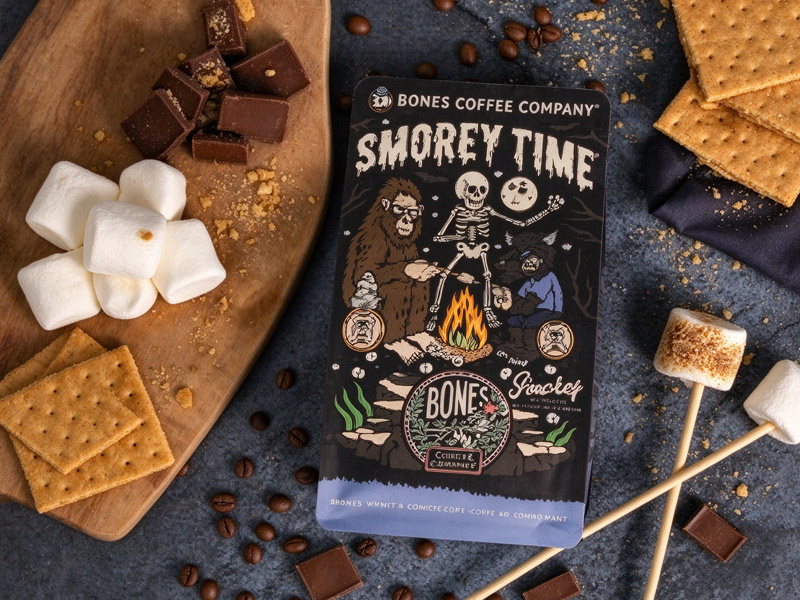
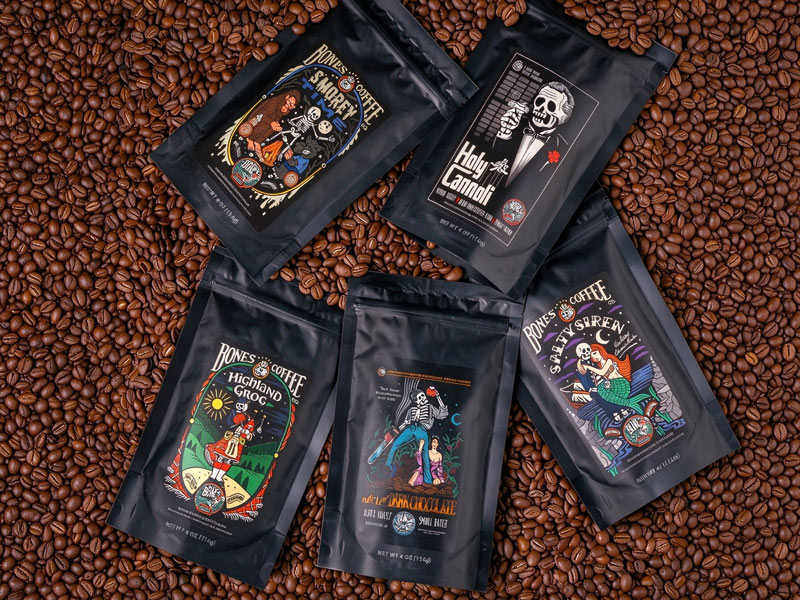
The catalog speaks in puns — a s'mores blend called S'morey Time, a sea-salt caramel called the Salty Siren, a butterscotch caramel called Highland Grog — each name doing the flavor's marketing before the description starts. Naming with wordplay is memorability aimed at the customer who orders by name rather than by number: the pun sticks in the memory, the flavor sticks in the name, and the customer who asks for the S'morey Time by name has become the brand's unpaid announcer. The puns are the advertising department, and the department has too much fun to be fired, and the fun is why the department costs nothing.
Thirty-Plus Ways to Break the Rut
Behind the names sits the depth — thirty-plus flavors, from cinnamon roll to army of dark chocolate, each roasted in small batches, each available across the brewing styles. Maintaining a flavor library this large turns assortment into retention: the customer who tires of one flavor has twenty-nine more to try, the exploration itself becomes the hobby, and the store has converted a commodity purchase into a collecting habit. The library is the moat, and the moat is filled with butterscotch, and the butterscotch keeps the competitors' plain Colombian on the other side.
The Five-Bag Debut
Before the commitment sits the sampler — five four-ounce bags, self-selected from the catalog, priced as an introduction rather than an upsell. Offering a build-your-own sample pack reduces risk for the flavor-curious who fear a full bag of regret: the sample is the audition, the self-selection is the agency, and the store has learned that the customer who chooses her five samples is already composing her first full-bag order in her head. The sampler is the handshake; the full bag is the relationship; the relationship renews every time a new flavor drops and the sampler alumni buy first.
Limited Editions as Calendar
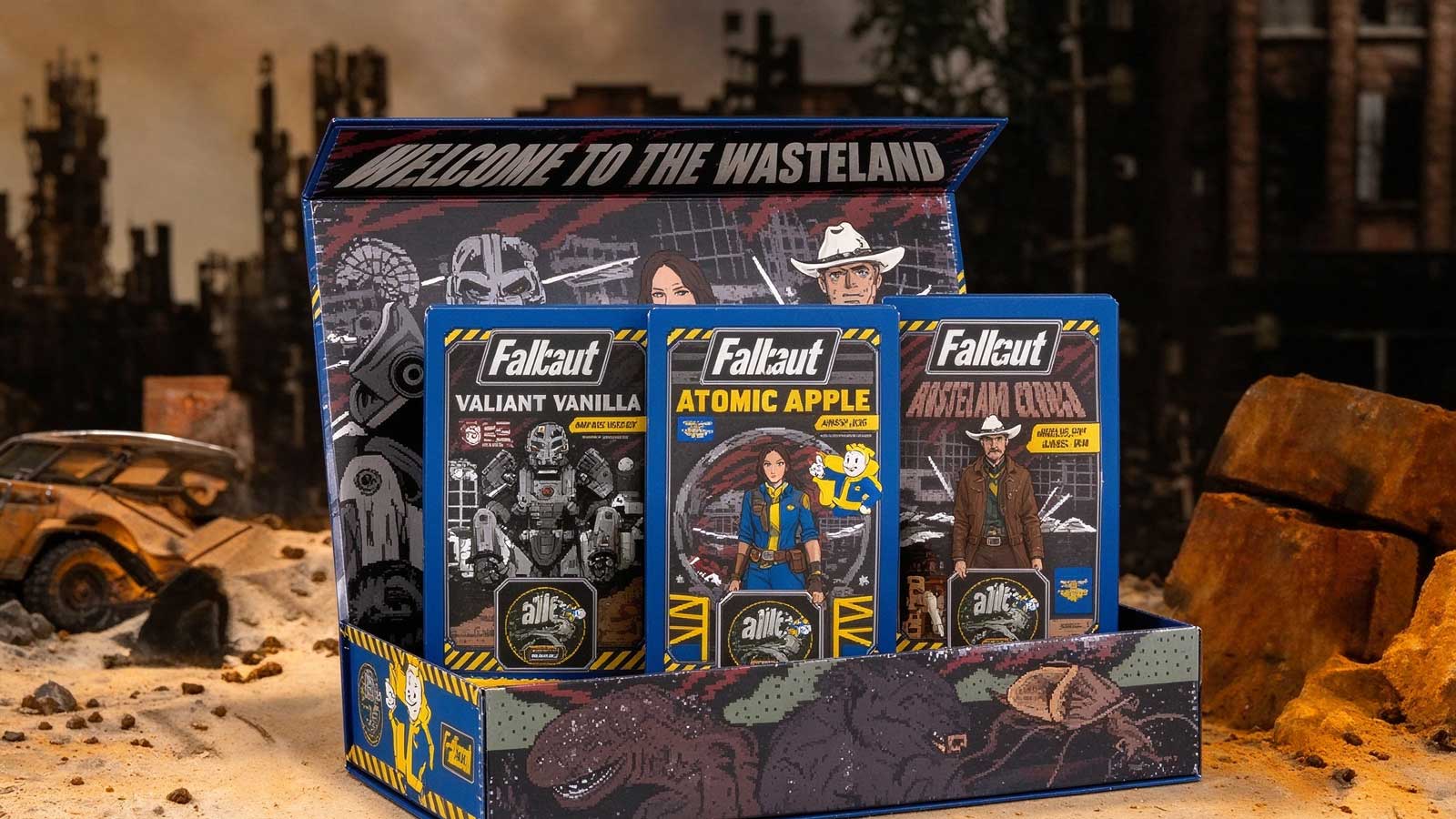
The storefront carries a rotating limited-edition line — series-inspired flavors with matching mugs, arriving and departing on a schedule the community learns to watch. Rotating limited runs turns cadence into retention for the collector the catalog has already created: the limited flavor is the reason to check back, the matching mug is the artifact, and the store has converted its own product development cycle into a content calendar. The calendar is the retention engine, and the engine runs on scarcity, and the scarcity is manufactured at the roaster the brand already owns.
The Subscription Without the Handcuffs
The coffee club offers twenty percent off and states its terms in the same breath — commitment-free, cancel anytime, on your schedule. Advertising the exit alongside the discount is trust aimed at the subscriber burned by cancel-button mazes: the terms say the store expects to keep her with flavor rather than friction, the twenty percent is the honest price of loyalty, and the cancellation policy is the confidence. The exit is the feature; the feature is why she stays; and staying without handcuffs is the only kind of staying that lasts past the third shipment.
The Shelf Beyond the Site
The footer invites the customer to find the bags in a store near her — the brand sitting on the shelves of the mass retailers where the weekly shop happens. Listing retail availability makes omnichannel work for the impulse buyer: the discovery happens at the grocer, the deep dive happens at the direct store, and the two channels feed each other without jealousy. The shelf is the top of the funnel; the funnel ends at the sampler; and the sampler was designed to fit in the same cart as the groceries.
Decaf, Without the Apology
The flavor line extends to decaf — the copy noting that pregnant women and the caffeine-cautious deserve the same thirty flavors as everyone else. Extending the full flavor library to decaf is inclusion aimed at the customer the coffee industry usually treats as an afterthought: the decaf drinker gets the puns, the samplers, the limited editions, and the store has quietly doubled its addressable audience without launching a single new product. The decaf is the welcome mat most stores forget to put out, and the mat says you belong here too, in all thirty flavors.