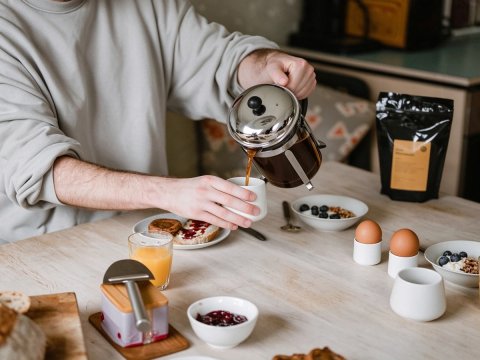
BLK & bold shop review: what to check before buying specialty coffee
Official homepage: https://blkandbold.com
Coffee stores usually sell you a place — a mountain, a farm, a washing station. BLK & Bold sells you a time of day: the homepage organizes its roasts by when you drink them, from the morning brew through the halftime cup to the limelight roast that closes the show. I browsed with a schedule full of meetings and a curiosity about whether coffee could be merchandised by the clock rather than the map. Here is the counter, decision by decision.
Door Policy: The Day as the Aisle
The catalog sorts by the hour — a morning roast for the alarm, a halftime blend for the afternoon lull, a limelight roast for the moment you are finally seen. Organizing by time of day rather than by origin is a use-case decision aimed at the customer who shops her schedule rather than her palate: she knows she needs a four o'clock cup, she does not know what a honey process tastes like, and the store has mapped its roasts to the only geography she navigates daily — her own day. The clock is the map, and the map has three time zones, and every customer lives in all of them.
A Name That Is a Mood
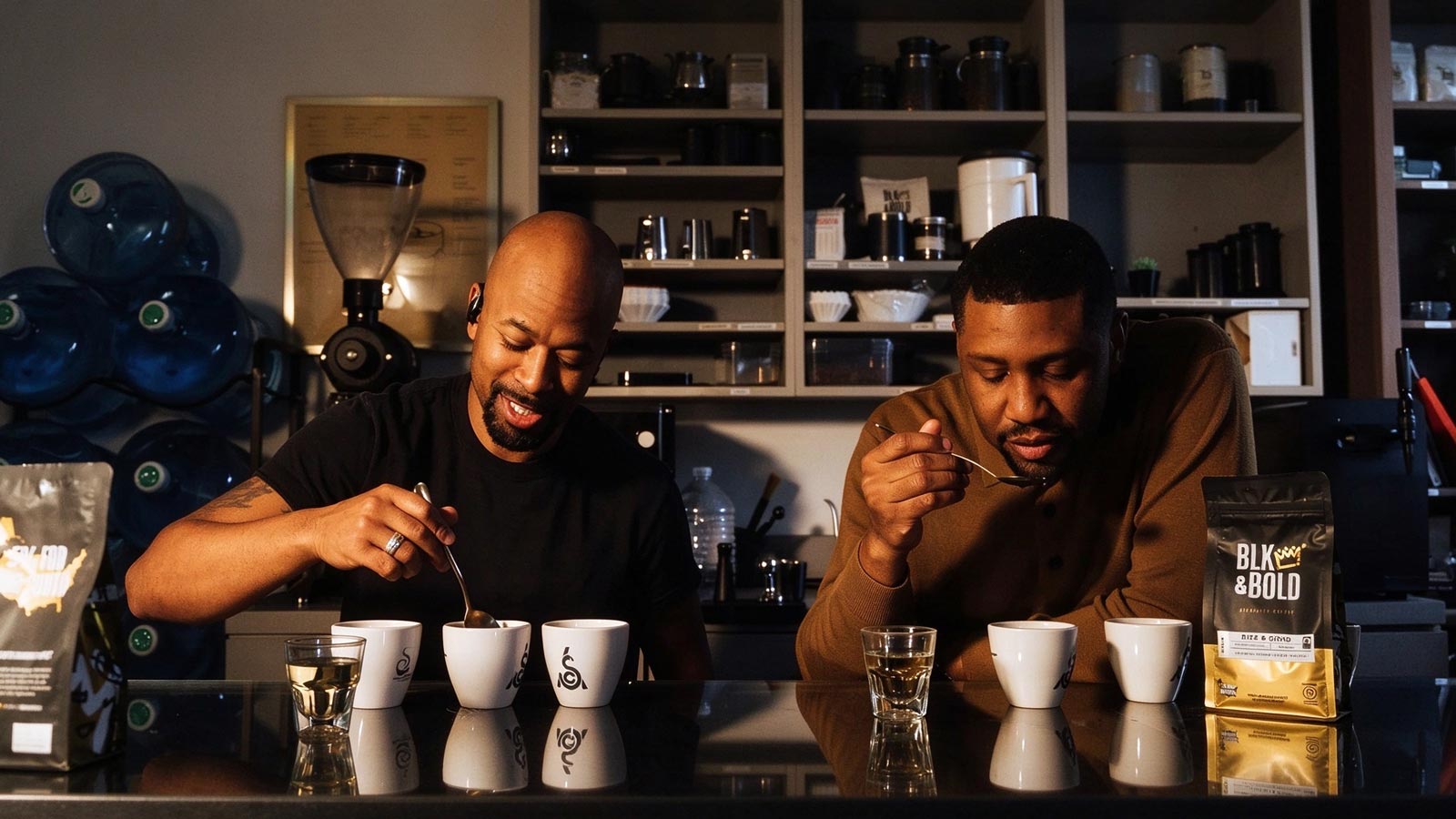
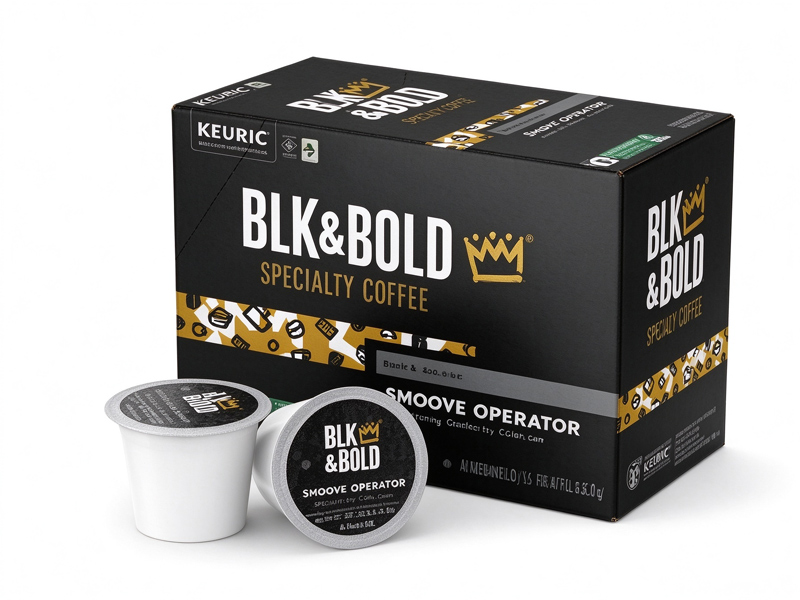
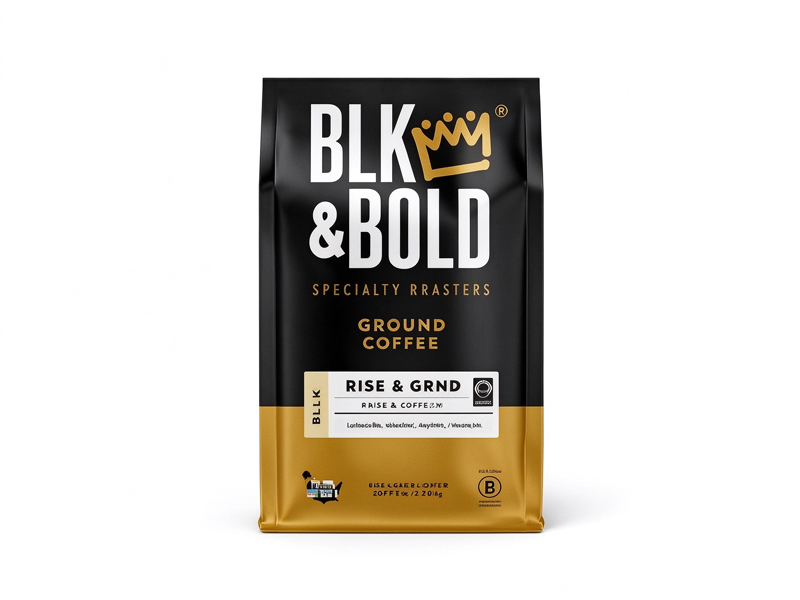
The brand name carries its thesis — the boldness is printed in the letters, the ampersand is a wink — and the copy treats boldness as a flavor rather than an attitude. Building the brand on a single adjective is memorability aimed at the gift buyer and the self-gifter alike: the name says what the coffee promises to do to your morning, the adjective works as both description and instruction, and the customer who buys BLK & Bold has bought a personality in a twelve-ounce bag. The name is the roast profile, spoken aloud, and the speaking aloud is the advertising that never stops.
Five Percent, Printed Where You Can See It
The mission rides the storefront — five percent of profits committed to youth programs, printed where the policies usually hide. Publishing the pledge above the fold is values positioning aimed at the customer who has grown cynical of cause marketing: the number is specific, the beneficiary is named, and the store has made the donation a feature of the purchase rather than a footnote to it. The five percent is the differentiator; the transparency is the proof that the differentiator is real; and the realness is what the cynical customer was waiting for.
Coffee Beside Tea, Without a Fight
The catalog splits — specialty coffees on one side, loose-leaf teas on the other — the two ancient rivals shelved as siblings. Carrying both is household coverage aimed at the home where one partner drinks coffee and the other does not: the order satisfies both, the shipping threshold is reached faster, and the store has doubled its basket without doubling its audience. The siblings share the cart; the cart shares the shipping; and the shipping is free, which makes the siblings better friends.
A Free-Shipping Ladder
The policy is printed in two tiers — free shipping at thirty-five dollars, free American shipping on every subscription order — the thresholds legible before the cart is full. Publishing the ladder is conversion architecture aimed at the customer who abandons carts at the shipping reveal: the thirty-five dollar mark gives her a target, the subscription tier gives her a reason to commit, and the store has converted a cost center into a steering mechanism. The threshold is the steering wheel; the subscription is the highway; and the highway has no tolls for the committed.
A Subscription That Ships Free
The subscribe-and-save option removes the shipping fee entirely — the recurring order travels free, the savings compound with the discount, and the commitment is framed as a convenience rather than a contract. Bundling free shipping into the subscription is retention aimed at the customer who calculates every delivery: the free shipping is the hook the discount alone cannot be, the recurrence is the habit the store is buying, and the customer who subscribes for the shipping stays for the coffee. The shipping is the bait; the coffee is the hook; the habit is the catch; and the catch renews itself every month without a single advertisement.
A City That Is Not on the Coast
The brand hails from Des Moines — not the coffee coasts, not the roaster capitals, but the middle of the country where the founders built the company. Claiming the Midwest is provenance aimed at the customer who suspects coastal coffee of being a costume: the Des Moines address says the brand was built where it is drunk, the founders built it in their own community, and the coffee carries a geography the map usually ignores. The middle is the origin, and the origin is the argument that great coffee is not a coastal monopoly, and the monopoly was never real anyway.