Audeze store review: what to know before you buy planar magnetic headphones online

Official homepage: https://www.audeze.com
Headphone stores usually sell you a driver — dynamic for most, balanced armature for in-ear monitors, electrostatic for the rare few. Audeze sells a physics: the homepage greets you with a single adjective, uncompromised, and the about page explains the mechanism — planar magnetic, a thin film suspended between magnets, moving as one surface where conventional drivers move as cones. I browsed with a curiosity about why the audio industry has only one true planar lab, and what it does with the monopoly. Here is the counter, decision by decision.
Door Policy: One Word, Held at Full Volume
The storefront's headline is a single adjective — uncompromised — followed by the noun audio, and the word is printed like a dare: most headphones compromise, this one does not, and the word carries the weight of every trade-off the industry has ever asked you to accept. Leading with an absolute targets the listener who suspects the mainstream of sandpapering her music: the absolutism says the lab does not chase the market, the market finds the lab, and the customer who buys uncompromised is buying the end of compromise as a concept. The word is the warranty; the warranty is one word long.
A Lab in Southern California
The about page prints the address of the physics — a Southern California facility where the company manufactures more than four million drivers a year, each one built to the same planar specification, some carrying the logos of gaming consoles and studio consoles alike. Publishing the manufacturing scale is credibility aimed at the specification reader who suspects boutique audio of being marketing over engineering: the four million says the process is repeatable, the consumer and professional lines share the factory, and the planar technology is proven at industrial scale before it is sold at audiophile scale. The lab is the resume, and the resume lists PlayStation among its references.
Three Shelves, One Physics
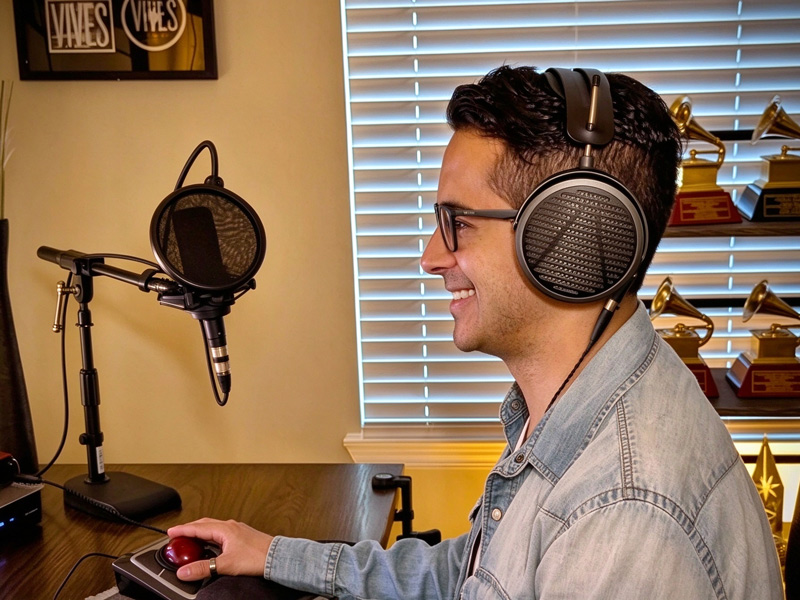
The catalog divides into three — audiophile listening rooms, gaming battle stations, professional studio desks — each carrying the same planar heart in a different housing. Selling one technology across three markets is a platform decision aimed at the customer's multiple lives: the enthusiast buys the open-back LCD for the evening album, the gamer buys the Maxwell with its noise cancellation for the session, the engineer buys the studio pair for the mix, and the brand's planar signature travels across all three identities without dilution. The physics is the platform; the housings are the apps; the apps share the operating system.
The Flagship's Own Upgrade
At the top of the line sits a new flagship, closed-back this time — the most advanced headphone the lab has yet built, the copy says, a planar driver refined over a generation of open models. Making the summit closed is market-bending aimed at the flagship customer who has been asking for isolation: the closed back answers studio and home-office demand, the refinement carries the legacy of the open line, and the store has upgraded the summit without abandoning the base camp. The closure is the innovation; the planar is the inheritance; the inheritance is the reason the innovation matters.
Gaming Without the Glow
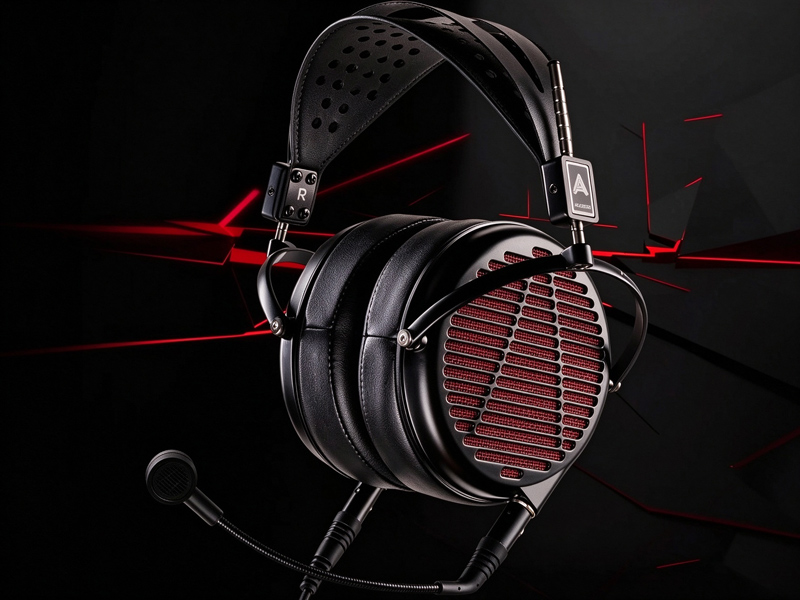
The gaming line carries a claim the category rarely makes — the best noise cancellation in gaming — printed beside a headset that carries the planar signature into the competitive arena. Putting audiophile physics into a gaming headset is credibility transfer aimed at the player who suspects gaming audio of being gimmick: the cancellation serves the competitive use case, the planar driver serves the audiophile ear, and the store has bridged two communities that rarely share a product page. The bridge is the Maxwell; the Maxwell carries two flags; the flags were never supposed to fly together until this store flew them.
Professional by Inheritance
The third shelf serves the studio — the headphones worn by engineers and artists, the copy naming the disciplines rather than the celebrities. Naming the professions rather than the stars is credibility discipline aimed at the working buyer: the engineer cares about the engineer's opinion, the artist cares about the artist's, and the store has let the work speak rather than the fame. The professions are the endorsement; the endorsement is paid in sessions; the sessions are the salary the endorsement earns.
The Driver as the Whole Story
Underneath every product page sits the same diagram — the planar film, the magnets, the coil — the physics explained once and inherited by every model. Explaining the technology once is education aimed at the newcomer who does not know planar from dynamic: the one explanation serves the entire catalog, the newcomer learns the physics in a paragraph, and the store has made the technology the product rather than the product the technology. The film is the story; the story is one paragraph long; the paragraph is longer than any competitor's because the physics is the only one of its kind.