87 Years of blocks: the german family mill still outlasting trends
Official homepage: https://www.habausa.com
HABA has been making wooden toys in the same Franconian hills since 1938 — and it still starts with a building block.
In an industry that reinvents itself every licensing season, HABA is the quiet counterexample. Founded by Eugen Habermaaß as a sawmill-turned-toymaker in Bad Rodach, Germany, the family company has spent nearly nine decades perfecting solid beechwood blocks, water-based finishes, and games that outlive childhoods. Today it spans continents, with an American outpost in upstate New York, yet the wooden building block remains its foundation stone. This review traces the company from 1938 to its Shopify storefront, examining the materials philosophy, the famous stacking games, the Green Company pledge, and what nearly a century of family ownership means for a toy buyer in 2026.
A Sawmill for Toys, Born in 1938
HABA began in the year Nazi Germany was dismantling its neighbors — an inauspicious moment to start a children's toy company. Eugen Habermaaß took over a sawmill operation in Bad Rodach, in the Upper Franconia region of Bavaria, and pivoted it toward wooden toys, reasoning that children deserved objects made with the same care as fine furniture. The first catalogs were modest affairs of simple wooden forms.
The founding insight has never been abandoned: a toy is a tool for development, not a disposable amusement. That conviction — printed in company literature for decades — explains nearly everything about how HABA operates, from the refusal to license film characters onto its classic blocks to the insistence on keeping primary production in Germany.
Bad Rodach, a Town Built on Beechwood
Geography is destiny for this company. Upper Franconia sits amid managed European beech forests, and HABA built its factory at the source, close enough to timber suppliers that the wood for its blocks travels short distances before entering production. The town of Bad Rodach remains the company's heartland, with the main factory and development teams anchored there.
For a buyer auditing supply chains, this is unusually legible: the species is European beech, the origin is documented, and the manufacturing site has been stable for generations. Contrast that with the anonymous globalized toy factory, and the premium starts to look like what it actually is — a shorter, older, more accountable chain from forest to playroom.
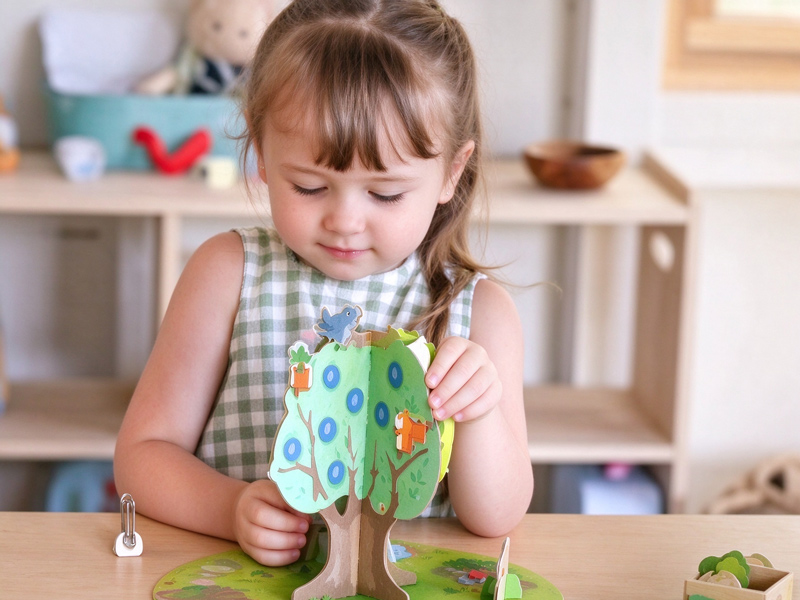
Third Generation Hands, Same Franconia Hills
The Habermaaß family remains in charge across three generations, a continuity rare at this scale. The company employs well over two thousand people worldwide — a far cry from the sawmill days — with subsidiaries across Europe, Asia, and North America, yet the ownership structure keeps decision-making long-horizon. Product lines are built to last decades, not quarters; the classic block collections in today's catalog descend directly from mid-century designs.
Family ownership also explains the catalog's breadth: alongside blocks, HABA makes board games, baby toys, dolls and accessories, outdoor play, and even furniture. It is a full childhood ecosystem sold under one roof, which gives the Shopify store an unusual density for a heritage brand.
Water-Based Stains and the Green Company Pledge
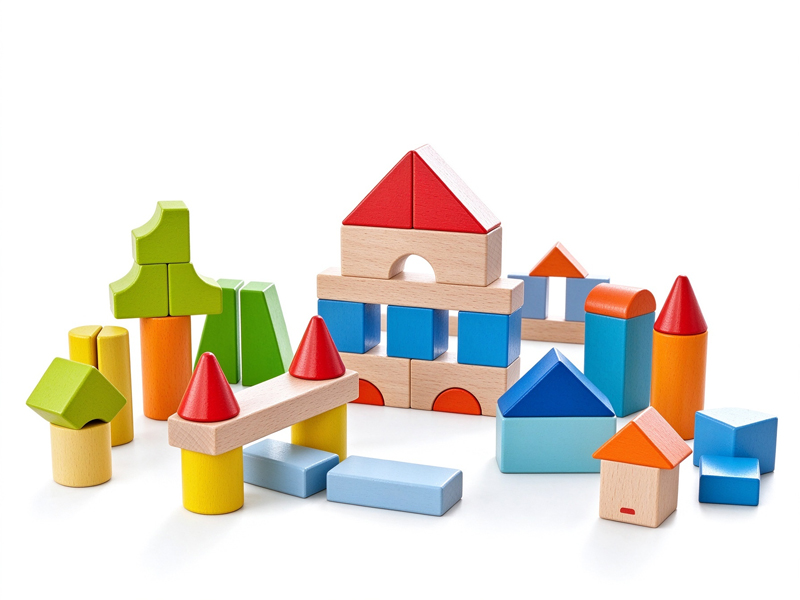
Materials philosophy is where HABA built its reputation, and the recipe is almost austere: solid beechwood, formaldehyde-free adhesives where joints exist, water-based stains and finishes, and nothing toxic touching a teething toddler. The company formalized this decades-long practice under its Green Company umbrella, committing to sustainable forestry, resource-conscious production, and durable-by-design products that resist the throwaway cycle.
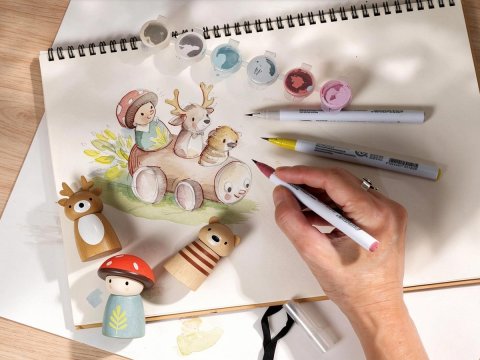
The practical implication parents care about: HABA blocks can be mouthed, chewed, washed, and passed down without off-gassing worries or flaking finishes. The stains are intentionally translucent, letting the wood grain show through — a visual signature that separates them from fully painted imports across the toy room.
Stacking Games Like Rhino Hero Carry the Flag
No review of this store is complete without its game line, which has quietly conquered family shelves worldwide. Rhino Hero — the stacking game of a super-hero rhino climbing an increasingly unstable tower of walls and roofs — has won international children's game awards and become the company's modern ambassador, proving that HABA's block DNA translates brilliantly to cardboard, wood, and suspense.
The crossover matters for the Building Blocks shopper specifically: stacking games teach the same physics of balance and collapse that unit blocks do, wrapped in a rule set that pulls adults into play. Families often arrive through a game and stay for the blocks, and the store's organization encourages exactly that migration.
Skaneateles, New York: the American Outpost
HABA's United States arm has operated from Skaneateles in the Finger Lakes region of upstate New York for decades, handling distribution, customer service, and community programs for the North American market. The American store carries the full block and game collections, with the localized site running on Shopify — a modern storefront on top of a nearly century-old supply chain.
For American buyers this means domestic warehousing, US customer service, and retail availability through specialty toy shops and museum stores, even as the manufacturing stays German. The hybrid is the point: Franconian woodcraft delivered with American convenience.
Safety Standards Tested Twice by Two Continents
HABA's safety posture benefits from its geography in an unusual way: products are engineered to satisfy both the European EN71 framework and the American ASTM standards, giving buyers on either continent the stricter of two regimes rather than the minimum of one. Small parts, finishes, mechanical strength — all documented in test reports the company makes accessible through its product pages.
For the under-three crowd, the baby lines extend the same discipline with larger components and extra finish scrutiny. The company's longevity means its safety record is long and public; a brand that has survived since 1938 has no place to hide a systemic failure.
What Made-in-Germany Costs at Checkout
The premium is real and should be stated plainly. HABA blocks sit above marketplace generics and above much of the mid-tier wooden category — a consequence of German wages, beechwood costs, and the refusal to offshore primary production. Individual block sets start in the mid-twenties and climb past a hundred dollars for large collections; games land in the twenty-to-forty range.
The counterweight is longevity measured in siblings and school years rather than months. Owners consistently report blocks surviving a decade of daily abuse and multiple children, and the secondary market for used HABA remains robust precisely because the product holds value. Frugal buyers will still do the math and walk away; durability-minded ones rarely do twice.
The Toy Shelf That Grows Up With Families
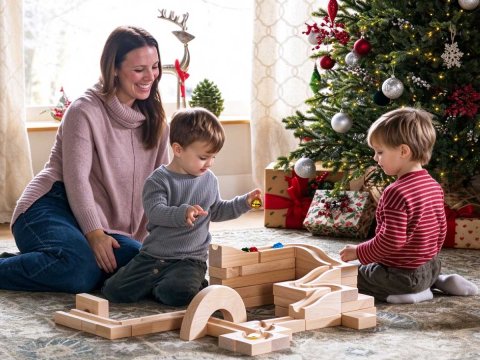
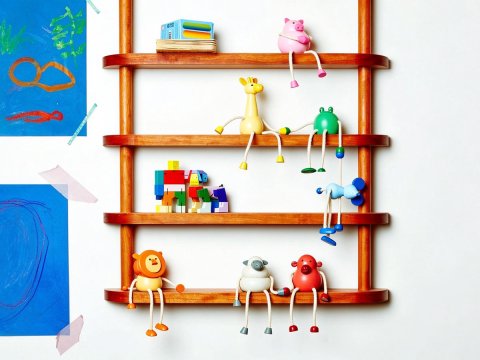
The HABA household is usually one that started with a baby gift — a clutching toy, a first block set — and discovered the ecosystem as children grew. The blocks serve two-year-olds and six-year-olds with equal legitimacy, the games pull in grandparents, and the absence of licensed characters means the shelf photographs like a nursery rather than a television.
The verdict after 87 years of evidence: HABA turned a regional sawmill into a global standard for what a wooden toy should be, and the Shopify storefront delivers that standard without dilution. In the building block aisle, where heritage brands multiply faster than their histories, the original Franconian answer still stacks up.