73 Years in one brooklyn building: the watchmaker who accidentally invented hi-fi headphones
Official homepage: https://gradolabs.com
Grado Labs has operated from the same Brooklyn building since 1953 — a former fruit store the family has owned since 1918 — and it remains one of the last headphone makers on earth that assembles every pair by hand, in America, without advertising. The company was founded by Joseph Grado, a master watchmaker at Tiffany & Co. who invented the stereo moving-coil phono cartridge at his kitchen table and held 48 patents. Headphones did not exist here until 1990, when nephew John Grado bet the company's survival on them at a workbench in the back. Seventy-three years in, the third generation just rebuilt the entire lineup on a new driver platform.
From Tiffany's Bench to a Kitchen Table
Joseph Grado's first craft was not sound but time. One of only two master watchmakers in the United States — employed at Tiffany & Company — he moonlighted repairing watches from his own Brooklyn shop while working for Sherman Fairchild's hi-fi division to fix cartridge production problems. The work seduced him. In 1953 he scraped together $2,000 and began assembling monaural moving-coil phono cartridges at his kitchen table, then walked around the corner and converted his Sicilian father's fruit store into Grado Laboratories. The stereo moving-coil cartridge patent followed in 1959 — the invention that made two-channel vinyl playback practical — and by the mid-1980s the company was producing 10,000 cartridges a week. Joseph entered the Audio Hall of Fame in 1982 with more than 48 patents to his name.
The 1990 Collapse That Created the Headphones
The CD era nearly killed the company. As turntables faded, weekly cartridge output collapsed from 10,000 units to a mere 12,000 for all of 1990 — the same year Joseph retired. John Grado, who had joined at age twelve sweeping floors in 1965 and run day-to-day operations since the seventies, bought the company from his uncle and faced a choice: fold, or invent a second product category. He chose the workbench. In the early 1990s John and his wife Loretta built the company's first headphones at a bench in the Brooklyn building, living upstairs with the family. The launch model, the $69 SR60 shown at CES 1995, took off "like a rocket" — the headphone business grew so fast that the company's planned Grado Towers loudspeakers never shipped beyond five prototype pairs, which still stand in the Grado listening room.
The House Sound: Midrange First, Forever
Ask the family what makes a Grado a Grado and the answer never mentions specifications. The house signature is mid-forward immediacy — vocals and guitars pushed slightly toward the listener, treble with energy and bite, bass present but never dominant — tuned by ear in Brooklyn and famously divisive: reviewers and owners either find the presentation addictive or the treble too hot and the low end too lean. Open-back housings across the range trade isolation for an airy, speaker-like stage. The company has never added active noise cancellation to its classic line, never made the cables detachable, and never chased the wireless feature wars. The 2026 Classic Series announcement drew attention precisely because of that refusal — in a market racing toward apps and touchscreens, Grado updated its core wired headphones with better drivers and headbands and called it done.
Hand Assembly on Seventh Avenue
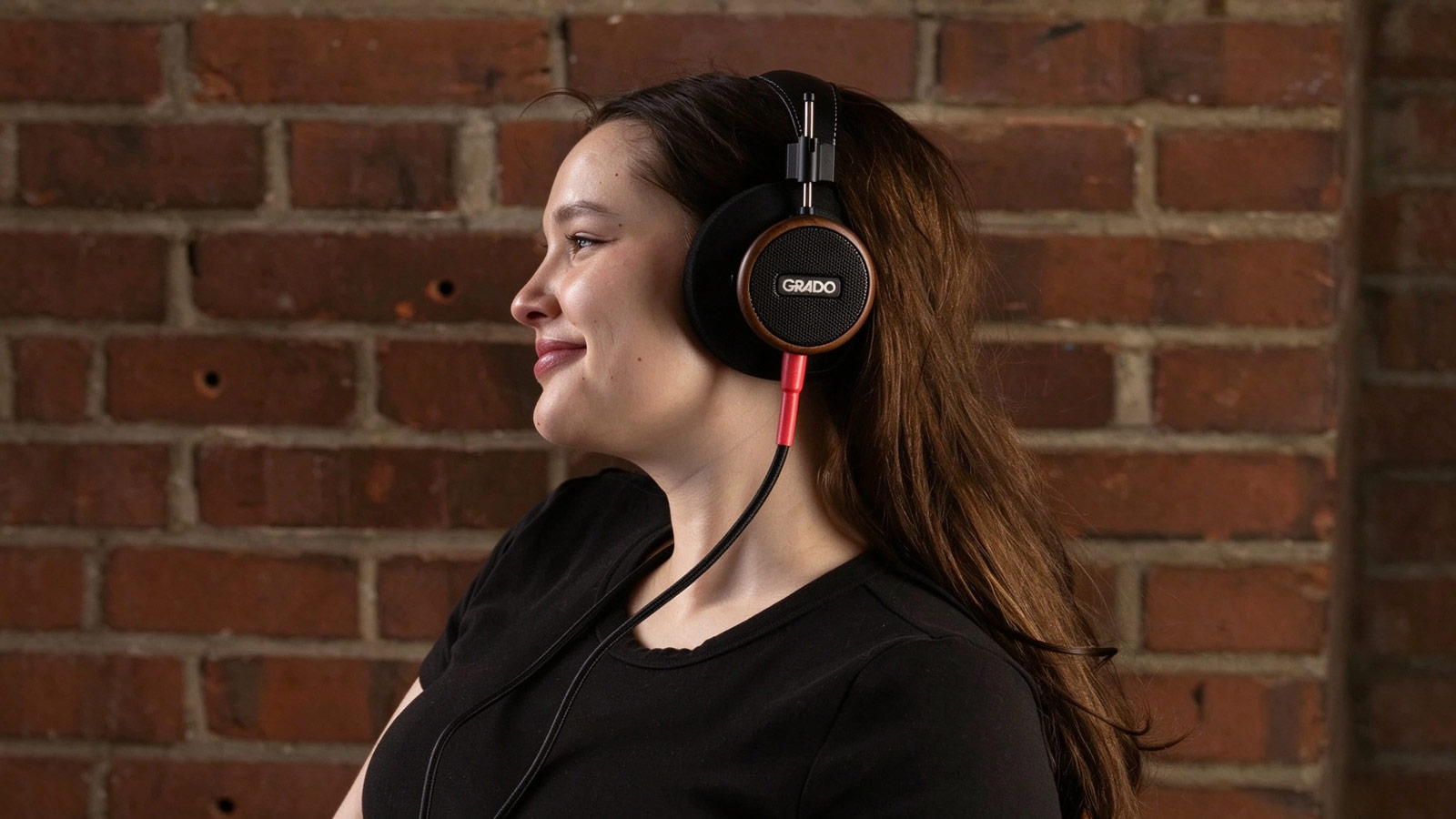
Manufacturing is the brand's stubborn thesis. Every Grado headphone is hand-assembled in the Brooklyn building by a small crew — a pair of sisters have supervised production of the higher-end models since 1994, with seven others on entry-level lines — using bonding agents and cable constructions chosen for their sonic properties rather than assembly-line speed. John Grado has explained the logic for decades: mass-produced headphones snap together from multiple pieces whose subtle vibrations degrade sound, while a hand-built, glued assembly damps those resonances. No pair leaves without a listening check. It is slow, labor-intensive, and incompatible with scale — which is exactly the point in a category commoditized by outsourcing.
The Third Generation's Biggest Bet Yet
The modernization is generational. Jonathan Grado joined in 2013 to drag the company's word-of-mouth marketing into the social era — becoming VP of Marketing — while his brother Matthew took operations. In 2023 leadership passed within the family, with John's brother Richard stepping up as the brothers' generation assumes day-to-day control. Their signature move arrived in March 2026: the Classic Series, which consolidated the brand's seven most iconic models onto a new X2 driver platform with Signature-line cables and redesigned headbands. The lineup runs from the $125 SR60 to the $1,995 flagship GS3000, with the metal-bodied SR325 at $350 and the hemp-and-maple Hemp at $495 in between. Reviews of the refreshed models describe exactly the intended evolution — more clarity and extension, the same musical energy.
Hemp, Mahogany, and Material Tuning
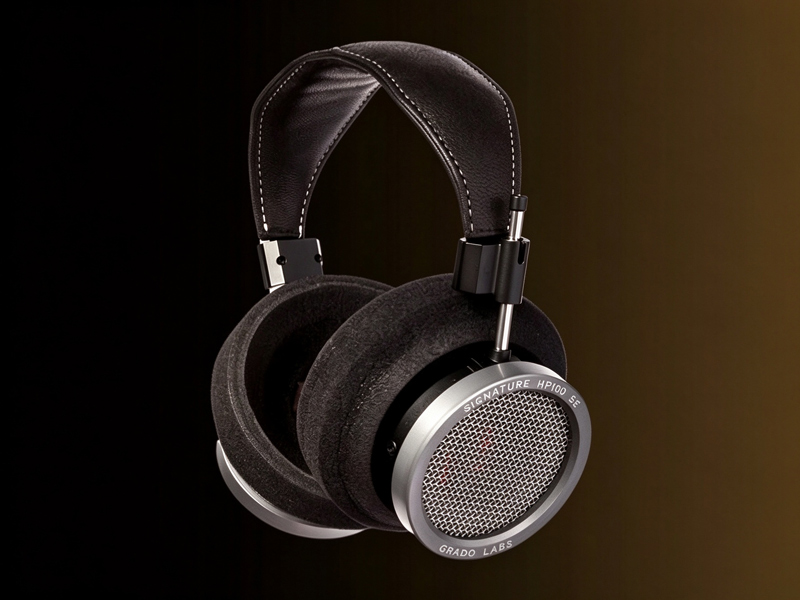
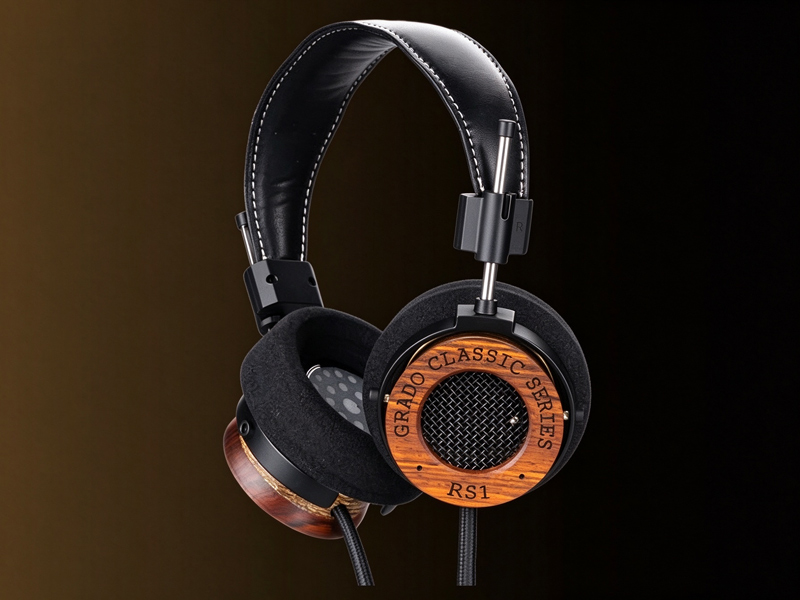
Material choice is an acoustic instrument at Grado, not an aesthetic one. Each Classic model's driver is voiced specifically to its housing: the SR60 and SR80 use a composite shell, the SR325 aircraft-grade aluminum, the Hemp blends hemp fiber with maple for a slightly warmer decay, the RS1 and GS1000 move into mahogany, and the flagship GS3000 builds around a larger mahogany housing for scale and warmth. Even ear cushions function as tuning elements — the oversized G-cushions on the GS models position the driver farther from the ear, widening the perceived stage. It is a design philosophy descended directly from Joseph's cartridge work: the material, the geometry, and the signal path are one system.
GW100x and the Reluctant Wireless Compromise
The one concession to modernity is the Wireless Series, led by the GW100x — an open-back Bluetooth headphone that reviewers consistently describe as the only wireless set that still sounds like a Grado. The family treats it as a gateway rather than a pivot: a way to serve phone listeners who will, ideally, graduate to a wired Classic. It carries the same hand-assembly discipline and a warm, spacious voicing, with aptX Adaptive support — but the company has never pretended it competes with feature-dense rivals from Sony or Bose, and the product page says so by omission, leading with sound rather than specs.
A Store With No Sale Section
The Shopify storefront mirrors the workshop's temperament. There are no countdown banners, no influencer campaigns, no loss-leader discounts — just the Classic, Signature, and Wireless lines, a cartridge section that still honors the 1953 origin, and a family story told in black and white. Prices are the prices. The site exists because the family believes the products should be findable, not because it wants to optimize a funnel; the word-of-mouth engine John built by circling global audio shows for a decade still does the heavy lifting. For a shopper tired of the headphone industry's churn, that austerity is itself the pitch: a 73-year-old company that changes only what listening tells it to, in a building that predates the transistor.